Glossary
What is clipping, and what is headroom?
Clipping is what happens when a signal is louder than the system can represent: the peaks are flattened off and the result is a crackle or a buzz. Headroom is the gap you leave below that ceiling so it never happens — aim to peak around −6 dB while recording.
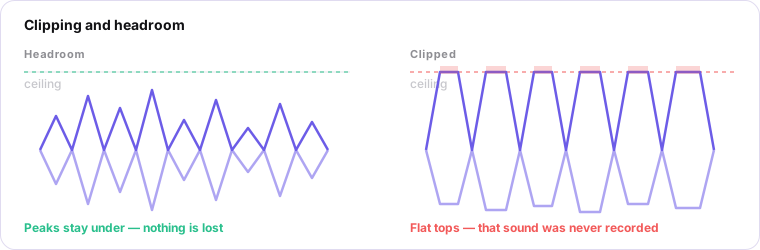
Digital audio has a hard ceiling. Below it everything is fine; above it there is nothing, so the waveform is cut flat at the top. That flat edge is heard as distortion, and it is permanent: the part of the wave that went past the ceiling was never recorded, so no tool can put it back.
Headroom is simply the distance you keep from that ceiling. Peaking around −6 dB leaves room for the sentence you say louder than you expected, and costs nothing in quality — quiet recordings are trivial to make louder afterwards, clipped ones are not repairable.
Later in the chain the same ceiling applies to the finished mix, which is what true peak and a limiter are for: Cast holds the export below the ceiling so a platform re-encoding your file does not push it over.
Last updated