The Mubert ecosystem
Cast, Fuse or Render — which one do I want?
Pick by what you are walking away with. A finished podcast episode → Cast. A short-form video with sound → Fuse. A music track on its own → Render. Music generated inside your own product → the Mubert API. They share one generative engine, so the music is the same quality wherever you meet it; what differs is the room you sit in to use it.
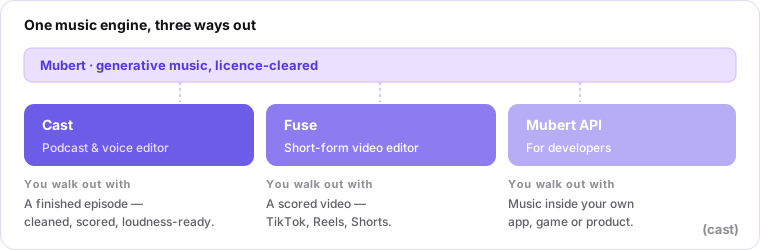
The engine is the constant. Every one of these generates original music that did not exist before you asked for it, and that you are cleared to use — that is the thing Mubert makes. The four products are four answers to "and then what?".
Cast is the only one built around a voice. That is why it is the only one that transcribes, cuts by text, and ducks the music under the speech automatically — a music tool does not need to know where the sentence ends, and a podcast finisher cannot work without it.
The dividing line people get wrong: if the music is meant to sit under your own voice, generate it in Cast rather than making it in Render and importing it. Music generated in Cast arrives in stems, ducks itself, and re-follows the mix when you cut a sentence out. A downloaded track is a flat file that knows nothing about your edits — you would be back to drawing volume automation by hand.
- CastYou leave with a finished podcast episode: cleaned voice, scored, licensed, at the right loudness.
- FuseYou leave with a short-form video that sounds finished: music, SFX, subtitles, ducking.
- RenderYou leave with the music itself — a track, a bed, a loop.
- Mubert APIYou leave with nothing yourself — your software generates the music, at runtime, for your users.
Last updated