Glossary
What is sibilance?
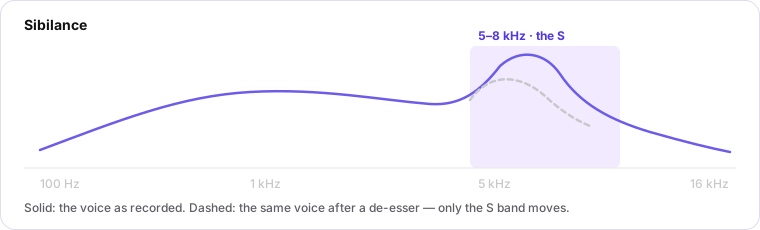
The harsh, hissing edge on S, SH and T sounds. It sits around 5–8 kHz, and once you notice it in a pair of headphones it is hard to stop noticing — it makes a voice tiring to listen to long before it sounds obviously wrong.
Sibilance is not a mistake you made; it is the shape of your voice meeting the shape of your microphone. Bright condenser mics and close positioning both push it, and any EQ that adds "air" or "presence" pushes it further.
It gets worse after processing. Noise removal and enhancement lift high frequencies along with everything else, so a recording that was merely crisp can come back spiky.
A de-esser is the tool for it: a compressor that only reacts to that narrow band, so the S is tamed and the rest of the voice is untouched. Cast has one in the lane's Advanced rack, and it has an intensity control precisely because the right amount is a matter of taste.
Last updated