


Universal Music and Sony Music say Suno copied 60,202 recordings to train its AI music models without permission. The list that ties Suno to BTS and Psy includes “Gangnam Style”, “Gentleman”, two BTS collaborations and a 2NE1 feature, Korea JoongAng Daily reported. The Korean labels and agencies behind these artists didn’t know until the paper told them. This post is for creators who make music with Suno, and for rights holders who just found their catalogue in someone else’s court filing. It covers the full timeline, what the list proves and what it doesn’t, and what to do this week.
How the labels found BTS and Psy songs in the Suno training data
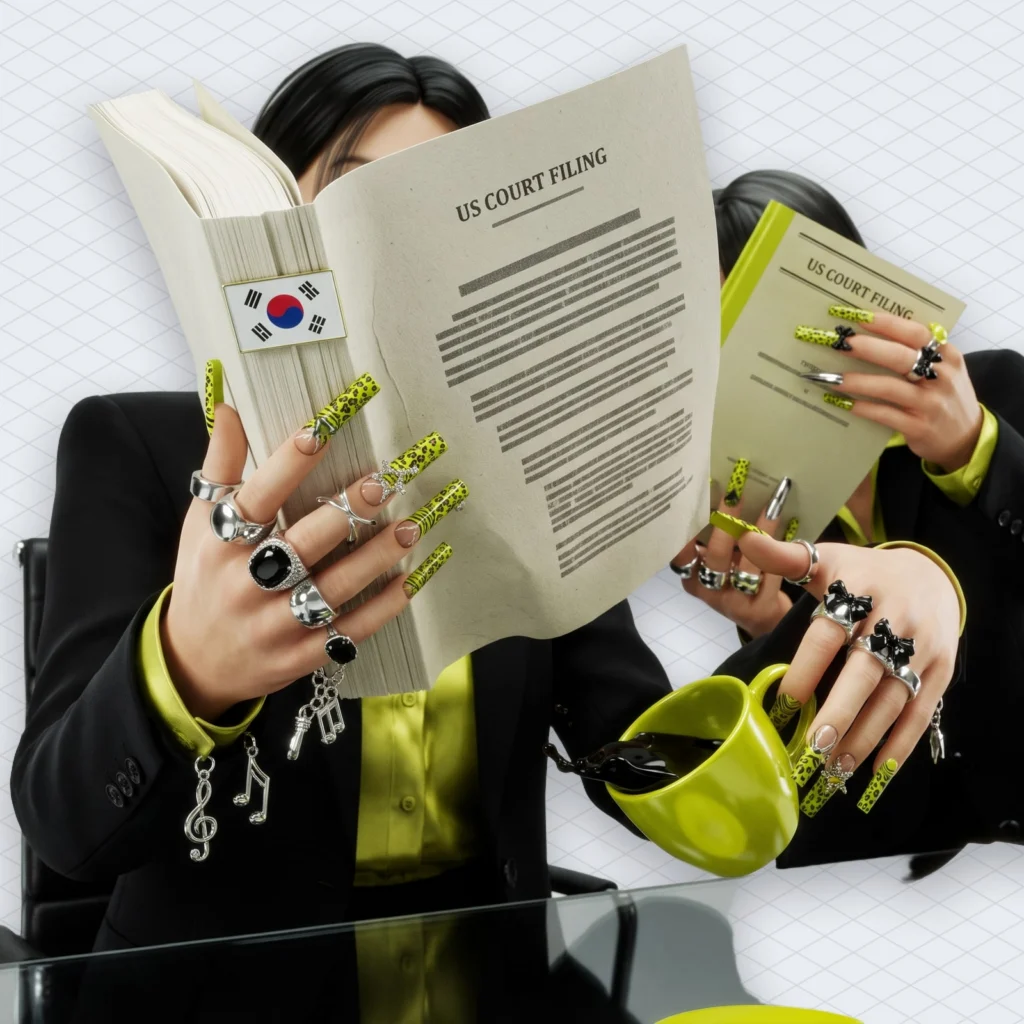
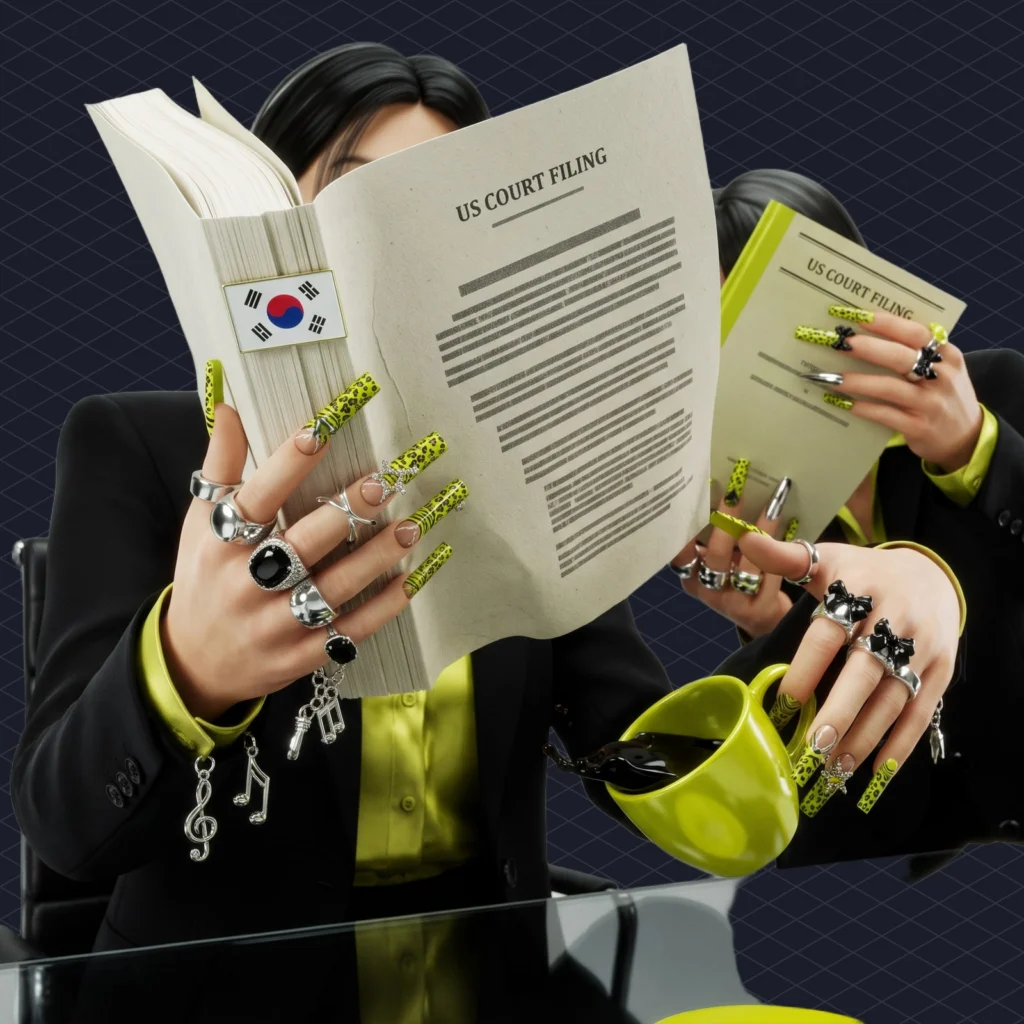
The named tracks are “Gangnam Style” (2012), “Gentleman” (2013), “Bad Decisions” (2022) by BTS, Benny Blanco and Snoop Dogg, “Waste It On Me” (2018) by Steve Aoki featuring BTS, and will.i.am’s “Gettin’ Dumb” (2013) featuring 2NE1. All of them sit on the list the labels filed in September in the US District Court for the District of Massachusetts. That’s two Psy singles and two BTS collaborations in a Suno court file, which is not where anyone on those teams expected to find them.
The labels didn’t guess. US civil cases have discovery, the stage where a court lets each side demand evidence the other side holds. According to JoongAng Daily, audio experts hired by Universal and Sony got access to Suno’s secure facilities last year and examined its source code and training data. They took audio fingerprints from Suno’s files and matched them against recordings the labels own.
An audio fingerprint is an ID built from the sound itself, the same technology Shazam uses to name a song in a noisy bar. So the labels basically Shazamed Suno’s hard drives. Sixty thousand hits.
None of this means a court agrees that Suno trained on BTS or Psy without the right to. It hasn’t ruled on infringement yet, and Suno disputes the claims.
Gangnam Style made the list because of a distribution deal
The list only covers recordings that Universal and Sony control in the United States or manage exclusively. “Gangnam Style” is there because YG Entertainment signed a distribution deal with Universal covering markets outside Korea and Japan. A K-pop song with no US deal through those two companies couldn’t appear on the list at all, even if Suno trained on it.
So the BTS and Psy tracks are the floor of what Suno may have used, not the ceiling. JoongAng Daily notes that nobody can count how many Korean songs went into AI training unless Korean labels sue themselves. (That’s a strange situation: the most complete inventory of K-pop in an AI dataset is whatever two American record companies happen to distribute.)
The labels say the same about the whole list. Their complaint calls the 60,202 recordings “only a small portion” of what Suno allegedly used, Digital Music News reported.
What happened so far, from the first Suno suit to the BTS and Psy list
- June 2024: Universal, Sony and Warner sue Suno in Massachusetts over AI training.
- August 2024: in its answer, Suno says it had to show the program “tens of millions of instances” of recordings.
- 2025: label-hired experts inspect Suno’s training data and source code under discovery.
- November 25, 2025: Warner settles and signs a licensing partnership with Suno.
- July 2026: 404 Media reports leaked Suno code with a “youtube_music” file logging “2,013,545 music clips”, per Music Business Worldwide.
Then the summer got busy.
- July 31, 2026: a Munich court rules largely for GEMA against Suno.
- September 1, 2026: Suno admits it obtained YouTube audio for training using YT-DLP.
- September 18, 2026: Universal and Sony file a second suit over 60,202 recordings.
- October 20, 2026: Suno answers the second suit and calls its use fair use.
- October 28, 2026: JoongAng Daily reports that BTS, Psy and 2NE1 songs are on the Suno list.
Suno admits the YouTube downloads and still calls it fair use
YT-DLP is a free, open-source tool that downloads video and audio from YouTube and other sites. Suno’s September 1 answer says it “admits that audio data was obtained from YouTube for use as training data using YT-DLP”, Music Business Worldwide reported. It also argues the labels lack standing to bring the stream-ripping claim.
The October 20 answer goes further. In it, Suno admits it “has not deleted all of the sound recordings it has used to train its AI models”, according to MBW. The company also concedes the labels’ analysis “purported to identify millions of copyrighted works” they claim to own.
Suno’s defence hasn’t changed: the training process creates something new, and that is “quintessential fair use”. A German court has already heard that argument. In Munich, judges rejected it in the GEMA case and found Suno had circumvented YouTube’s download protection. That ruling applies in Germany and isn’t final, but it’s the only court decision on Suno so far.
Korea learns about its own songs from a US court filing
The Korea Music Copyright Association (KOMCA, which manages rights in Korean musical works) told JoongAng Daily: “We believe there is a possibility that a significant number of [Korean] musical works have been used for AI training.” It added that it is “considering taking legal action, if necessary.” No Korean label behind BTS or Psy has taken action against Suno yet.
This is the same KOMCA that recently froze 24 billion won in Shorts royalties, so it can move when it wants to. Korea is also the market where an AI-sung song reached No. 3 on Melon. The country is both using Suno and, apparently, inside it.
What the Suno BTS and Psy list means for creators
If you make tracks on Suno, the legal fight over BTS and Psy recordings is about the models and not about you. But the details still matter. Suno says its current v6 model “was trained on content licensed from our partners.” The labels call v6 “the fruit of the same poisoned tree”, arguing that older models passed what they learned on to v6, as Digital Music News reported.
Suno has also said v6 learned from “creations and preference signals” from its users, per MBW. So if you used it, your prompts are part of the story too.
The money involved is huge. Universal and Sony seek up to $150,000 per infringed recording. Multiply that by 60,202 and the figure stops looking like damages and starts looking like a country’s budget.
Claims on uploads are already common. In Mubert’s own data from the last 28 days, about one in four tracks run through our copyright checker came back with a rights holder’s claim (25.8%, slightly down from 26.5%).
What we think about the size of this
We’ve read a lot of AI training filings this year. Most of them are lawyers arguing over principles. This one is an inventory. Fingerprints, file names and a two-million-clip YouTube folder are harder to argue with than a theory. The fair use question is still open in the US, and we’re not judges. But “we learned statistical patterns” sounds different once the other side can list the patterns by ISRC (the code that identifies each recording).
The BTS and Psy part of the Suno story shows the real problem. Rights holders worldwide may only learn what an AI company used if a big US label happens to share the catalogue and decides to sue. Everyone else just gets a newspaper call. Our earlier post on the deposition fight in this case shows the labels digging deeper, and the Elvis suit against Anthropic shows the same playbook spreading.
What to do this week
If you distribute music made on an older Suno model, write down which model made each track and keep the generation dates. Rights holders with Korean or other non-US masters should ask their distributor which territories its US partners control, because that decides if those songs could show up on a list like this. YouTube uploaders can check each track before they publish. The labels’ experts Shazamed Suno’s hard drives and found Psy and BTS, so do it to your own uploads first.

 Who we are


