
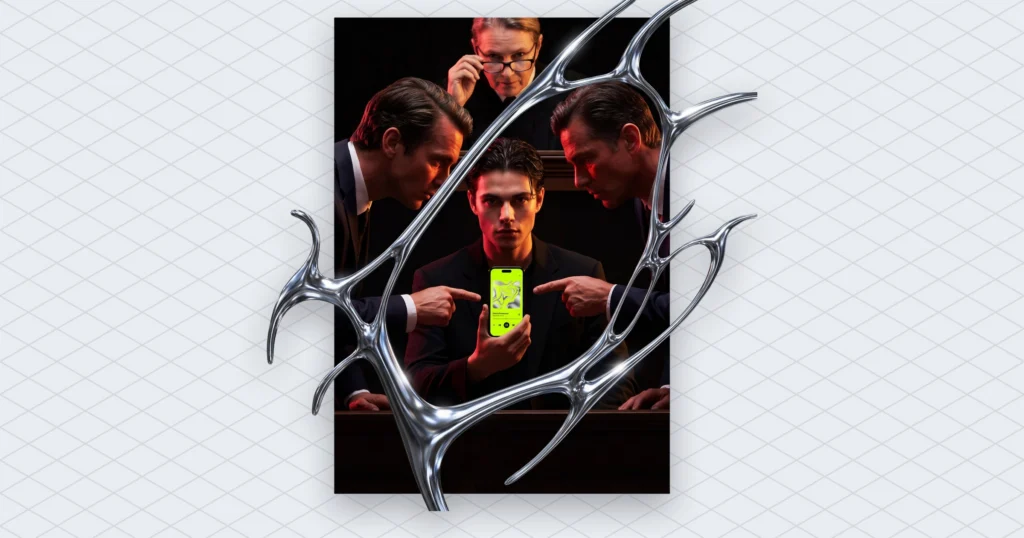
The Suno fair use defense now has to survive a deposition about one deleted post. On October 26, a federal magistrate judge in Massachusetts let Universal Music Group and Sony Music question C.C. Gong, a former principal at Suno’s lead investor Menlo Ventures, about her February post saying she had moved most of her listening to Suno. Below: the full timeline, why one post matters in court, and what it means if you release AI music.
Here is the post in full: “I’ve personally shifted most of my listening to Suno. I was so tired of Spotify giving me the same overplayed recommendations.”
That’s two sentences. It may be the most expensive music review anyone has written. It also got deleted, which has never once worked on the internet.


A judge lets the labels question Suno’s investor under oath
Lawyers for UMG and Sony filed their motion on Friday, October 23, Music Business Worldwide reports. Magistrate Judge Paul G. Levenson granted it on Monday. Three days, start to finish. The order lets the labels serve a deposition subpoena on Gong and question her within 30 days. A deposition is sworn testimony taken outside the courtroom: lawyers ask the questions, a court reporter types every answer, and nobody gets to delete anything afterwards.
Digital Music News reports the same timeline in case 1:24-cv-11611. It adds that Menlo or Gong could still try a motion to quash. That’s a request to cancel the subpoena.
Suno did not oppose the motion. It did ask for a statement of its position in the filing, and that statement is a small masterpiece of legal shrugging. Suno said it had kept to every deadline and “believes those deadlines should bind all parties equally”. Then it deferred to the court. It “takes no position on the subpoena’s propriety”, it added, and will not limit any objection Gong or Menlo raise, “including by motion to quash.” (Translation: we’re not objecting, but if someone else wanted to, we wouldn’t stop them.)
None of that statement mentions the Suno fair use defense. That defense is the whole reason the labels want Gong.
The Suno fair use defense rests on the market question
Fair use is the part of US copyright law that sometimes allows use of a protected work without permission. Four factors. They sit in Section 107 of the Copyright Act, and the fourth one, the one this fight is about, is “the effect of the use upon the potential market for or value of the copyrighted work”. Put simply: does the new thing replace the old thing people used to pay for?
Suno’s answer has been no. The Suno fair use defense argues that its output creates something fundamentally new rather than a substitute for recorded music. MBW made the point in an open letter to Suno CEO Mikey Shulman back in March. One line stung. It read: “Your own investor just told the world it is a replacement.”
The labels now say the same thing in a court filing. Gong’s post, they argue, “bears directly on the effect of Suno on the market” for their recordings, and thus “on the fourth fair use factor”, which happens to be where the Suno defense lives.
What happened so far
None of these steps mention the Suno fair use defense by name. Every one leads back to it. The story starts with a funding round and then runs through what feels like a thousand emails between lawyers, with dates taken from the motion as reported by MBW unless noted otherwise.
How a funding round and one post started it
- 19 November 2025: Menlo Ventures announces it led Suno’s $250 million Series C. MBW reports the round valued Suno at $2.45 billion.
- Also in November 2025, Warner Music Group settles with Suno as part of a licensing deal and leaves the case.
- February 2026: Gong posts about moving her listening to Suno. On 26 February, Ed Newton-Rex, CEO of Fairly Trained, writes that the tweet “will surely be used in court one day,” Futurism reports. Later the post disappears.
- March 2026: MBW publishes its open letter to Shulman.
- August 2026: The labels add a claim that Suno got around YouTube’s anti-download technology to obtain recordings, which lawyers call the “§ 1201 claim” after the anti-circumvention section of the law.
- 20 August: The labels subpoena Menlo, asking for testimony on topics including Gong’s post.


How the subpoena fight ran past the deadline
- 24 September: Menlo’s counsel says the firm cannot get the information.
- 26 September: The labels reply that Gong is a current Menlo employee and that a reasonable investigation “requires only that Menlo ask her.”
- 30 September: Fact discovery closes for everything outside the § 1201 claim. Gong leaves Menlo.
- 5 October: Menlo agrees to provide a witness on how the post went up and came down. Not on her listening.
- 12 October: Menlo tells the labels Gong has left, the first they hear of it, and the labels notice a subpoena to her the same day.
- 13 October: Menlo’s counsel says they are “working to confirm” they will represent Gong, and asks the labels not to contact her directly.
- 23 October: UMG and Sony file.
- 26 October: Judge Levenson grants it. The 30 days start.
Why one deleted post matters for the Suno fair use defense
A tweet is not market data. One person’s listening habits prove very little about a market, and if this case turned on a single investor’s playlist, we would worry about the legal system in general.
But this isn’t any listener. She was a principal at the firm that led a $250 million round. Presumably that firm looked hard at usage. Menlo’s own announcement says listeners usually find Suno through songs other people share. So her post sits right on the question the fourth factor asks, which is the whole problem for the Suno fair use defense.
Notice what Menlo offered a witness on: the posting and the deletion. Not the listening. The listening is the part the labels want.
We’ll admit some sympathy for the complaint itself. Plenty of us have opened a streaming app, scrolled past the same twelve recommendations, closed it again, and then opened it ten minutes later hoping the algorithm had had a change of heart. It hadn’t. Fixing that would be a nicer job than being deposed.
Anyway.
The bigger fights are over numbers, not posts. According to Digital Music News, the AI side wants play-volume data from the Mechanical Licensing Collective to push back on claims of royalty dilution and market replacement. UMG and Sony, meanwhile, want documents on DistroKid’s AI-detection tool. They have also filed motions to compel against Suno investors Bond Capital, Lightspeed Venture Partners and Menlo itself. Lightspeed, which led Suno’s Series B, moved to quash first. One deleted post won’t decide the Suno fair use defense. Still, it hands the labels a human example to set beside the spreadsheets. Judges remember those.
Update, October 27: the subpoenas now run both ways. Suno has served a deposition subpoena on Apple, Digital Music News reports. It wants Apple to testify on whether Apple Music could stay commercially viable without the major labels’ catalogues, on its licensing, royalty and generative AI talks with UMG and Sony, on royalty rules that treat AI and non-AI audio differently, and on how common streaming fraud is on the service.
Apple has asked a federal court in California to quash the subpoena or grant a protective order. It calls the requests “irrelevant, overbroad, and disproportionate” and says it already handed both sides data on Suno-generated tracks, after more than a year of cooperation. The motion is set for December 1. Judge Susan Van Keulen recused herself on October 21, so another judge will hear it.
The MLC fight is still open too: Suno’s motion to compel asks for streaming play-volume data from 2021 to the present, and the MLC has not produced it, DMN adds. From Menlo, the labels want “ALL DOCUMENTS and COMMUNICATIONS RELATED TO copyright law in relation to SUNO”. Both sides are now chasing the same thing: proof of what Suno does to the market for recorded music.
Update, October 28: more of Suno’s investors are being pulled in. Matrix, a longtime Suno backer and one of at least seven Series D participants facing subpoenas, has pushed back against a production request from the labels, Digital Music News reports. It has not filed a motion to quash yet. Billboard has published a list of every company now fighting subpoenas in the case.
The labels’ papers on Bond Capital, which led Suno’s $400 million Series D in June, show what they want from investors. “An investor leading a multi-hundred million dollar funding round in Suno in 2026 necessarily asked about those [existing copyright infringement] claims, and Suno necessarily answered,” UMG and Sony wrote. They say Bond agreed to hand over all its communications with Suno about the platform’s legal risks and its possible effect on the music market. They also want summaries of investment calls and meetings and Bond’s internal projections of Suno’s impact on the music industry. That is the fourth fair use factor again, this time read from an investor’s files. Separately, Korea JoongAng Daily reports that songs by BTS and Psy are on the labels’ list of 60,202 recordings; we cover that list here.
Update, October 29: Suno has answered Apple. In a 24-page opposition filed on October 27, it argues that the information it wants is central to its fair use and copyright misuse defenses, is available only from Apple and is covered by a robust protective order, Digital Music News reports. Suno has cut its demand to four modified deposition topics: Apple Music’s current licensing talks with UMG and Sony and any “artificial intelligence initiatives” discussed in them, Apple Music’s projected commercial viability without the two majors’ catalogues, how common streaming fraud is on the service and how it is handled, and Apple’s communications with the labels about the case and Suno, with agents such as the RIAA in scope.
For the fourth fair use factor, Suno points to Apple’s AI contract terms, including guaranteed minimum royalties and “contractual provisions that specifically exclude AI-generated content from the royalty pool”. Its misuse argument goes further: Suno says UMG and Sony use their must-have catalogues to win anti-AI concessions from streaming services, and use streaming fraud to justify keeping out non-infringing music. Apple’s motion called the topics “irrelevant, overbroad, and disproportionate to the needs of the case” and said they reach its highly confidential, proprietary information. The hearing is still set for December 1. Elsewhere in the case, DistroKid’s deadline to answer the labels’ document demand has moved from November 4 to November 6, and Suno and the MLC have proposed response deadlines that run into mid-November.
Update, October 30: DistroKid has two more days. A newly filed and approved stipulation gives it until November 6, instead of November 4, to respond to UMG and Sony’s demand for documents on its AI-detection data, Digital Music News reports. The parties gave no reason for the extension and told the court they “are working on a resolution”. The subpoena asks for the share of DistroKid recordings flagged as AI-generated, the streams and royalties those recordings earned, and how many of them were made with Suno.
DistroKid is not a defendant in this case, so the labels asked the federal court in Manhattan, where DistroKid is based, to enforce the subpoena (Hypebot). DistroKid’s public line so far is that it “is a third party in the ongoing litigation between Universal Music Group, Sony Music and Suno”. It is also being sued by UMG directly, in Delaware, and it has just gained a new minority owner: Create Music Group bought a stake in DistroKid.
What the Suno fair use defense means for people releasing AI music
Nothing changes this week. Nobody has ruled on fair use, the deposition hasn’t happened, and a motion to quash could still delay it. Still, your Suno catalogue now leans a little on how an ex-investor explains her playlist. We’ve watched that kind of risk turn into real takedowns before: see how DistroKid pulled songs over UMG’s lawsuit and the Reservoir complaint covering 1,050 songs.
Some homework is worth doing now. Read your tool’s terms on ownership and commercial use. Save your prompts, dates and project files. Then find out where the tool’s sound actually comes from, because that is now a question people answer under oath, with a court reporter typing. If the Suno fair use defense loses, those notes are what you’ll want on hand.
Claims hit plenty of music that has nothing to do with AI. In Mubert’s own data for the last 28 days, about one in four copyright checker results found a rights holder’s claim (26%, down slightly from 26.8%). For another case that turns on fair use, read our post on the Anthropic lyrics hearing.
Gong said she was tired of Spotify serving the same overplayed recommendations. The court’s recommendation is a long afternoon with a court reporter, and every single question will be about her listening. No shuffle.

 Who we are