

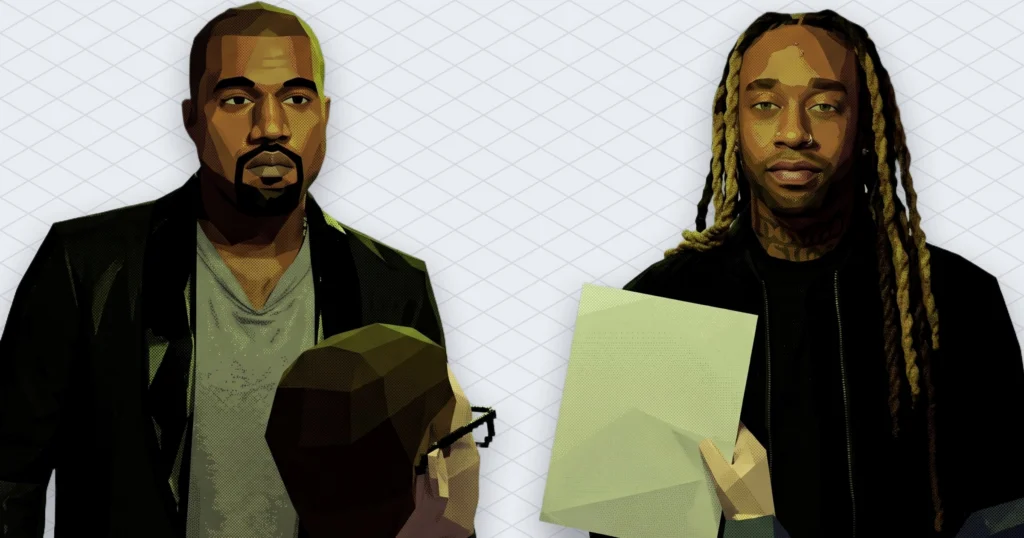
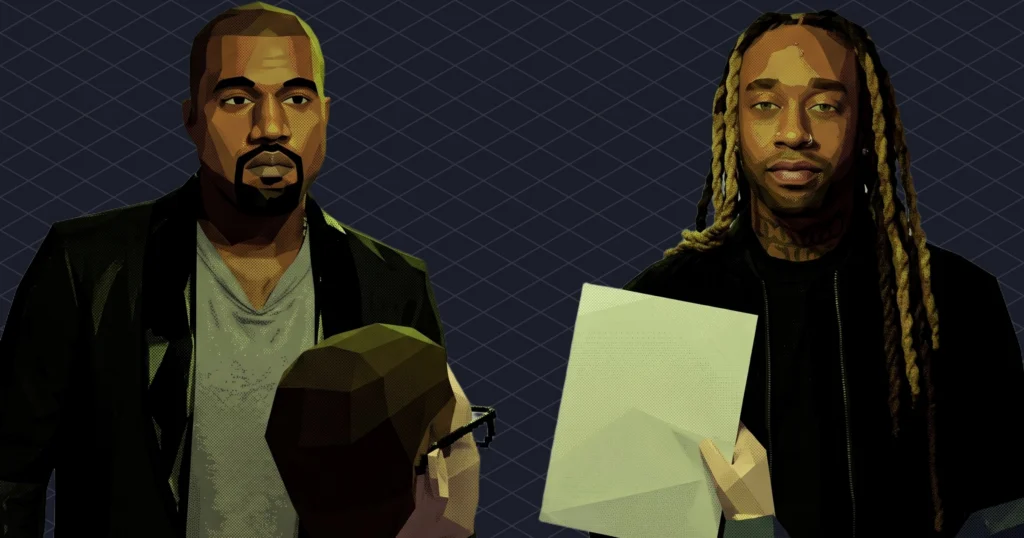
Producers Jae Deal and Marlon Barrow filed the Vultures lawsuit in a Los Angeles federal court on November 6, 2026. They say Ye and Ty Dolla $ign built “Vultures” on their 2018 recording “Joint 2” without a licence or any payment. Barrow says he texted Ty an MP3. By the producers’ account, that MP3 became the title track of a Billboard 200 No. 1 album. Below: who is suing, the timeline, the money and what beatmakers who text files to friends should learn.
According to the complaint, it all started with a phone call.
The Vultures lawsuit says a texted MP3 is not a licence
The Vultures lawsuit names Ye, Ty Dolla $ign, Yeezy Record Label LLC, Yeezy LLC and distributor Create Music Group, Music Business Worldwide reports. Barrow, known professionally as Marlonwiththeglasses, owns 50% of Joint 2 and Deal owns the other half. That covers the composition and five separately mixed stems. (Stems are the individual instrument tracks of a mix: here Rhodes, flutes, piano, brass and strings.)
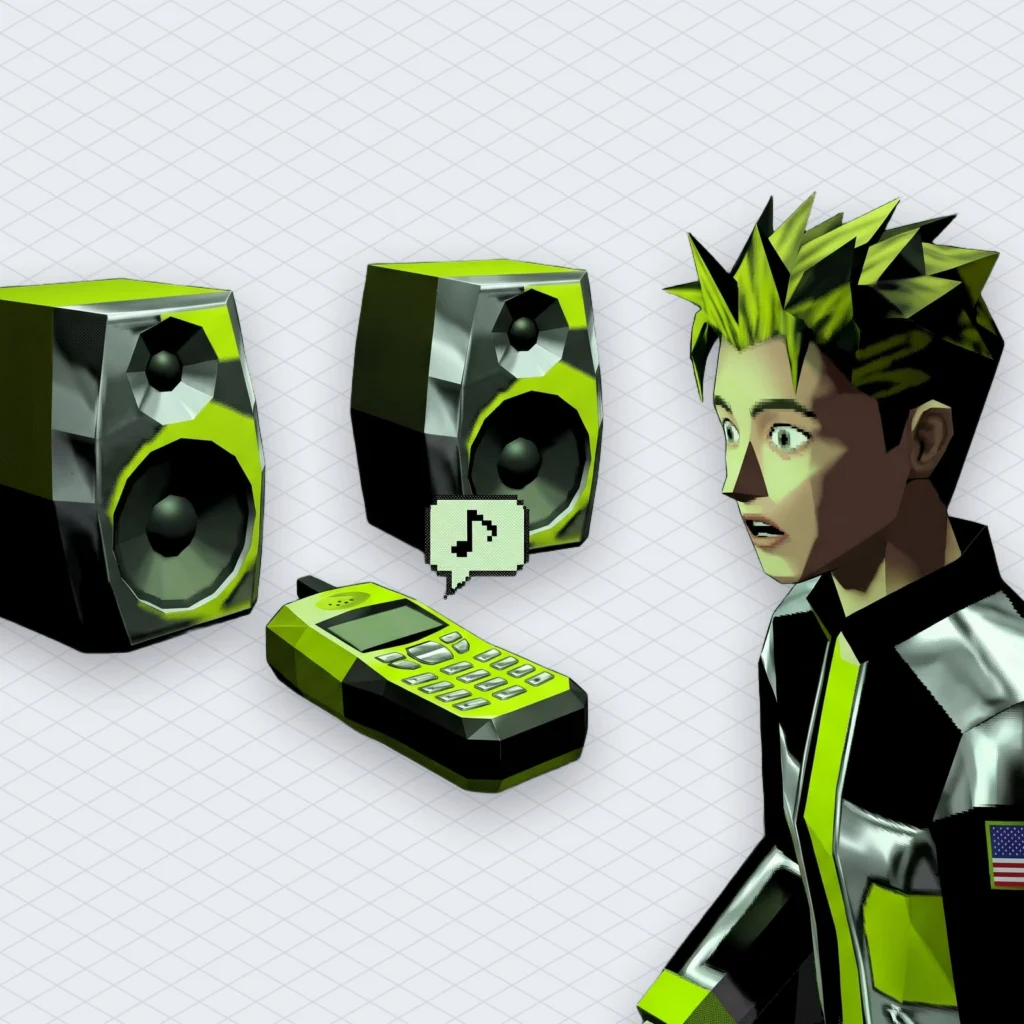
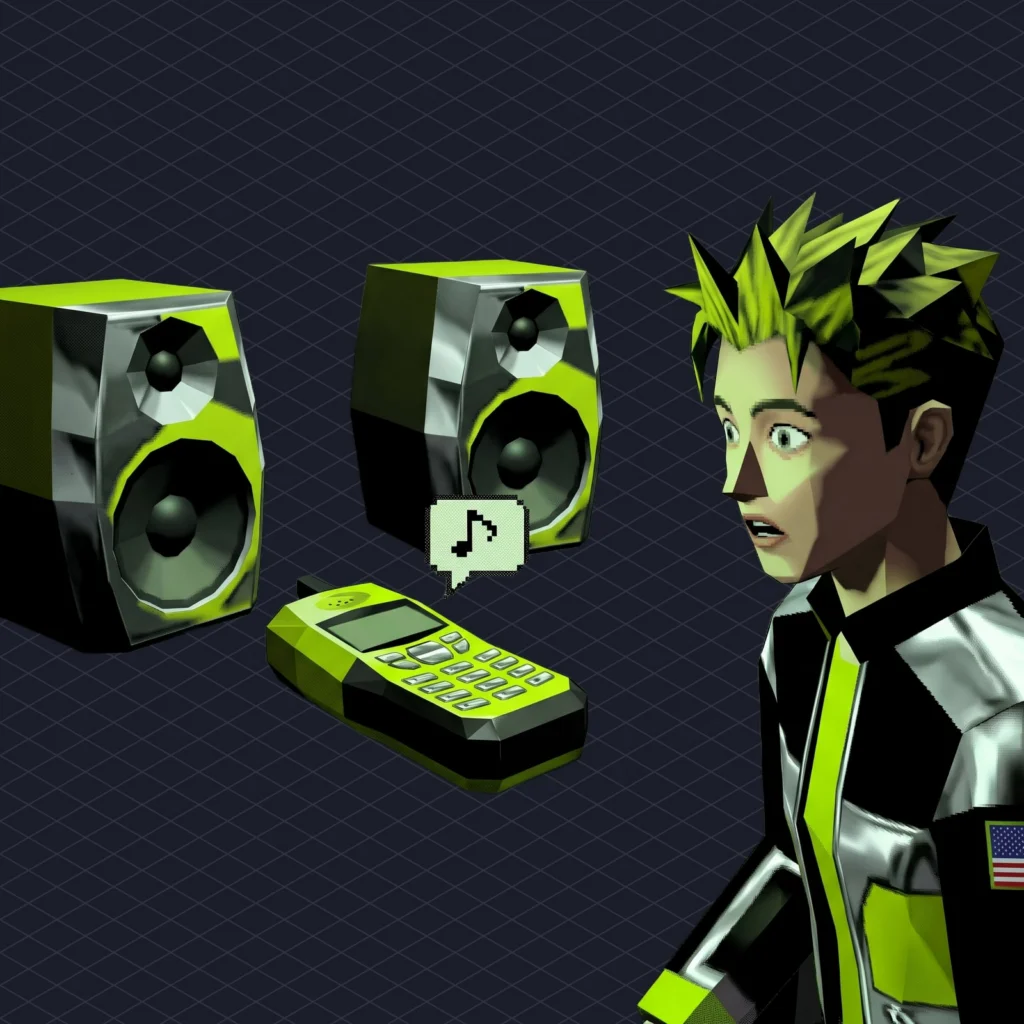
The complaint says Barrow and Ty share “a close personal and professional relationship spanning decades.” During one call, Ty heard the music playing in the background on Barrow’s end. Then he asked to visit the studio. Later he asked for a copy “to potentially use on his forthcoming album.”
So Barrow sent an MP3 by text. The complaint says this came “with the understanding, consistent with industry practice, that higher-quality versions and stems would be provided only upon execution of a written agreement.” But nobody signed one. Barrow also refused Ty’s later requests for the stems. The producers believe Ty passed the MP3 on to Ye.
So the case rests on one line: the MP3 was a preview, and the stems were the deal. Complex, which also obtained the complaint, reports the same sequence and says the plaintiffs want a jury trial.
What happened so far
The Vultures lawsuit covers eight years, from a finished beat to a filed case.
- November 2018: Deal and Barrow finish Joint 2.
- Around November 18, 2023: two versions of Vultures come out. One features Bump J and Lil Durk, the other Bump J alone.
- Same release: Barrow gets a producer credit and no money. Deal gets neither.
- Around December 15, 2023: Deal starts takedown attempts through Create Music Group, YouTube and Spotify.
Then came 2024.
- Around January 11, 2024: 88-Keys, named as Yeezy’s Head of Music, contacts the pair. They say they own the music and never authorised it. Their registration for Joint 2 takes effect that same day.
- Around February 6, 2024: Vultures (Havoc Version) appears on the Vultures Pack EP.
- Four days later: Vultures becomes the title track of Vultures 1. It tops the Billboard 200.
- March 2024: Deal releases Joint 2 himself.
- October 2024: Yeezy’s then-attorney emails “a buy-out settlement offer.” Deal says no.
- July 9, 2025: the defendants register the Vultures works. The producers say the filing omits Deal and falsely claims Barrow transferred his rights.
- November 6, 2026: the Vultures lawsuit is filed in the Central District of California, per Bloomberg Law.
There is no public reply yet, since none of the three reports includes a response from Ye, Ty Dolla $ign or their teams. This lawsuit is also not the first dispute over music on the Vultures projects, MBW notes.
The Vultures lawsuit follows the money to merch and listening parties
The Vultures lawsuit counts more than 130 million Spotify streams, but its biggest numbers sit elsewhere. It says Vultures merchandise grossed more than $100 million in total. Ticketed listening parties from December 2023 to around March 2024 allegedly grossed over $12 million. And that excludes the Rolling Loud California headline fees. At those events, the filing says, West and Griffin “merely hit play.”
That phrase is doing a lot of work. Song and merch share a name, the producers argue. So they call them “parts of an indivisible whole in the eyes of the public.” If a court accepts that link, MBW notes, the profits at stake could go well beyond streaming income.
One figure needs an asterisk. The complaint says Ye claimed a Vultures storefront sold over $19.3 million between December 12, 2023 and February 12, 2024. Ye did post a $19.3 million figure on Instagram in February 2024. At the time, though, it was widely reported as yeezy.com’s sales in roughly 24 hours after his Super Bowl ad. Those sales also included the Yeezy Pod shoe and other products. (Two months and one day are different time spans. A judge will probably notice.)
$150,000 per work depends on a registration date
As an alternative to damages and profits, the Vultures lawsuit asks for up to $150,000 per willful infringement. It counts the recording and the composition separately. The ceiling is real, because 17 U.S.C. § 504(c) lets a court award up to $150,000 per work for willful infringement. Statutory damages count per work, not per release. (Eight Mile Style used the same per-work maths at a much larger scale in its $41 million case against Suno.)
Then the snag. Joint 2’s registration took effect on January 11, 2024, nearly two months after the first Vultures release. Under 17 U.S.C. § 412, that usually rules out statutory damages and attorney’s fees for an unpublished work. Ninth Circuit precedent binds the Los Angeles court. It also treats an ongoing series of the same infringement as starting with the first one.
So the complaint argues each later release, with its own ISRC, was “a new and additional copyright infringement.” (An ISRC is the code that identifies a single recording.) If the judge disagrees, the $150,000 figure drops out and the case turns on profits.
The producers also want distribution stopped. They ask for every copy, master, stem and session file with their music to be impounded or destroyed. If they win that, the title track of a No. 1 album leaves streaming services.
What we think about the Vultures lawsuit
The Vultures lawsuit is a set of allegations, and nothing is proven yet. Still, anyone who makes beats will know the pattern. A friend asks for something to try. The file travels. The song comes out, and the paperwork starts after release. Barrow did get a credit, though. A credit is a line of text, and rent doesn’t accept it.
We think the producers are right on the principle, even if they lose on statutory damages. Having a file on your phone lets you hear it. It does not let you release it. The complaint calls this “the essential right of any artist to determine when, how, and by whom their creative work is used.”
A confession: we have texted demos to people we trusted and never written a word about terms. It always worked out, which is how you learn to skip the paperwork.
Uncleared music turns up more often than you’d expect. Here is Mubert’s own data from the last 28 days. About one in four tracks (24.6%) put through our copyright checker came back with a rights holder’s claim. That is down from 26.8%. For how platforms now swap claimed music out after the fact, see our post on YouTube’s Replace Song tool.
The background-of-a-phone-call detail deserves a moment. Most people’s calls pick up a dishwasher. Barrow’s apparently picked up a future Billboard No. 1.
Anyway.
What to do before you send the next beat
The Vultures lawsuit points at five weak spots, and each one has a fix. First, send a tagged or low-quality preview and keep the stems until terms are signed. That is what Barrow says he did. It gives you evidence, but it won’t stop anyone.
Then write the terms in the same thread as the file. Something like “listening only, no release without a signed agreement” will do.
Register the recording early, too. Section 412 gives you three months after publication. For unpublished work, that protection is gone once someone else starts using it first.
Also keep timestamps, session files and every takedown request. This complaint leans on all three. And if your beat comes out without a deal, document the credits and contact the label and distributor straight away.
Send the MP3, keep the stems. And next time a friend hears your beat during a phone call, bring up the paperwork before the studio invite.
Cover: illustration based on a photo of Kanye West by David Shankbone, public domain and a photo of Ty Dolla Sign by Toglenn, CC BY-SA 4.0.
 Who we are


