
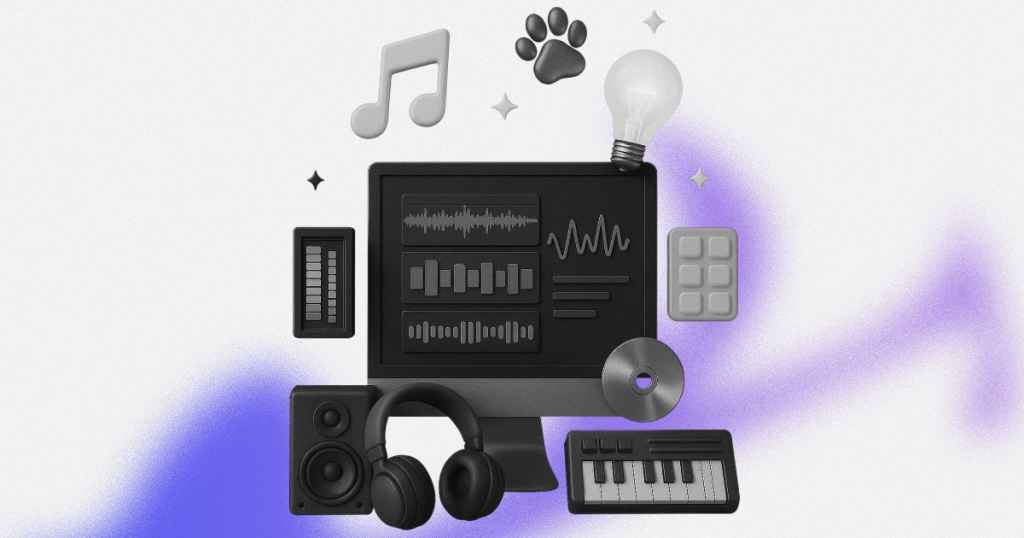
Short answer: To build an EDM track, pick a reference track, set your DAW to its tempo, and build in layers: drums first, then bassline, atmospheric textures, and melody. Arrange it as buildup, drop, buildup, drop, then outro. A reliable computer, honest headphones, and one DAW you know well matter more than lots of gear. Then finish the track.
EDM and its subgenres are on our list of the most popular music genres worldwide, so the audience for your first track is already there.
Walk into any festival and you’ll feel it: thousands of people moving as one to the EDM hit, hands in the air, completely lost in the music. You think to yourself, “I want to make something like this”.
The good news is that you don’t need a million-dollar studio to start making EDM and become a producer. A decent computer, some software, and the drive to experiment can take you pretty far.
Initial Stage to Make EDM
Before you even touch your first piece of equipment or download any software, become a student of the music you want to produce. Seriously, this matters more than most beginner guides admit. Choose five EDM tracks you absolutely love and listen to them differently than you normally would. Focus on one element at a time, like the kick drum pattern, how the bassline moves, and when new sounds enter the mix. Active listening will build your musical instincts.
The technical setup matters, but not as much as beginners think. A reliable computer, honest-sounding headphones, and one DAW you know inside and out will take you further than a room full of gear you don’t understand.
EDM Basics
You should first understand EDM frequency relationships and how electronic sounds interact in a mix. EDM producers usually have complete control over every aspect of their sounds.
Most EDM tracks operate in specific frequency zones:
- sub-bass (20–60Hz);
- bass (60–250Hz);
- midrange (250Hz–4kHz);
- highs (4kHz+).
Tracks produced within these zones translate well across different playback systems.
The beat is everything in electronic dance music. Most EDM tracks use what’s called a “four-on-the-floor” pattern, or a kick drum hitting on every quarter note.
Tempo comes next, because it largely decides the genre. Ableton’s Learning Music lessons put house at about 115 to 130 BPM, techno and trance at 120 to 140, dubstep at 135 to 145 and drum and bass at 160 to 180. Set your project to the tempo of your reference track before you program a single note.
Basslines in EDM provide low-end frequencies and create the groove that makes people move. The relationship between your kick drum and bassline determines whether your track feels tight and punchy or loose and unfocused.
Synthesizers produce sounds that don’t exist in nature, and a few mixing techniques keep those sounds from crowding each other:
- high-pass filtering on non-bass elements;
- careful stereo placement;
- dynamic EQ.
Master these concepts and you’ll easily turn the sounds in your head into reality, but remember that every element in your song should serve the dancefloor.
EDM Song Structure
EDM song structure is more predictable than most other music styles:
- intro (16–32 bars);
- buildup (8–16 bars);
- drops (16–32 bars);
- breakdowns.
The most reliable structure is ABAB: buildup (A), drop (B), buildup (A), drop (B), then outro. You can add bridge sections or vocal breaks, but the core principle remains: create tension, release it, then do it again.
Programs that Synthesize Sound and Audio Plugins
Producing EDM tracks starts in your DAW, or digital audio workstation, where you can record, arrange, edit, and mix your music all in one place. You can choose one of these popular DAWs or combine them:
- Ableton Live 12;
- FL Studio 2026 (Windows and macOS);
- Logic Pro (Apple only: Mac and iPad);
- synth plugins (Serum 2, Massive, Sylenth1, etc.);
- effects plugins.
Don’t collect every available one, but learn a core set of tools. Many legendary EDM tracks were created with surprisingly minimal equipment.
As of October 2026 the cheapest ways in are modest: Ableton Live 12 Intro costs $99, every FL Studio edition comes with lifetime free updates, and Logic Pro for iPad is a free download with in-app purchases. Serum 2 costs $249 and is a free upgrade for Serum 1 owners.
Creating Your First EDM Track
Every producer you admire began exactly where you are now, but they all started simple:
- Find a reference track.
- Build your track in layers, starting with the rhythm section, program a drum pattern, then add a bassline.
- Add atmospheric textures that make your track feel alive and don’t dominate the mix.
- Write melodic elements and don’t try to make every section different, as repetition with subtle variation is the EDM core.
The most important advice for you: finish the track. It’s tempting to perfect every sound before moving forward, but you’ll learn more from completing ten simple tracks than spending months perfecting one section.
Making EDM Music with AI with Mubert
You can make EDM without years of technical training using Mubert’s online music render tool and simply describing what you want to hear. Type something like “energetic house track with driving bassline and atmospheric pads”, set your duration and track type, and generate a complete song in seconds or explore curated EDM music playlists. You’ll hear structured, professional music that follows proper EDM arrangement principles and can then use your DAW to swap out elements or completely rearrange sections. The equipment requirements are minimal: just an internet connection and the ability to write clear prompts.
Conclusions
You don’t need to master everything before you can create something meaningful. Start with basic beat patterns, simple melodies, and the song structure principles we’ve discussed. Your skills will develop naturally through practice and experimentation.
Your first tracks won’t sound like Martin Garrix or deadmau5, and that’s perfectly normal. Every legendary producer has a hard drive full of early experiments they’d rather forget. The goal is understanding, not perfection. Each song you write teaches you something new about how EDM works, even if it never leaves your computer. Just trust your instincts and make music you genuinely enjoy.


 Who we are