


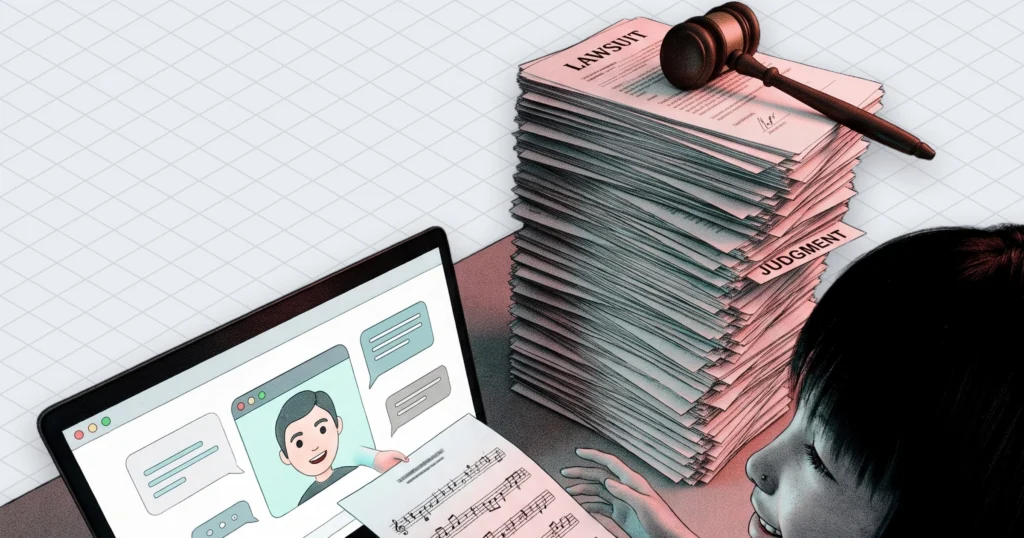
Suno has launched an MCP server, an early access connector for making songs inside Claude, ChatGPT, Gemini, Claude Code and Cursor. You never open Suno itself. MCP stands for Model Context Protocol. It’s an open standard that lets an AI assistant call outside tools while you talk to it. This post is for creators and developers deciding if the Suno MCP server belongs in their workflow, and it covers what the connector does, how to set it up, what it costs in credits, who owns the songs it makes and the label lawsuits still running behind all of it.
Before this, asking a chatbot for a song got you lyrics and a chord chart. That’s a song in the same way a recipe is dinner.


What the Suno MCP server does inside a chat
Suno’s release notes are dated Oct 28. The flow is simple. You describe a song in plain words, shape the lyrics and style with your assistant over as many messages as you like, and then the Suno MCP server makes the track without you ever leaving the chat window you were already typing in. You can also upload a voice memo or a loop and turn it into a full song. Covers, extensions and mashups of songs in your library work too. The MCP page adds one more feature: your saved Suno Voices can go on tracks.
Each song lands in your Suno library, and you can add it to a playlist from the chat. So the chatbot is a very polite front desk. The kitchen is still Suno.
Music Ally first reported the launch. It calls Suno one of the first major AI music tools to offer this kind of connection. The launch blurb says “Add Suno to your AI stack”. Sounds like a breakfast order.
Side note: MCP is also the Master Control Program, the villain in Tron that absorbs other programs to get stronger, and once you plug every app you own into one chatbot the name starts to feel a bit too accurate. Anyway.
How to connect the Suno MCP server, and which plans you need
No API key needed. Add https://api.suno.com/mcp as a custom connector, which is the chatbot’s term for an outside tool you plug in. Then sign in to Suno and approve the connection. In Claude Code it’s one command: claude mcp add --transport http suno https://api.suno.com/mcp. After that, /mcp handles the sign-in. Claude, ChatGPT, Gemini and Cursor each have their own menu path for this, and Suno’s page lists all of them, while Music Ally notes that other AI tools work too if you’re happy to fill in the connector settings by hand.
There are two gates. On Suno’s side, the Suno MCP server is a beta behind an early access sign-up. Still, the help FAQ says it works on every Suno plan, Free included. The second gate is your chatbot. Suno warns that some apps only allow custom connectors on certain paid plans. So a free Suno account can still need a paid chatbot.
The songs aren’t free either. They use credits from your Suno plan, the same as on suno.com. You can ask the assistant for your balance. Chat makes “again, but sadder” very easy to type at 1 a.m., hardly anyone keeps the first take, and every retry comes out of the same balance you would spend on the website. Mubert’s own data, last 28 days: creators who use our generator make 3.4 tracks each on average. Your credit balance doesn’t care that the fourth try was the good one.
What happened so far
The connector arrives in a busy season for Suno:
- June 2024: Universal and Sony first sue Suno. That case is still ongoing. Warner Music Group later settled and signed a licensing deal with Suno.
- Sept 9, 2026: Suno releases its v6 model.
- Sept 18, 2026: Universal and Sony file a new lawsuit focused on v6. They allege Suno took more than 60,000 songs. The real number could be in the millions, they say.
- Oct 27, 2026: Suno files a 24-page opposition to Apple’s motion to quash a deposition subpoena about Apple Music’s licensing talks with the labels, Digital Music News reports.
- Oct 28-29, 2026: Suno announces the MCP server beta in its release notes. Music Ally reports it a day later.
- Dec 1, 2026: The Apple subpoena dispute goes to a hearing.
The Suno MCP server arrives mid-lawsuit
About half a dozen lawsuits against Suno are pending in federal court in Massachusetts, according to Boston.com. One comes from Jason Isbell and three others, over commercial use of their identities. A German court also ruled in July that Suno had infringed copyrights. Meanwhile, the labels won permission to question an investor in their attack on Suno’s fair use defence.
Music Ally points to a specific problem. Connecting the Suno MCP server through Claude is especially sensitive for rightsholders, because Anthropic is being sued too. Reservoir actually filed against both companies on the same day. So one Claude chat with Suno connected now involves two defendants. It’s a toaster with a law degree that also happens to be on trial.
Nothing in the setup says this affects you as a user, but if a brand or client of yours is already nervous about AI music, learning that the track came through a chatbot doorway with two lawsuits attached will not calm them down.


Who owns a song made through the Suno MCP server
The connector runs on your Suno plan, so it follows Suno’s rules about rights. On the free plan, Suno keeps ownership of the songs, its ownership page says. Non-commercial use only. If you made the song while subscribed to Pro or Premier, you count as the owner, and you keep commercial rights to that song even after you cancel and drop back to the free plan.
Upgrading later doesn’t fix old songs. Suno’s help center says a subscription doesn’t automatically grant commercial rights to free-plan songs. Suno may grant them for specific songs. No guarantees. The Suno MCP server FAQ itself points to Suno’s Terms of Service for commercial rights. The connector has no licence of its own.
What we think about it
As an interface, the Suno MCP server works. Describing music is a conversation anyway. Chat is a natural place to sketch an idea while you’re writing a script or code. The tangle is timing, because the friendliest door into Suno so far opens while its biggest legal fights are still in discovery. (Discovery is the stage where both sides force each other to hand over evidence, which is what all those subpoenas are for.)
Developers should read the setup closely. It runs on a personal Suno sign-in, not a key. That makes it a tool for one person at a keyboard, not for shipping music inside a product. Fine for a placeholder track at a game jam. Not a backend. We covered that difference in five decisions to make before you put music in an app.
The settings that matter are the boring ones: your plan, whose credits you’re spending, which terms apply. A chatbot will happily help you write a song. It won’t tell you if you can monetize it.
What to do before you connect it
- Check your Suno plan before you make anything you might sell.
- Confirm your chatbot plan allows custom connectors at all.
- Ask the assistant for your remaining credits before a long session, not after.
- Keep free-plan experiments apart from paid-plan work, because the rights don’t move across later.
- Read Suno’s terms once instead of asking the chatbot to sum them up.
The recipe can now cook itself. Someone still has to check who owns the kitchen.


 Who we are


