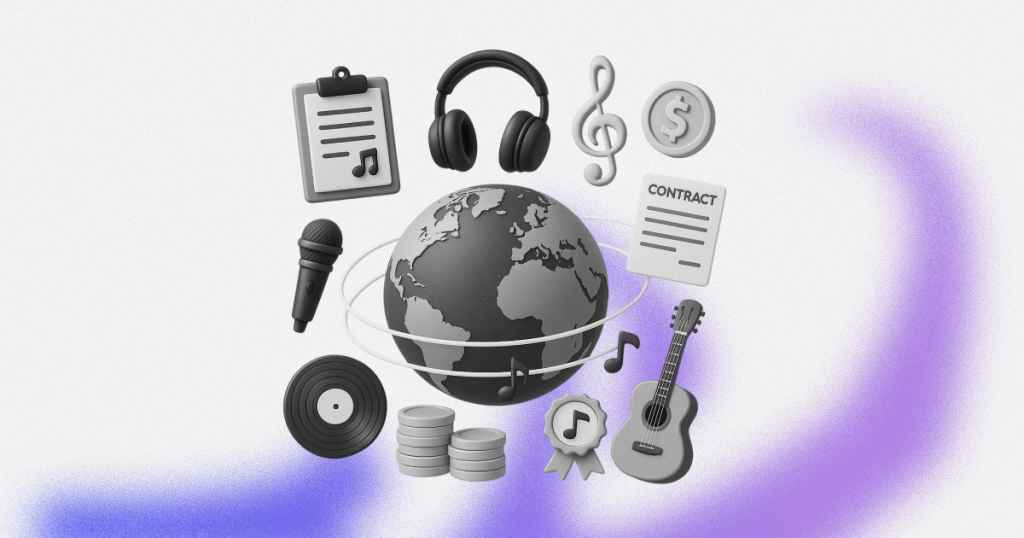
Most people misunderstand what “royalty-free music” really means. At first glance, “royalty-free” sounds like “free music,” but that’s the biggest misconception among content creators. Many people assume they can use a royalty-free track without paying anything. In reality, the term is more nuanced, and knowing its true meaning can help you avoid copyright strikes and potential legal trouble.
What is Royalty-free Music?
Normally, if you wanted to use a popular song in your video, you’d need to pay the artist royalty fees based on how many people watch it, where it gets broadcast, and how long you use it. These fees go to the artist and copyright holders every time your content gets played.
Royalty-free licensing means you pay a single fee upfront, and that gives you the right to use the track without additional royalty payments. The artist still owns the copyright, which hasn’t changed, but they’ve agreed to let you use their work under specific terms without demanding ongoing fees. What changes is how they get compensated and how you access their music. Most royalty-free music services work through subscription models or individual track purchases, and each comes with certain license terms that explain exactly how you can use the music.
What are “Royalties”?
Royalty payments are ongoing payments made to rights holders whenever their copyrighted work is played, streamed, or used in content. For example, when a radio station plays a song, it pays royalty fees to the artist. When Netflix uses a track in a show, royalty payments flow back to whoever holds the rights. When you stream music on Spotify, a portion of your subscription fee becomes royalty payments to the artists whose music you play.
Is Royalty-free Music the Same as Copyright-free?
It’s easy to understand why people confuse these terms: they both have “free” in the name and sound like they should mean the same thing. But they’re completely different.
Royalty-free music isn’t free music. The artist still owns it, they still have copyright protection, and you still need a license to use it legally. When you use a royalty-free license, you’re getting permission to use the track without paying ongoing royalty fees, but the artist retains full copyright ownership. You pay once upfront for the right to use the track under specific terms, then you’re done with payments.
Copyright-free music is actually free to use because no one owns it anymore. This happens when copyright expires (usually 70 years after the artist’s death) or when creators deliberately release their work into the public domain. True copyright-free music can be used without any license, restrictions, or payments whatsoever.
Do Artists Earn From Royalty-free Music?
Yes, artists absolutely earn from royalty-free music, just not through traditional royalty payments. The meaning behind the term “royalty-free” is that content creators are free from paying ongoing royalty fees every time their video gets watched or their podcast gets downloaded. But the artist who created this track still gets paid; they just get their money upfront when you purchase the license. They don’t have to wait and hope their music gets popular to see income.
Most royalty-free services pay artists anywhere from 35% to 70% of each license sale. Some platforms work on subscription models where artists earn based on how often their tracks get downloaded by subscribers. The copyright always stays with artists, because they’re not selling their music, just licensing specific rights to use it.
Different Types of Royalty-free Music
So, what kinds of royalty-free music can you find out there?
- Free options are sometimes no cost, sometimes you need to credit the artist, and sometimes it’s only for non-commercial use.
- Paid royalty-free music means artists earn from each license sale.
- Background music supports your content without fighting for attention.
Commercial use of music gets its own category because the license terms are different, and artists charge more because they know you’re making money from your content.
Copyright stays with the artist. You buy the right to use their work, not ownership of it. But that’s fair: you just want to avoid claims and legal complications, and royalty-free delivers on that promise.
The Benefits of Royalty-free Music
Royalty-free music just makes sense if you create content regularly, and its benefits are obvious once you start using it:
- It’s legal. Artists keep their copyright, and you buy specific rights through a straightforward license.
- It’s cheaper than traditional music licensing. You get access to professional music for reasonable fees.
- It includes rights for social media, streaming platforms, and other distribution channels. You don’t need separate agreements for each one.
- It’s versatile. Artists work across all styles because they know creators need variety.
- You can download and use a royalty-free track immediately instead of waiting weeks for license approvals.
When you know your music is legally cleared with straightforward license terms, you stop second-guessing every creative decision, and that freedom to experiment and iterate without fear is what lets creators actually create.
What’s the Difference Between Royalty-free and Direct Licensing?
Royalty-free music operates through licensing platforms where artists upload tracks that anyone can license. You pay once for it and get clear rights to use it in your content. The artist gets compensated upfront through that license fee, but there aren’t any ongoing payments or royalty calculations to think about later. But what does direct licensing mean then?
It’s simple: you approach the copyright holder (the artist, their record label, or a publisher) directly to negotiate custom terms and work out a personalized agreement.
Artists make money from both models differently: royalty-free platforms give them a steady income from multiple license sales, and direct licensing provides larger payments for individual tracks but happens less frequently.
Meet Mubert’s Artists
Most royalty-free AI music platforms work the same way: you type in a prompt, the AI generates something, and you download it. But Mubert, an online AI music generator and music rendering tool, actually partners with professional artists like Baby Angel, Abyss X, Alex Kova, Haco, and many others, who contribute original samples and sounds, instead of just feeding AI algorithms with existing music (which raises all sorts of copyright questions).
These artists earn royalty payments when their samples appear in generated tracks. They keep their copyright, get fair compensation, and their creativity helps beginner artists take inspiration and create their own music. This benefits everyone: artists get ongoing income, and you get professional royalty-free music that actually supports the people who made it possible.
Mubert Sound App
You can also try out the Mubert Sound app available on both iOS and Android. It combines real-time music generation with streaming, all with clear royalty-free licensing.
Just download the app from Google Play or App Store, open it, and you can either type in what you’re looking for (“chill beats for studying” or “upbeat electronic”) and watch it generate a completely fresh track in seconds. Or if you’d rather just listen, there are different curated channels where the AI keeps the music flowing without ever repeating the same mix.
Every track you generate or stream includes royalty-free rights, meaning you can safely use it in videos, podcasts, or any other projects without the risk of copyright strikes. At the same time, artists who provide samples to the system receive royalty payments whenever their work is used.
Conclusions
In this article, we’ve explored what royalty-free music really means, the different types available, and why it matters. This model simplifies copyright challenges and eliminates the rising costs that have long frustrated creators. With straightforward license terms, both you and the artist are protected. It may not be revolutionary—but it’s effective.
 Who we are