
Drum and bass is British electronic music built on chopped-up breakbeats at 170 BPM and above, with a bassline heavy enough to move furniture. It grew out of the London rave scene in the early 1990s. Its most famous ingredient is a six-second drum solo recorded in 1969 by a soul band whose drummer never got paid for it. This post gives producers and creators the short history of drum and bass and a working method for a first track, without a 40-minute tutorial.
Drum and bass is breakbeat music at 170 BPM and up
Drum and bass comes down to two things: very fast drums and a deep, slow-moving bass. In the 2000s, “tempos of 170 beats per minute and above” became the norm, according to Beatport’s history of the genre. Before that, the tempo moved around a lot.
A “breakbeat” is a drum solo sampled from an old record, usually funk or soul, from the bar where the band drops out and only the drummer plays. Producers cut these solos into single hits, then rearrange the hits into new patterns. So the drums sound played, because they were. They just weren’t played in that order.
The odd part is how it feels. The hi-hats and ghost snares run at full speed, but the bass and pads tend to move as if the track were at half the tempo. So you can nod along at 85 while your feet try to keep up at 170. That gap is the genre in one sentence.
Most drum and bass tracks use a “two-step” pattern: a kick on the first beat, a snare on the second, a kick tucked in before the fourth beat’s snare. Everything else is decoration. There is a lot of decoration.
Six seconds from 1969 built the whole genre
The single most important sound in drum and bass is the Amen break. It’s a six-second drum solo from “Amen, Brother”, a 1969 B-side by The Winstons. Hip hop used it first. Then UK producers sped it up, cut it apart and made it the backbone of jungle and everything that came after (Beatport).
The drummer was Gregory C. Coleman. He died in 2006, and neither he nor bandleader Richard L. Spencer, who held the copyright, received royalties for the endless sampling, Mixmag reported. In 2015, UK breakbeat DJ Martyn Webster started a GoFundMe for Spencer. It raised £24,000.
That’s £24,000 for roughly three decades of other people’s records. (Divide it by the number of tracks that use the break and you get a figure that is technically a royalty, in the way a crumb is technically a meal.)
We once tried to spend an evening naming a drum and bass producer from the genre’s first decade who never touched the Amen. We came up with two names. Then we remembered one of them had a side project. Anyway.
The break worked because it has everything a chopper wants in a very short space. You get a punchy kick, a snare with a crack and a tail, a busy ride and a little stumble near the end. Each hit sounds different from the last, so every rearrangement sounds new. Coleman played a groove. A generation of producers treated it as an alphabet.
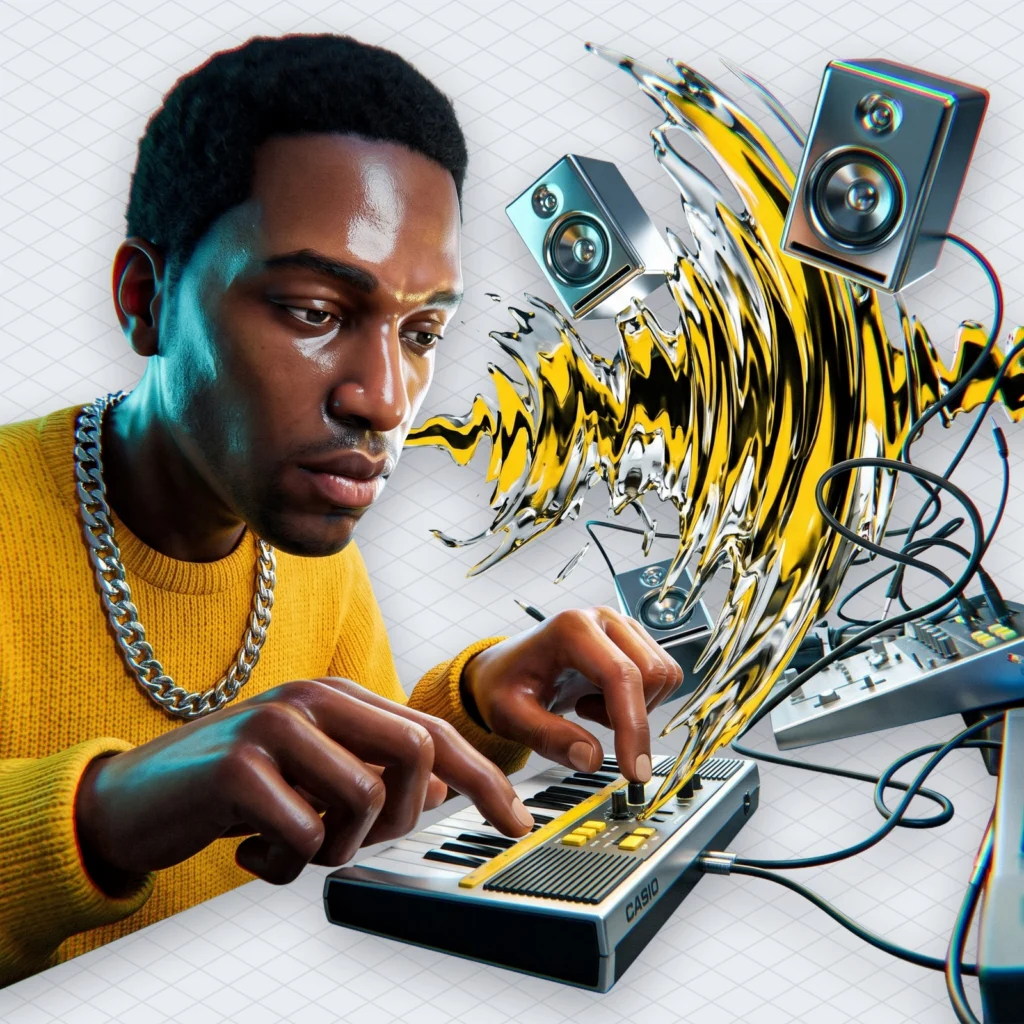
The Reese bass came from Detroit, on a Casio
The other half of the drum and bass sound is the Reese bass: a growling, slowly moving low note that seems to churn in place. It comes from “Just Want Another Chance”, a 1988 Detroit techno track Kevin Saunderson released on Incognito Records under the alias Reese, Mixmag’s feature on the sound explains.
He made it on a Casio CZ. He doesn’t remember whether it was the 1000, the 3000 or the 5000. So one of the most copied sounds in UK dance music came from a synth its inventor can’t fully identify, tweaked by ear (oscillators, resonance, decay) until it clicked.
The UK took six years to find it. In 1994, Ray Keith, recording as Renegade with Nookie engineering, put the Reese under the Amen break on “Terrorist”. Detroit supplied the bass, a 1969 soul record supplied the drums, and London glued them together at a tempo neither had been built for.
Producers today usually describe the Reese more plainly. In the same Mixmag piece, producer Silva Bumpa calls it “two saw waves that are slightly detuned”. Those two waves drift in and out of phase, and that drift is the churn you hear.
Jungle turned into drum and bass between 1993 and 1997
Nobody can point to the date when jungle became drum and bass, but the change took about four years. Beatport’s timeline is a good map, and the steps below come from it.
The groundwork came earlier. Fabio and Grooverider launched their Rage night in London in 1988, and the hardcore rave records of the early 1990s kept getting faster and breakier. Then, in 1993, Origin Unknown’s “Valley of the Shadows” came out as a B-side on Andy C’s RAM Records. It’s often cited as one of the first tracks that sounded like jungle rather than hardcore. LTJ Bukem’s “Music” came out the same year and pointed somewhere softer.
1994 was the ragga jungle peak. MCs and dancehall vocals rode the breaks, and Shy FX & UK Apache’s “Original Nuttah” made it into the charts. Goldie also set up his Metalheadz label that year.
Then 1995 happened. Goldie released Timeless, with “Inner City Life” as the lead single, and the genre suddenly had an album that critics treated as an album. The same year, Fabio and LTJ Bukem launched the Speed night, and the Metalheadz Sunday Sessions started in London.
By 1997, Roni Size & Reprazent won the Mercury Prize with New Forms. A drum and bass scene that started on dubplates and pirate-radio shout-outs now had the most respectable trophy in British music. Most of the producers carried on making the same records. The name on the shop rack changed.
The 2000s split drum and bass into liquid, neurofunk and halftime
After 2000 the genre broke into styles, each pulling a different part of the original sound to an extreme. Fabio’s 2000 mix CD Liquid Funk named the smooth, soulful branch. Ed Rush & Optical’s 2002 RAM Trilogy remix of “Pacman” helped define neurofunk, the cold and technical branch. Sam Binga’s “Freezy” (2013) is Beatport’s example of halftime, where the drums move at half speed while the tempo stays high.
Somewhere in there, Fabio said it out loud: “Drum & bass has died”, Beatport quotes him, during the years UK garage looked like the next big thing. It didn’t die. It went into the charts instead.
Sub Focus & Dimension’s “Desire” was a chart-topping pop crossover in 2018. Then Chase & Status won Producer of the Year at the BRIT Awards 2024, at a ceremony held on 2 March at The O2, Music Week reported. At the time, the duo had four singles in the UK Top 40 at once, including “Disconnect” with Becky Hill.
Funny how it goes. Drum and bass, built on an unpaid six-second loop, now wins industry prizes for production.
How to make a drum and bass track: tempo, break, bass
A first drum and bass track needs four things: a tempo in the 170s, a chopped break, a Reese or sub bass, and room in the mix for both. Do those in that order and you’ll have something that sounds like the genre within an evening. It may also sound like a filing cabinet falling down the stairs. Ours did.
That’s the confession. Our first attempt used a full break looped end to end, a bass with no high-pass anywhere, and a kick fighting both. It was very loud and very bad. The steps below are what we should have done instead.
Set the tempo in the 170s and program the two-step
Pick a tempo somewhere in the 170s and lock it for the whole session. Then program the skeleton before you touch a sample: kick on beat one, snare on two, a second kick just before the snare on four. Loop that for a few bars and check that it already makes you nod.
If it doesn’t, adding more hits won’t fix it. Move the second kick around until the gap between kick and snare feels like a bounce. Only then add a closed hi-hat on the eighth notes, low in the mix.

Chop a break instead of looping it
Load a breakbeat into a sampler and slice it at each hit, either by transient or by hand. Now play the slices from a keyboard or a MIDI clip. Put your own two-step underneath and use the slices as ghost notes, fills and ride, not as the main kick and snare.
The clean kick and snare carry the weight. The break carries the feel. Layer them, nudge the break slightly off the grid, and roll off its low end so it doesn’t argue with your kick.
Pitching a slice up a few semitones makes it brighter and shorter. That’s how a lot of the 1994 drum and bass sound happened, because samplers then shortened a sound when you pitched it up.
If you want a break from a full song rather than a sample pack, stem separation tools can pull drums out of a mix. Our post on splitting a song for a remix covers what you get and what bleeds through. The drums still belong to whoever recorded them.
Build the Reese from two detuned saws
Start a synth with two sawtooth oscillators an octave below middle C. Detune one a few cents. They now beat slowly against each other, and that beating is the churn. Put a low-pass filter on it and close it until the sound is warm rather than buzzy. Then automate the filter cutoff slowly over eight bars, so the bass breathes.
Underneath, add a plain sine sub one octave down, mono, for the weight you feel in your chest. The Reese moves. The sine weighs. Keep the Reese above the sub’s range with a high-pass filter, or the two will cancel each other out and the bass will vanish on phone speakers. (It will vanish on phone speakers anyway. Everything does.)
Leave room for the bass and the drums to take turns
Drum and bass lives in the low end, so the mix is mostly about who gets it when. Sidechain the bass to the kick: every time the kick hits, the bass ducks for a few milliseconds and comes back. It’s the cheapest move in the book. It also works.
After that, arrange in blocks of 16 bars, because DJs mix this music on long intros and outros. A 32-bar intro with just drums lets a DJ blend you in. Then the drop, a breakdown with pads and maybe a vocal, a second drop with a variation, and an outro that strips back to drums. Done.
Drum and bass under a video works when you cut on the snare
Drum and bass works under video when the edit follows the snare. At 174 BPM a beat lasts about 0.34 seconds, so one bar runs about 1.4 seconds and a 16-bar block about 22 seconds. That’s a useful grid.
Cut on beats two and four, where the snare lands. Then the edit feels fast without feeling random. Save the big visual change for the drop, which usually arrives at the start of a 16-bar block, because that is where the ear already expects something to happen.
Pick the branch by the video. Liquid sits under a travel vlog or a voiceover, since its pads leave space for a voice. Neurofunk suits a gaming montage, where nobody listens to the narration anyway. Halftime is the cheat for talking-head clips. The tempo stays high, the drums move at half speed, and your voice doesn’t have to race a snare roll.
Length is the usual problem, because a three-minute track rarely matches a 47-second clip. If you want a finished track for a video tonight rather than a weekend in a DAW, Mubert Render composes an original track to the mood, genre, tempo and exact length you describe, from samples uploaded by artists who get paid for them. Duration matters more than people expect. Mubert’s own data, last 28 days: more than one in four tracks generated in Render (27.5%) get re-cut to another duration.
Sampling breaks is the part with lawyers
The history above is also a warning. Mixmag notes Spencer held the copyright to “Amen, Brother”, so the Amen break is a copyrighted recording. Thousands of drum and bass records sampled it. That doesn’t make it free. It only means a lot of people took the risk, and most never got caught.
So for anything you release, monetise or put in a client video, know where your break came from. A sample pack’s licence tells you what you can do, and it sometimes says less than the shop page. Read it. Our guide to free beats and their licences shows the usual gap between “free to download” and “free to release”. For a scene with a similar sampling story, see how phonk grew out of 1990s Memphis tapes.
Your safest break is one you recorded yourself, or one whose licence you have read twice. Book a drummer friend for an afternoon. Pay them. History suggests this is the step everyone skips.
A checklist for your first drum and bass track
- Set a tempo in the 170s and keep it for the whole session.
- Program a two-step kick and snare before you load any break.
- Slice one break into single hits and use them as ghost notes and fills.
- Build a Reese from two slightly detuned saws over a mono sine sub.
- Sidechain the bass to the kick and high-pass everything that isn’t kick or sub.
- Arrange in 16-bar blocks with a drums-only intro a DJ can mix in.
- Check the licence on every sample before you upload the track anywhere.
- Listen to Timeless and New Forms in full, then go back to step one.
Gregory Coleman played six seconds in 1969 and never got paid for them. Credit the drummer, or be the drummer.
 Who we are