
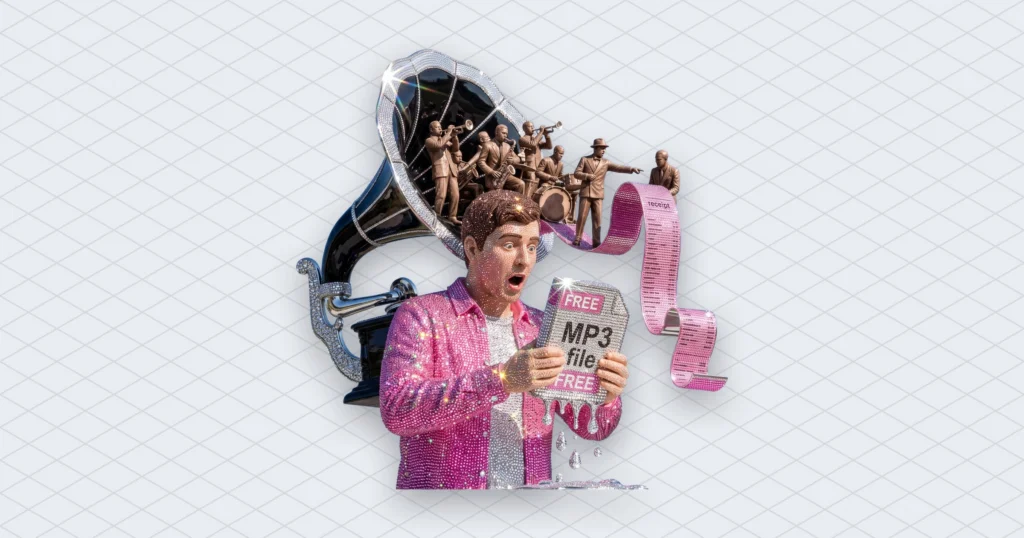
In the US, recorded music mostly becomes truly copyright-free by getting old. Sound recordings published in 1925 or earlier are public domain as of January 1, 2026. Almost every other copyright free music download is a licence, which means a permission with conditions attached to the file. This post is for creators who need background music for videos, streams or podcasts. It covers the three kinds of free you can actually download, what each licence allows and where to keep the files, plus the proof that saves your week when a claim shows up three months later.
On a copyright free music download page, the word “free” does the work of a small legal department. It means free of charge. Rules still apply.
A copyright free music download is usually a licence, not freedom
Free music downloads that call themselves copyright free come in three kinds: public domain recordings, Creative Commons tracks and platform licences. The YouTube Audio Library is one example of the last kind. Only public domain has no copyright left in it. Someone still owns the other two, and they let you use the music if you follow their terms.
That difference sounds academic until you get a claim. Nobody can object to a public domain recording, because nobody owns it. With a Creative Commons track, the owner has already said yes, but only to certain uses. Platform licences add a middleman, so the platform’s rules decide what happens when the track leaves the platform.
So copyright free and royalty-free are different things too. Royalty-free means you pay nothing per play, either once or never. The copyright stays in the file like a passenger who paid for the seat.
Every song has two copyrights, and both have to be free
A recorded song carries two separate rights: one in the composition and one in the sound recording. The composition is the melody and lyrics, while the recording is that particular performance. For a free music download to be safe under copyright, both rights have to be free. Both of them, not one.
The Duke Center for the Study of the Public Domain shows the gap well. On January 1, 2026, musical compositions from 1930 entered the US public domain. They include the Gershwins’ “I Got Rhythm” and “Georgia on My Mind”. But Duke points out that only the compositions became free. Recordings, it says, have “a separate copyright with a different term of protection”. Duke also notes that the later recordings of “Georgia on My Mind” by Ray Charles are still copyrighted.
In practice, you can record your own version of “I Got Rhythm” and use it. You cannot download a famous later recording and call it public domain because the song turned 95. The song is free. The singer is not.
This is also why a lot of free classical music is less free than it looks. Bach has been out of copyright for centuries, yet the orchestra that recorded the Bach owns its recording. So does whoever issued the release. Free composition, owned performance.
Public domain recordings are the truly copyright free music downloads
US sound recordings published from 1923 to 1946 get 100 years of protection from publication, so the 1925 batch became public domain at the start of 2026. That rule comes from the Music Modernization Act. The US Copyright Office explains it as a 95-year term plus five extra years for that period. Recordings released before 1923 lost protection at the end of 2021.
Duke’s examples from 1925 include Bessie Smith’s “The St. Louis Blues” with Louis Armstrong and Marian Anderson’s “Nobody Knows the Trouble I’ve Seen”. The Internet Archive celebrated the same batch. It hosts many digitised old recordings, which makes it a natural first stop for a free music download with no copyright left in it.
There are catches, because of course there are. First, the rule is American. Duke notes that recording terms differ abroad: 70 years in the EU and 50 years elsewhere. So a recording that is free in the US can still have an owner in another country. Second, remasters invite new claims. Whoever restored the recording may say the new version is theirs. Third, a 1925 recording sounds like 1925: crackle, one microphone, a tuba carrying the bass.
(We once spent an afternoon trying to make a 1920s dance-band record work under a product demo. It sounded like a ghost had launched the product. Charming, and also wrong for a fitness app.)
Anyway. Public domain suits a period piece, a history channel or a deliberately vintage edit. For a modern vlog it is usually the wrong colour.
Creative Commons gives you six licences built from four letters
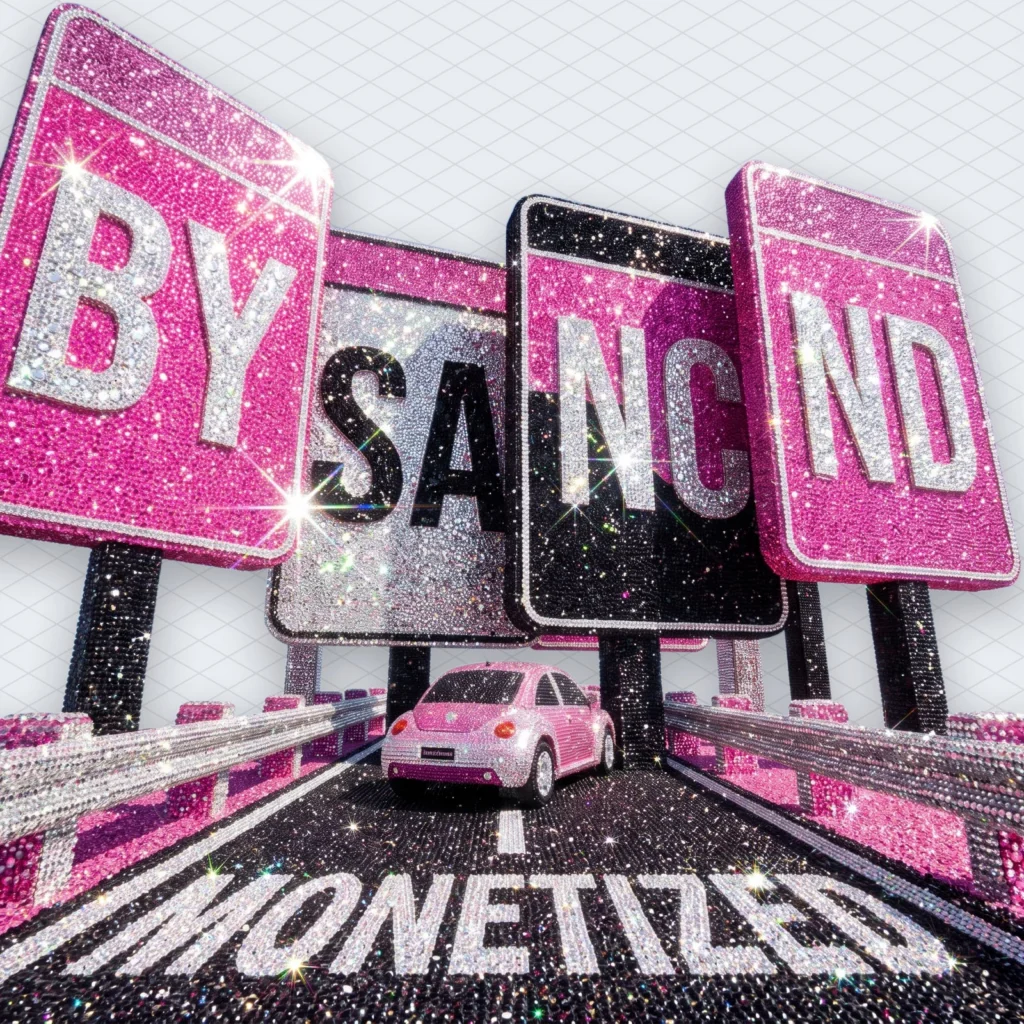
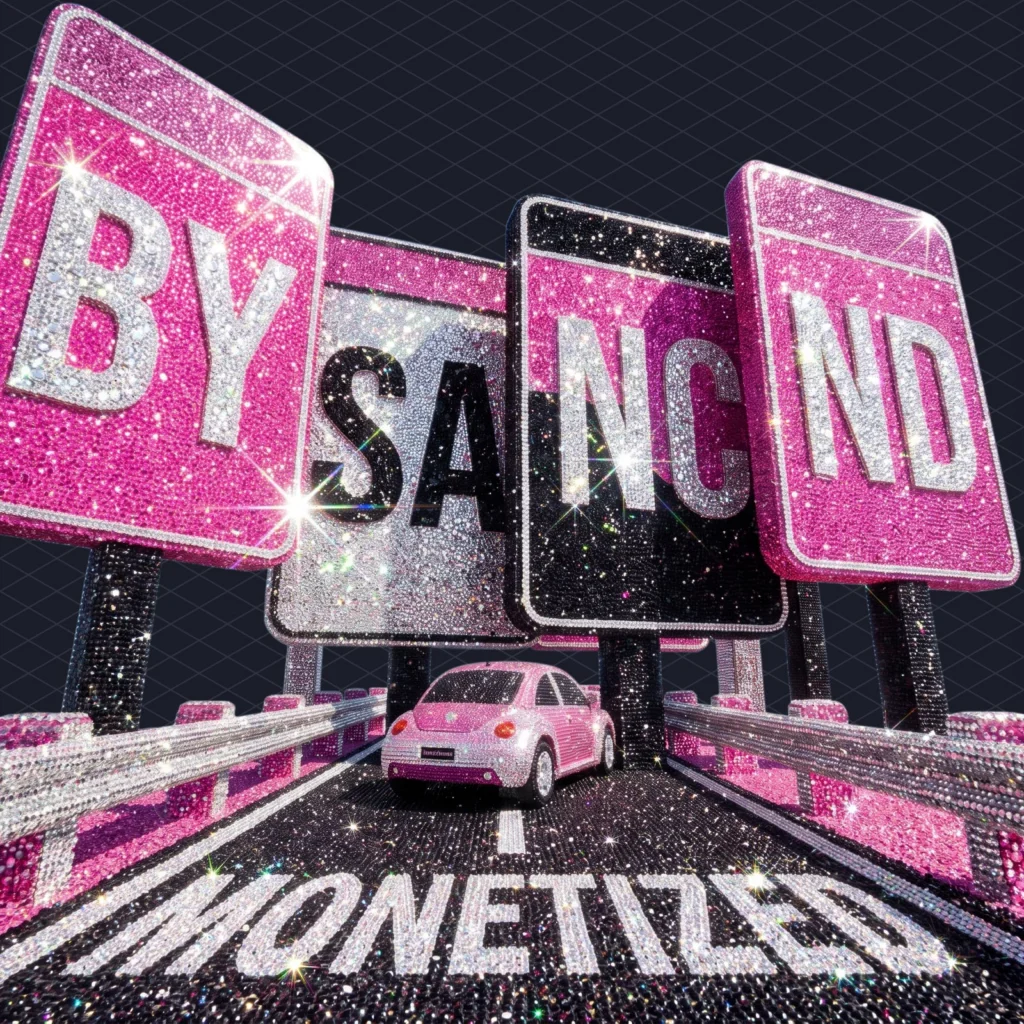
Creative Commons offers six licences made from four conditions, and the letters tell you what a track allows before you read anything else. According to Creative Commons, they are BY (credit the creator), SA (share adaptations under the same terms), NC (noncommercial use only) and ND (no derivatives or adaptations).
Combine them and you get CC BY, CC BY-SA, CC BY-ND, CC BY-NC, CC BY-NC-SA and CC BY-NC-ND. BY appears in all six, so every one of these tracks needs a credit. A Creative Commons track is a free music download that still has a copyright owner. The licence just tells you which uses the owner has already allowed.
Then there is CC0, which sits outside the six. The CC0 deed says you can copy, modify, distribute and perform the work “even for commercial purposes, all without asking permission”. For a free music download, CC0 is as close to copyright free as a living artist can get.
CC BY is the friendly one among the six. The CC BY 4.0 deed lets you share and adapt the work “for any purpose, even commercially”. In return you give credit, link to the licence and say if you made changes. If you cut a three-minute track down to forty seconds, “edited for length” in the credit covers that last part.
The credit is not decoration. It is the price of the music. Leave it out, and you are using someone’s track without the permission they offered, which is the one thing a free licence was supposed to save you from.
The NC and ND letters cause most of the trouble
Two of the four letters trip up creators far more than the others, because they clash with how videos actually get made and paid for:
- NC, because Creative Commons defines noncommercial as “not primarily intended for or directed towards commercial advantage or monetary compensation”, and a monetized channel, a sponsored video or a client job is hard to describe as anything else.
- ND, because cutting a track to length, looping it or putting it under a voiceover can count as an adaptation, and ND forbids adaptations.
So an NC-ND track is fine for a school project and awkward almost everywhere else. Still, people grab it for monetized videos, mostly because the download button looked the same as all the others.
YouTube Audio Library: a free music download with copyright rules attached
The YouTube Audio Library is the free music download built into YouTube Studio, and its copyright rules are short. According to YouTube Help, you sign in to YouTube Studio, open Audio library, pick a track and click Download. You confirm the licensing prompt and get an MP3 file. Your downloads also appear under Your library, in the Downloaded tab.
Each track uses either YouTube’s own Audio Library licence or a Creative Commons licence. For Creative Commons tracks, YouTube says you “must credit the artist in your video’s description”, and a Copy button gives you the attribution text. If you’d rather skip credits, filter by “Attribution not required”. YouTube also says these downloaded tracks “won’t be claimed by a rights holder through the Content ID system”. (Content ID is YouTube’s system that matches uploads against rights holders’ files.)
YouTube adds a “Music in this Video” section on the watch page for Audio Library tracks. That section is not your Creative Commons credit, though. You still write the line yourself.
The grey zone is everything outside YouTube. The help page doesn’t say what the standard licence allows on TikTok, in a podcast or in a client’s ad. We covered that in our post on what the YouTube Audio Library licence allows and where it stops. The short version: YouTube wrote it with YouTube in mind. The further the file travels from YouTube, the less you can lean on it.
How to read the licence page of a copyright free music download site
Before any copyright free music download, find the page that states the licence, and read it before the track goes into your edit. Most sites keep it one click away from the download button, often in a footer link called licence, terms or FAQ. If you can’t find one at all, treat the track as unlicensed.
Then look for four things. Who owns the music, and does the site say so by name? Is commercial use allowed, including monetized videos and client work? Is a credit required, and in what form? And does the licence cover only one platform, or anywhere you publish?
A site that answers all four in plain words is usually a site that expects to be asked. A site that answers none of them is asking you to trust a button. If you are comparing several sites, our breakdown of seven free download sites and what each allows on a monetized video puts the terms side by side.
One more habit: check the date. Licence pages change, and the version that counts is the one that applied when you downloaded the file. That is why the next section exists.
Where copyright free music downloads end up, and why the licence must go with them
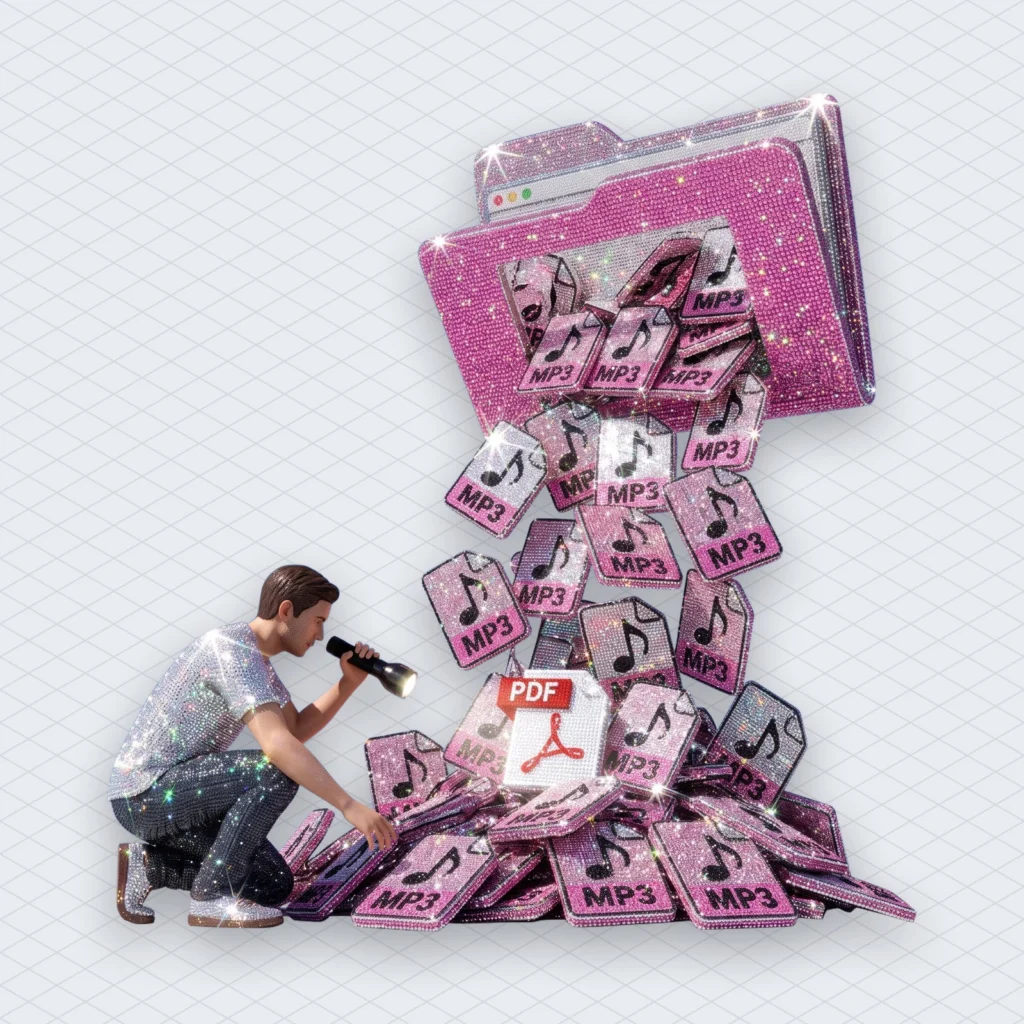
Every copyright free music download lands in your browser’s Downloads folder, and the licence stays behind on the website. That is the real problem. An MP3 doesn’t remember where it came from. The file keeps the music and forgets the copyright terms that made the download free to use. Six months later you have “track_final_2.mp3” and no idea whether it was CC BY, CC BY-NC or something a friend sent.
Confession: we have had exactly that folder. Dozens of tracks, zero licences, one very long evening of reverse-searching our own music. It went badly. Two of the files had to go because we couldn’t prove anything about them.
The fix is boring, which is why it works. Make one folder per source. Next to every audio file, save a text note with the track name, the artist, the page you downloaded it from, the licence type, the date and the credit line. A screenshot of the licence page with the date visible is even better, because your memory is not evidence.
Claims are common, which is why this matters. In Mubert’s own data from the last 28 days, about one in four tracks people ran through our copyright checker came back with a rights holder’s claim (24.1%, down slightly from 25.7%). Those were tracks people already doubted, so it isn’t a picture of all music online. Even so, a free music download you can’t trace is a copyright question waiting for a date.
When a claim arrives, the note next to the file turns a dispute into a copy-and-paste job. For the platform side of the process, our explainer on how the TikTok Commercial Music Library works shows what happens when a sound is not cleared for business accounts.
Sound effects and beats follow the same rules
Sound effects and beats follow the same copyright rules as any free music download: public domain, Creative Commons or a platform licence, each with its own conditions. Sound effect libraries often use CC0 or CC BY, and the credit is the part nobody writes. We went through that in our guide to free sound effects and their licences.
Free beats are stricter. Many producers give a beat away for practice, then ask for payment or a separate licence once you release a song on it. Our post on where to get free beats and what their licences say walks through that pattern. Downloading the beat costs nothing. Releasing a song on it without a licence is a different matter, even if nobody has noticed yet.
Generated tracks come with their own licence
A generated track avoids the shared-file problem, because it is made for your request rather than picked from a shelf thousands of other people use. Mubert Render composes an original track from a library of samples that real artists uploaded, and those artists get paid. So the music is not a copy of someone else’s recording.
The practical differences are length and uniqueness. You describe a mood, a genre, a tempo or the video itself, and the track fits the exact duration you need instead of fading out of a three-minute file. Since it is composed for you, a thousand other videos don’t share it.
It is still a licence. Pretending otherwise would undo everything above. Generated music is cleared for commercial use under the platform licence, and the exact scope depends on your plan. Check the live pricing page and the terms before you use it in an ad or for a client. The generator at the top of this page will make a track you can try under your own video first.
A checklist for your next copyright free music download
- Check the licence type and the copyright owner before you download free music.
- Confirm both rights are free when a song claims to be public domain: composition and recording.
- Avoid NC tracks for monetized, sponsored or client videos.
- Skip ND tracks if you plan to cut, loop or remix them.
- Copy the credit line into your description the moment the track hits your timeline.
- Save a text note and a dated licence screenshot next to every audio file.
- Run anything you are unsure about through a copyright checker before you publish.
Then rename “track_final_2.mp3” to something your future self can trace. The word “free” won’t keep your records for you, and its small legal department doesn’t work weekends.
 Who we are