




The best time to post on Instagram in 2026 is Thursday at 9 a.m. Or 5 a.m. Or Tuesday afternoon. It depends which study you open. This post is for creators and small brands who want one usable answer for Reels, feed posts and Stories. We put the four big published studies on the best time to post on Instagram side by side, explain why they disagree, and then show you how to find your own hours in Instagram Insights with a test that takes about four weeks and costs nothing but a spreadsheet.
Reading the studies back to back is like checking the time in a hotel lobby with four clocks labelled London, Tokyo, New York and Sydney. Every clock is right. None of them is your watch.
We learned this the annoying way. Once we scheduled a launch Reel for a slot a listicle called golden. We forgot that the listicle’s audience and ours did not live in the same time zone. So the Reel went out to a following that was mostly asleep. It recovered later. But the first hour was the one we had been nervous about all week. Silence.
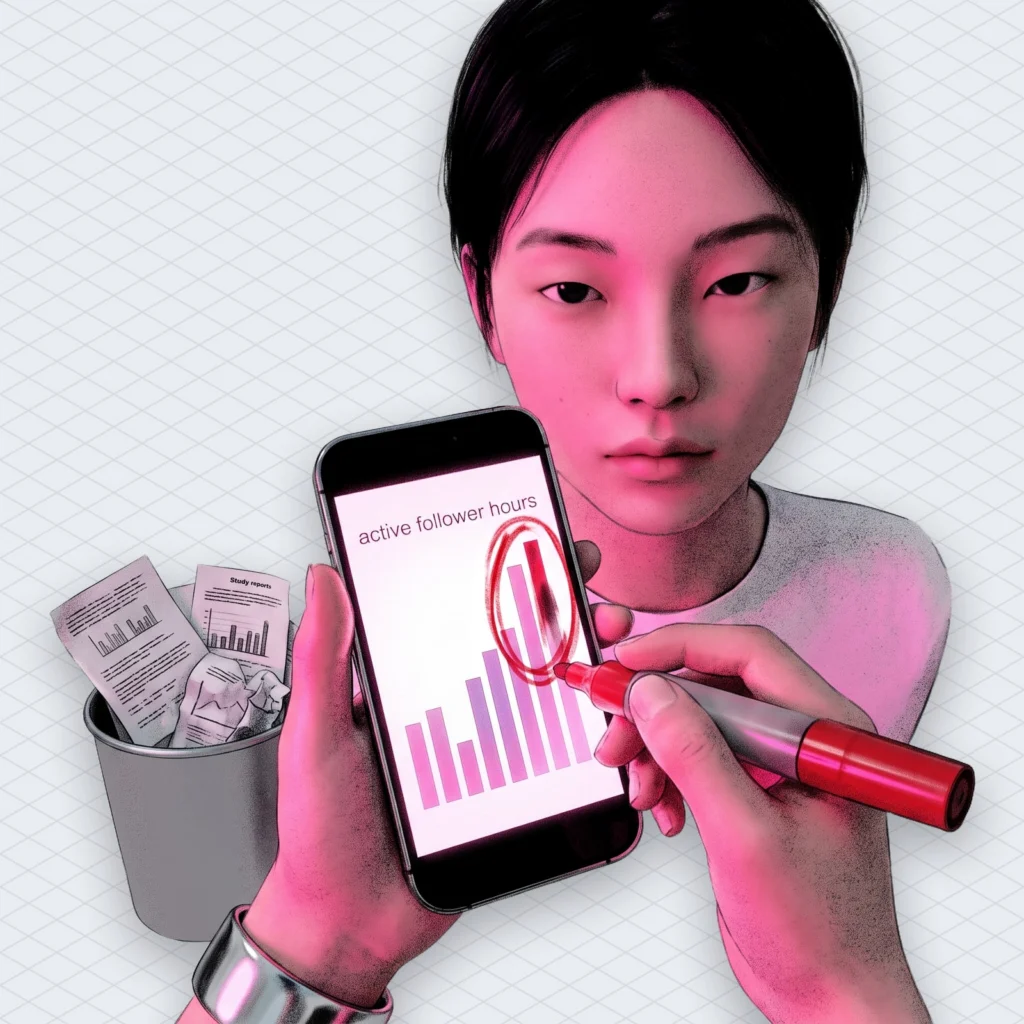
Four studies, four answers on the best time to post on Instagram
All four studies come from social media scheduling companies. They all measure some version of engagement and report times in the audience’s local time. Each sells a scheduler, so each sits on a lot of posting data. Their samples and their maths differ, though, and that explains most of the disagreement:
- Buffer: 9.6 million Instagram posts from January 2024 to December 2025, scored by median engagement rate.
- Later: more than 6 million feed posts from January to October 2024, plus a separate set of about 975,000 Reels.
- Sprout Social: nearly 2 billion engagements across about 307,000 profiles on six networks, from November 27, 2025 to February 27, 2026.
- Hootsuite: more than a million posts, analysed with the research firm Critical Truth and localised across 118 countries.
Notice the dates. Later’s data stops in October 2024, while Sprout’s window is one winter. Buffer covers two full years. So these are not four measurements of the same thing. Rather, they are four photos of different crowds, taken in different seasons, with different cameras.
They also describe other people’s audiences. A median across that many accounts includes bakeries in Ohio, fitness coaches in Manila and news pages in Berlin. Your followers are in there somewhere, averaged into a best time to post on Instagram that fits nobody exactly. Including you.
Buffer says midweek: breakfast, lunch and after dinner
Buffer’s best time to post on Instagram is Thursday at 9 a.m., followed by Wednesday at 12 p.m. and Wednesday at 6 p.m. Wednesday is its best day overall, with Thursday and Tuesday behind it. Friday and Saturday come last, with lower engagement in every time slot.
The hourly pattern is more useful than the top three. Evening hours from 6 to 11 p.m. performed best on every weekday except Thursday. Thursday is the odd one, where the morning wins (7 to 9 a.m.). The dead zone is 1 to 5 a.m., the lowest-engagement window on any day. Remember that dead zone. The next study has opinions about it.
Buffer’s metric is worth a second look too. It counts likes, comments, shares and saves, divides them by followers and takes the median. Using the median stops one viral post or one giant account from dragging the average around. Sensible. But dividing by followers rewards posts that land with your existing audience, so Buffer’s best time to post on Instagram is really a guide to feed posts, the format your followers see first.
Buffer did not split its numbers by format. Its article suggests evenings for Reels and the midweek pattern for carousels, but that advice is not a separate measurement. It also has no Stories data at all. (We respect a study that admits what it did not measure. It’s rarer than it should be.)
Later says 5 a.m., and it is not a typo
Later’s analysis puts the best time to post on Instagram at 5 a.m. in the audience’s local time. Posts published between 3 and 6 a.m. did better than average on every day of the week. Monday is its best day, with the highest average engagement for posts that went up between midnight and 6 a.m. Saturday is the weakest.
For Reels, Later’s separate sample names midnight as the best time and Monday as the best day. Its worst slot for Reels is Wednesday at 2 a.m., which is at least a useful thing to know at 2 a.m. on a Wednesday.
This is the exact window Buffer calls the dead zone. One study’s worst hours are another study’s best, and both have millions of posts behind them.
Our reading (and it is a reading, not a finding) is simple. A 5 a.m. post is already waiting when people wake up and open the app. It collects a whole day of engagement before evening posts even exist. Engagement rate also rewards less competition, since a 5 a.m. post fights fewer fresh posts for the top of the feed. No study can tell you if that holds for your audience. Your own test can.
A quick tangent about who is actually awake at 5 a.m. Bakers. New parents. Shift workers coming home. Anyone in a time zone where it is lunchtime. If your followers sleep until eight, the 5 a.m. post is less “early bird” and more “note slipped under the door”. Anyway.
Sprout Social and Hootsuite put the best time to post on Instagram in the afternoon
Sprout Social’s 2026 data puts the best time to post on Instagram in the middle of the day. Its strongest windows are Monday 2 to 4 p.m. and Tuesday 1 to 7 p.m. Wednesday runs from 12 to 9 p.m., with a late spike at 11 p.m., and Thursday from 12 to 2 p.m. Friday has no significant peak at all. Saturday has the lowest engagement of the week, and Sunday is among the worst days. Sprout also says the best windows for Reels match the overall ones. In its data, the format does not move the clock.
Hootsuite gives a best time to post on Instagram for every single day instead. Monday is 3 to 9 p.m., Tuesday 5 to 8 a.m. and 3 to 7 p.m., Wednesday 5 p.m. and Thursday 4 to 5 p.m. Friday is around 4 p.m., Saturday 11 a.m. and around 5 p.m., Sunday 12 to 3 p.m. Its best days for reach are Monday, Tuesday and Thursday.
Those weekend times can look like a contradiction of Sprout. Mostly they are not. A best hour on Saturday is the best hour of a weak day. The best seat on a delayed train is still on a delayed train. Hootsuite also gives no separate times for Reels or Stories.
The studies agree on less than you would hope
Line them up and the overlap is thin but real. Three of the four (Buffer, Sprout Social and Later) name Saturday as the weakest or one of the weakest days. Midweek does well in three of them too. Buffer picks Wednesday, Sprout picks Tuesday and Wednesday, and Hootsuite picks Tuesday and Thursday. Later is the outlier, with Monday and the small hours.
The hours are a mess. Buffer likes evenings and Thursday mornings, Sprout likes the long afternoon, Hootsuite likes the late afternoon, and Later likes the time when your alarm has not gone off yet, which is a lot of disagreement for four companies looking at the same app. If you averaged the four, you would get a best time to post on Instagram that nobody published and nobody tested.
So here is the honest summary. Skip Saturday as your main test slot. Start with a weekday. And do not trust anyone who gives you a single hour without saying whose followers it came from.
The best time to post on Instagram for Reels is a different question
Feed posts and Reels are ranked differently, and Instagram says so itself. In its own ranking explainer, the Feed signals include when a post was shared. The Reels signals do not mention time at all. Not once. They are about your activity: what you liked, saved, reshared and commented on. Then come your history with the account, the reel itself (its audio, visuals and popularity) and the person who posted it.
Reels also travel to people who do not follow you. Instagram built a feature around exactly that. Trial reels, launched on December 10, 2024, are shown to non-followers first. Insights for them arrive about 24 hours later. If a trial reel performs well, Instagram can share it with your followers automatically, judged “based on the views it receives within the first 72 hours”.
Read that number again. Instagram itself judges a test Reel over three days. If the platform’s own experiment runs for 72 hours, the exact minute of publishing matters less, and the first three seconds of the video matter far more than any best time to post on Instagram a study can hand you. We went through what counts as a view and what keeps people watching in our post on Instagram Reels views.
Reels reach strangers, so follower hours matter less
Timing still has a job for Reels. Your followers are often the first people to see a regular Reel. Posting when they are online gives it early signals to work with. But if your Reels mostly reach strangers, your followers’ “most active times” describe a smaller audience than you think. Strangers keep their own hours. For Reels, then, the best time to post on Instagram is a starting push, not a verdict.
One practical Reels detail people underrate is length. A Reel that ends where the music fades out of a three-minute file feels cut, not finished. Mubert Render writes an original track to the exact duration you ask for. In Mubert’s own data (last 28 days), about one in five generated tracks gets re-cut to a new length. That is roughly what happens when people edit Reels: the video changes length, and the music has to follow.
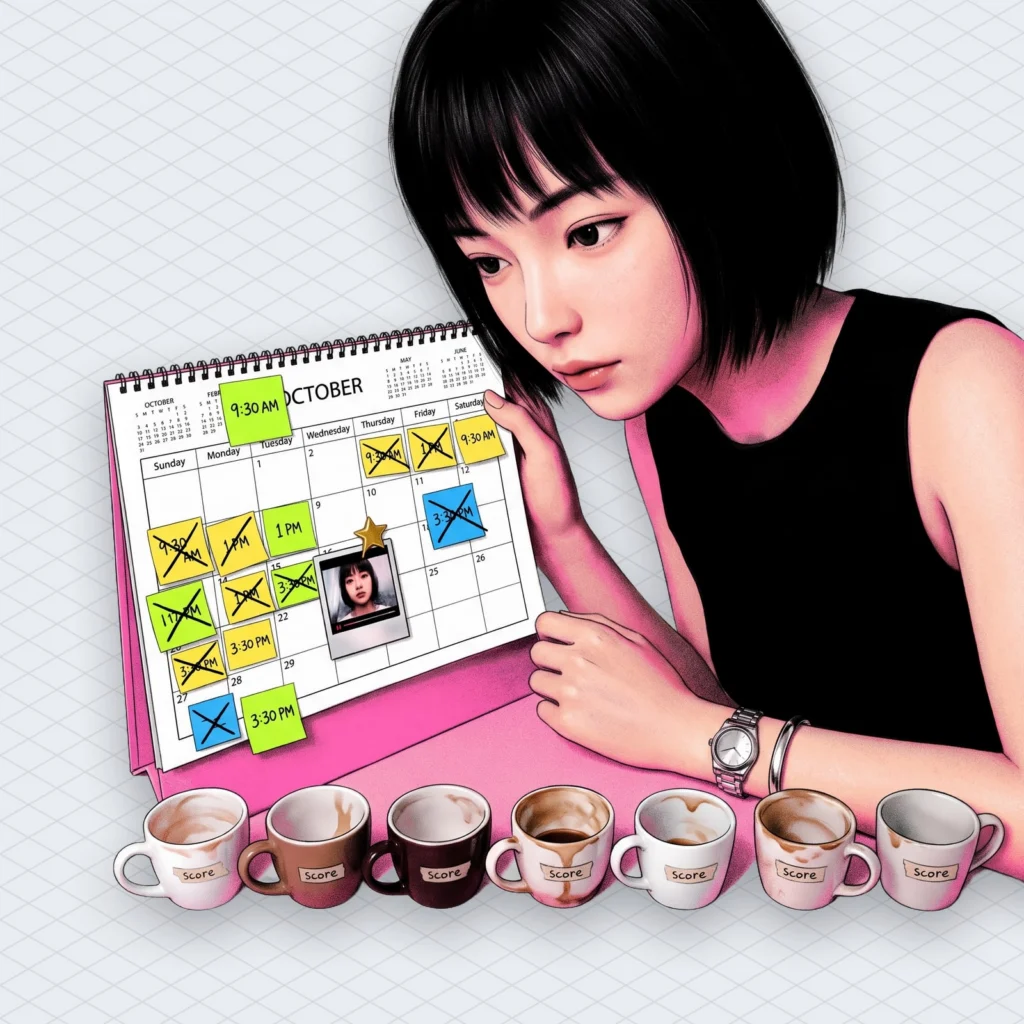
Stories: the best time to post on Instagram is when your followers are online
Nobody in this group published real Stories timing data. Buffer says outright that its study did not include Stories. Later offers suggested Stories windows (6 to 8 a.m. and 7 to 9 p.m.). It says those come from research and industry patterns, not from its post dataset. Sprout and Hootsuite give no Stories times.
The ranking explainer gives a clue. Stories are ranked by viewing history, engagement history and closeness. Closeness means how likely you are to be friends or family. Timing is not on that list. Stories also disappear after 24 hours. So the real question is if your followers open the app while the Story is still up.
That makes Stories the easiest format to plan. They reach people who already follow you, so for Stories the best time to post on Instagram is whatever your own follower chart in Insights says. Skip the studies here.
Your best time to post on Instagram is in Insights
Instagram shows you when your own followers are on the app. That is the closest thing to a personal best time to post on Instagram you will get without running a test. You need a professional account (creator or business), and the chart appears once you have at least 100 followers. Meta’s help page on Instagram Insights describes the Total followers metric. Tap it, and you see growth, top locations, age range and the times your followers are most active.
The path in the app is short. Open your profile, tap Professional dashboard, then Insights, then Total followers, and scroll to Most active times. You get two views, one by hour and one by day of the week. You can pick a date range within the past 90 days. A longer range gives a steadier picture than last week alone. (Menu names move around between app versions, so if a label has changed, look for the followers or audience section.)
Read the chart for what it is. It shows when followers are online, not when they engage, and it says nothing about non-followers who might see your Reels. Treat it as a shortlist of candidate hours rather than an answer. Also check the top locations on the same screen. If a big share of your followers sits in another time zone, their evening is not yours.
How to test posting times without fooling yourself
A shortlist becomes your best time to post on Instagram only when you test it. The method below is boring on purpose. Boring tests give results you can trust. We use the same approach for TikTok, where the two big studies also disagree. That version is in our post on the best hours for TikTok.
Pick three slots. One is the highest bar in your Most active times chart. Another is a study slot that fits your audience, like Buffer’s Wednesday 6 p.m. for a weekday crowd. The third is a control, the time you usually post, so you have something to compare against.
Then rotate them for four weeks. Keep the format the same within a comparison, since a Reel and a carousel are not the same experiment. Log reach and engagement for each post at the same checkpoint every time. Use 24 hours for feed posts and 72 hours for Reels, borrowing Instagram’s own trial window. If you compare one post at 2 hours with another at 3 days, you are measuring patience, not timing.
Instagram’s scheduler runs the test while you sleep
The in-app scheduler keeps this from eating your evenings. Instagram’s help page says professional accounts can schedule posts and Reels up to 75 days ahead. The limit is 25 per day. Some features do not work with scheduled content: product tags, collaborative posts and cross-posting to Facebook. Publish those by hand.
Expect a messy result. One viral post can make a bad slot look like the best time to post on Instagram for a week. That is why four weeks beats one. If two slots come out close, choose the one you can keep. A schedule you hold for six months beats a perfect hour you abandon in three weeks.
Then stop checking the four clocks in the lobby. Your watch has been in your pocket the whole time, in the Insights tab.
A checklist for finding your best time to post on Instagram
- Switch to a professional account if you are still on a personal one.
- Open Insights, tap Total followers and screenshot your Most active times by hour and by day.
- Check your followers’ top locations and convert their peak hours to your own time zone.
- Pick three slots: your chart’s peak, one study slot and your usual time as a control.
- Schedule four weeks of posts across those slots with the in-app scheduler.
- Log reach and engagement at 24 hours for feed posts and 72 hours for Reels.
- Try one trial reel to see how your content does with non-followers.
- Keep the winning slot, then retest it next quarter.
 Who we are


