AI firms have already trained on Kylie Minogue’s songs, says ICMP, the global trade body for music publishers. It told The Guardian that tech firms are “strong-arming” the government while Australia weighs its AI copyright rules. Bad timing. This post is for musicians and creators anywhere, because whatever Canberra decides could become the template the next government copies when an AI company turns up with an investment plan and a list of laws it would like changed. You get the full timeline, who said what, and what to do now.
One of Australia’s biggest pop stars is, it turns out, also a row in a dataset. So is Nick Cave. You might be in there too.
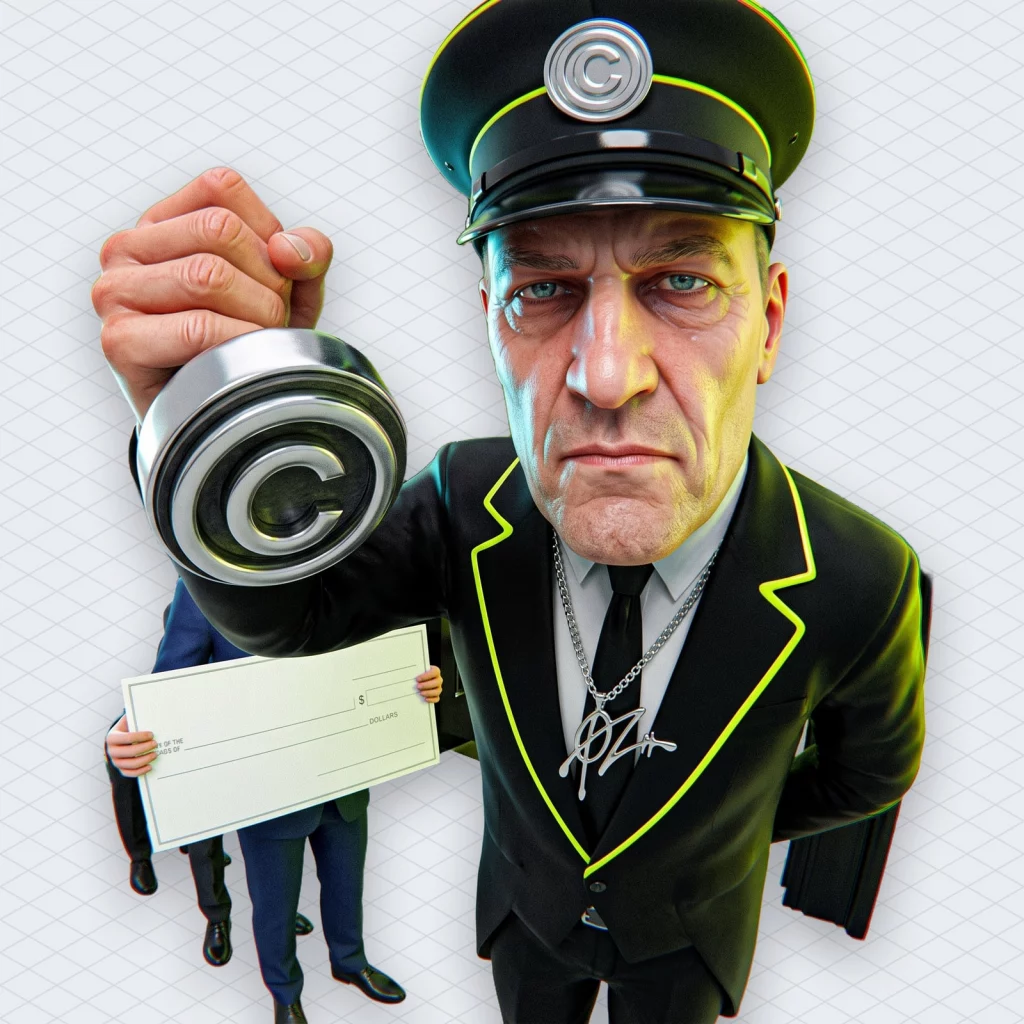
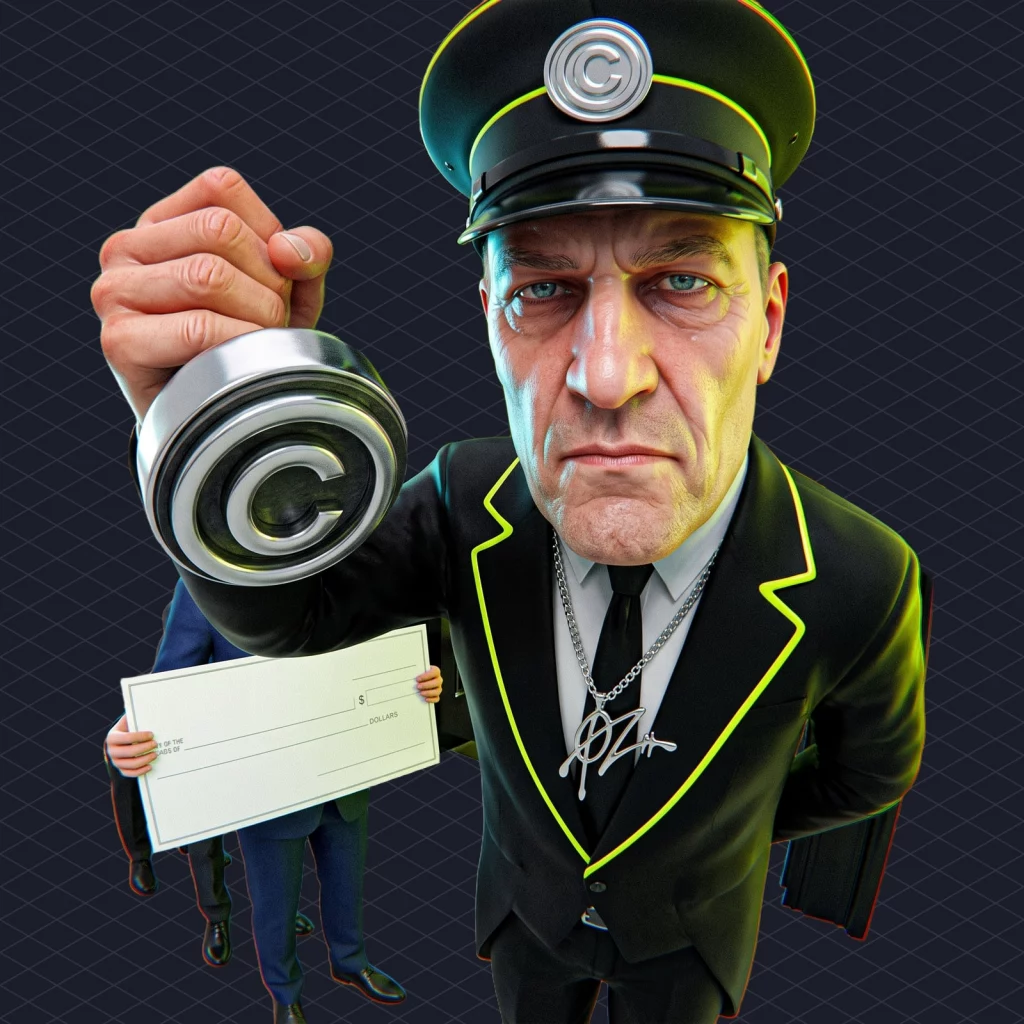
Kylie Minogue songs are already in AI training data, ICMP says
ICMP is the International Confederation of Music Publishers. It speaks for Sony, Warner, Universal and thousands of independent publishers across six continents, according to The Guardian. Its managing director, John Phelan, says tech firms tie investment in Australia to new rules on copyrighted work. Translation: we’ll build here, but change the law first.
The proof comes in two parts. First, ICMP gave The Guardian examples of Google Gemini reproducing lyrics by Kylie Minogue, G-Flip and Nick Cave. Then Phelan pointed to a training dataset The Atlantic reported on in June, which he says holds more than 12 million songs pulled from YouTube videos, with Minogue, Cave and Hilltop Hoods among them. (A training dataset is the pile a model learns from. Nobody asks the people in the pile.)
Then there is the number ICMP clearly wanted in the headline. Phelan says 62 countries looked at changing their laws on AI training data. None of the other 61 added a new text and data mining exception for commercial purposes, ICMP claims. Sixty-one. So by ICMP’s count, Australia is the only one still holding the pen on AI copyright.
What happened so far in the Australia AI copyright fight
This story did not start this week. Here is the timeline, oldest first.
2025: Australia AI copyright rules get a firm no
- 26 October 2025: Attorney-General Michelle Rowland said there would be no Text and Data Mining Exception in Australia’s copyright law.
- 27 October 2025: Rowland told the ABC “we will not be entertaining a text and data mining exception”.
- Late October 2025: the government’s Copyright and AI Reference Group met to work on ways to pay creators.
A text and data mining exception is a legal carve-out that lets companies copy works for analysis without asking first, which is roughly the opposite of how a music licence works. Rowland said no. For about a year, that was Australia’s whole answer on AI copyright.
2026: leaked slides, an inquiry and a letter
- July 2026: Prime Minister Anthony Albanese said no company should train AI on Australian books, music, art or news “without the artist’s control” (Music Ally).
- September 2026: leaked slides showed Australia weighing an AI copyright opt-out (The Next Web).
- 6 October 2026: Anthropic envoy Jeff Bleich told the AI inquiry that Australia’s copyright regime is an obstacle that needs to change.
- 12 October 2026: committee chair Jo Briskey and deputy chair Jonathon Duniam wrote to Albanese, backing a review of copyright settings (Capital Brief).
- 16 October 2026: ICMP called opt-out “legitimising larceny”, first reported by the Australian Financial Review.
- 18-19 October 2026: The Guardian ran the Kylie evidence.
- 25-26 October 2026: an ARIA poll by RedBridge Group found 78% of Australians want AI firms to keep asking permission; 9% would change the law (Mumbrella).
- 29 October 2026: more than 150 musicians launched the Artists Alliance of Australia to fight for copyright (The Music).
- 29 October 2026: the AFR reported the government will pursue a model where rights holders negotiate directly with AI firms, with draft laws out for consultation this year (Capital Brief).
- 30 October 2026: at an AI committee hearing, Nationals senator Ross Cadell warned an opt-out could breach the constitution; the Attorney-General’s Department said it was “extremely alive” to the issue (The Guardian).
- 5 November 2026: ICMP director general John Phelan called the push “a vast landgrab” in an exclusive interview and said the opt-out on the table “cannot work” (Billboard).
Opt-out, for the record, means firms can train on your work unless you find out, fill in a form and object in time. The committee letter asks for a review that keeps creators in control and paid. So the door is open. It has a polite sign on it.
The letter has its own controversy. Independent senator David Pocock has raised concerns that the committee was reaching a position on copyright predetermined by the prime minister, after staffer edits were seen in the letter, The Guardian reports. Briskey has rejected the claim.
Then the public got asked. A poll commissioned by ARIA, the Australian Recording Industry Association, and run by RedBridge Group found 78% of Australians would keep the rule that AI companies need permission to use Australian creative work, even if some firms then chose not to train their models in Australia. Just 9% would change the law. RedBridge surveyed 1,524 adults online from 8 to 10 October 2026, with a margin of error of about 3.3 points, and ARIA released the results on 26 October (Mumbrella, B&T).
The tech side’s other arguments did no better. Of the 33% who back AI companies training models in Australia, 82% still say creators should decide whether their work is used. 78% say a company citing national security should still need permission, and 68% trust AI companies less after an OpenAI agent accessed non-public Australian Government files without authorisation. No age, gender, income or education group fell below 65% for keeping permission (The Music Network). It is an industry-commissioned poll, so read it as ARIA’s case. Still, RedBridge director Kos Samaras said he had “rarely seen public opinion this clear”.
Now the artists have their own body. On 29 October more than 150 musicians launched the Artists Alliance of Australia (AAA), with Bernard Fanning, Jack River, Kristy Lee Peters (KLP), Paul Dempsey, Kate Ceberano and Troy Cassar-Daley among them, The Music reports. G Flip backs it too, per AAP. Until now the loudest voices in this fight were trade groups like ARIA and APRA AMCOS. The AAA is run by the artists themselves.
Its website calls it “an artist-led organisation” and promises artists “a seat at the table”. Its first job: “immediate advocacy on the most critical issue facing artists today, the protection of copyright.” In plain terms, that means resisting any change that lets AI firms train on songs without asking or paying. The site names no board yet and is still signing up members, so the timing is the point: the committee report is due by the end of November.
Then came a legal argument with a very large price tag. Changing copyright so AI firms can scrape music, books and journalism could breach the constitution, Coalition senators and the recording industry warned in Guardian Australia. Section 51 lets the Commonwealth acquire property only “on just terms”, the same point The Castle turned on. Nationals senator Ross Cadell, who sits on the AI committee, raised it with the Attorney-General’s Department on 30 October: “We could be liable for ‘just terms’ compensation for acquiring that property for every rights holder on Earth.” He called it a risk of “the biggest compensation rights case in history”. Officials did not directly answer his question about paying foreign rights holders.
Anne Twomey, professor emerita of law at the University of Sydney, agreed there was “potentially” a problem, depending on how a law is drafted. No bill exists yet, and the High Court has ruled different ways in past copyright cases on video games, cigarette plain packaging and cassette tapes. Her advice: be “quite confident” before legislating. ARIA chief Annabelle Herd called scraping “clearly an acquisition of property”. Mushroom Records CEO Chris Maund made the global point: AI firms could train in Australia to get around copyright laws elsewhere. Rowland’s office says any change will “deliver meaningful control and fair compensation”, and the AFR reports the plan is a model where rights holders, small creators included, negotiate directly with AI firms (Capital Brief). Whether that still includes opt-out, nobody has said.
ICMP came back on 5 November with a bigger claim. In an exclusive interview with Billboard, director general John Phelan called the push “a vast landgrab” and said AI firms “must play by the same Australian and international laws” as the companies that license music. He says ICMP has spent several years collecting evidence of copyright infringement for AI by companies including Google, Microsoft, Meta, Amazon, Adobe, Anthropic, OpenAI, Suno, Udio and DeepSeek, and shows it to governments in private. In a recent meeting with the Australian government, he says, ICMP showed that all 10 of the prime minister’s favourite songs had been used illegally, and that the work of all 12 Australian orchestras had been infringed. None of that evidence is public, so read it as ICMP’s case. His ask: “refuse OpenAI, Anthropic and Big Tech’s asks and instead focus on enforcement.”
Phelan also expects the fight to run past the report. Parliament’s summer recess starts at the end of November, which he called “a big junction but not the end of the road”, adding that “the timeline will likely extend”.
Tech firms want the Australia AI copyright rules rewritten
The AI companies’ case is short. They want to train models here, and they say the law gets in the way. Bleich told the inquiry Anthropic wants to train in Australia, but the AI copyright rules there must change, licensing deals or not. Then came the line everyone quoted: “You can’t license the entire internet” (ABC News).
Bleich also said Anthropic was not trying to dictate terms. Noted. OpenAI’s Adam Cohen pointed to the US fair use exception, though he added that OpenAI still signs separate deals for some material.
Now hold the Gemini lyrics up next to that internet line. Lyrics are the part of a song most people get wrong at karaoke. A machine getting them word for word is the one time accuracy counts as a problem. Anyway.
The pitch itself is simple. A company says it will build here if the rules change. That is a deal, and the thing on the table belongs to someone who isn’t in the room.
Why Canberra’s decision reaches musicians everywhere
Models get trained in one place and used everywhere. So if Australia loosens its AI copyright rules, every song that law covers gets cheaper to use. It would also prove the “investment for rules” pitch works. Other governments would hear it next.
The UK already ran this test. It dropped a similar plan in March, after only 3% of more than 10,000 people who answered its consultation backed opt-out. Now Australia is picking up the AI copyright idea the UK put down.
The clock is short, too. The committee’s final report, which will shape what Australia does next on AI and copyright, is due on 30 November (ABC News). About a month. Draft AI laws are expected out for public consultation before the end of the year, unnamed sources told the AFR (Capital Brief).
What we think: opt-out turns songwriters into unpaid auditors
Opt-out sounds fair until you read it slowly. Your work gets used unless you object. So the burden moves to the person with the fewest lawyers. Say a songwriter has 200 co-writes across three publishers. She would have to find every use and flag it, even though AI firms copied many of those songs before the opt-out form existed.
Licensing at scale is slow. Dull, too. We have filled in enough rights forms to know. Still, “it is hard” is a reason to build licensing systems, rather than skip them. When the exception died last year, APRA AMCOS called on tech firms to start licensing talks, and Australia’s 2025 AI copyright stance pointed the same way: no free pass, then a conversation about payment. Opt-out walks that back.
We have a stake here, so here it is. Mubert builds tracks from samples that artists upload to our Studio and get paid for. We chose that supply chain on purpose. It is slower. Nobody has to opt out of anything.
What creators can do before the Australia AI copyright report lands
Register every song you write with your publisher or collecting society. In Australia and New Zealand, that is APRA AMCOS. If a paid licensing scheme ever arrives, unregistered songs are the ones nobody can pay. Paperwork wins again.
The committee reports on 30 November, and the draft laws are meant to go out for public consultation this year: that is the next chance for creators in Australia to weigh in on AI and copyright. Write to your MP while the committee still drafts its report. Name your songs. Say nobody asked you. Keep it short.
Using AI music tools for your own videos? Ask where their training data came from. Our piece on AI-generated music copyright issues covers what to look for, and the DistroKid takedowns story shows what happens when a platform finds out late.
Until Australia settles its AI copyright question, Kylie stays a row in a dataset. Yours is probably a few rows down. Nobody has sent either of you an opt-out form.
 Who we are