
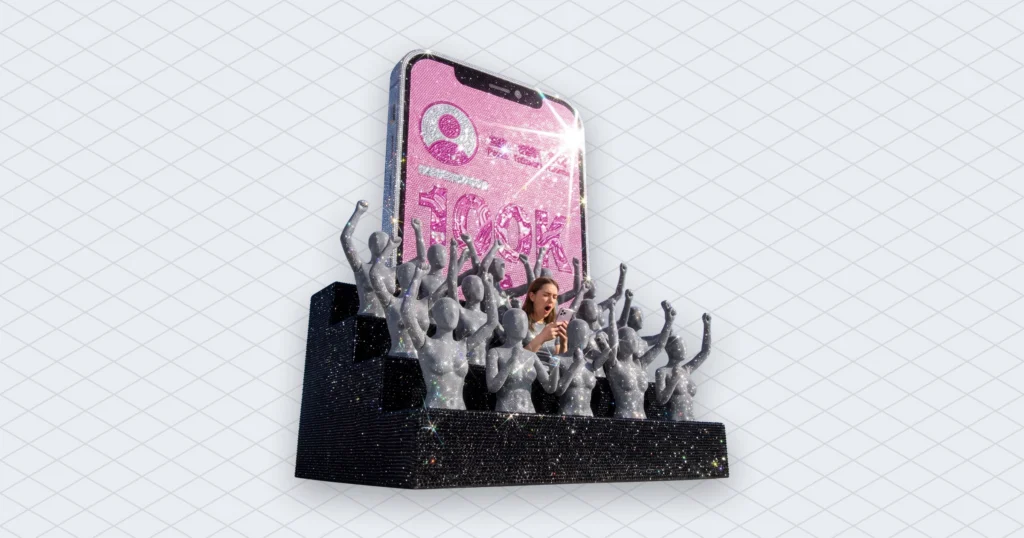
TikTok fake followers are bot or bought accounts that follow a profile to make its count look bigger. TikTok says it removed over 5 billion fake followers in 2024. The same report says it blocked over 33 billion fake follow requests at the door. That is a big door. This post is for anyone vetting a creator before a brand deal, a collab or a shoutout, and for anyone staring at their own follower graph late at night, wondering who is actually in there, because the line went up last spring and the views never came with it. Below: how to spot a bought following by eye, what audit tools measure, and where their scores go wrong.
A profile with 100,000 followers and 400 views a video is a restaurant with a full car park. Nobody is at the tables. The cars are real, in the sense that they are parked. Nobody is ordering.
TikTok fake followers get deleted by the billion
TikTok’s own numbers for 2024: over 5 billion fake followers removed, over 33 billion fake follow requests prevented and over 54 billion fake likes stopped, all listed in its counter-deception report. So for every fake follower it pulled off a profile, it stopped more than six at the door. That ratio is the whole business model of a follower seller, seen from the other side.
The seller is selling a number that the platform subtracts as fast as it can. Some of what you buy never arrives. Some arrives and vanishes in a cleanup weeks later. The rest stays on the profile, doing nothing, until the next sweep.
It also explains why a bought following looks odd from the outside. Followers are the cheap metric. Views, comments and watch time are the expensive ones. Each needs a person (or a much pricier bot) to show up again and again. When a profile’s numbers disagree with each other, the cheap one is usually the liar.
The same trick runs on other apps, by the way. We covered what the free follower trial sites on Instagram actually deliver, and the pattern is identical: a fast count, a slow decline and zero extra views. Buying TikTok fake followers gets you the same curve, only with bigger numbers.
People buy TikTok followers to clear the 10,000 line
A common reason to buy fake followers on TikTok is a threshold. TikTok’s Creator Rewards Program, the one that pays for videos, asks for at least 10,000 followers and 100,000 views in the last 30 days. It also wants an account holder who is 18 or older and original videos over a minute long.
Look at those two numbers side by side. The first one can be bought in an afternoon. The second one is views, and bought followers do not watch anything. So a creator who buys 10,000 TikTok fake followers is still at the same locked door, holding a ticket for the wrong gate.
Brand deals work on a similar instinct. A follower count is the first thing a marketer sees, so it is the first thing people inflate. We have been impressed by a big count before. Then the paid video landed with the reach of a dentist’s waiting room. We are not proud of it. Now we read the views first.
The maths on a sponsorship is just as blunt. A sponsor pays for people who see the video. Followers who never open it do not raise a creator’s rate. Once someone checks, they lower it.
There is a free version of this temptation as well, and it’s even worse value. Our post on Instagram free trial followers and the same catch on TikTok walks through what those “free 100 followers” sites ask for in return. (Usually your login. Sometimes your account.)
The rules: TikTok removes fake followers, and the FTC can fine the buyer
TikTok’s rules ban fake engagement outright. Its Integrity and Authenticity guidelines ban “the trade of services that artificially boost engagement or trick the recommendation system”. The current version, released August 25, 2026, has applied since September 24, 2026, and when TikTok finds inflated metrics the same page promises to “remove fake likes, followers, or other inflated signals”.
That’s the soft end. For accounts that mislead or manipulate the platform, TikTok says it may restrict the account, which includes limiting how it shows up in search and the For You feed (the main recommendation feed, where strangers find you). It may also ban the account. And block the owner from opening new ones. So the worst case of buying TikTok fake followers is worse than losing them: you can lose the reach you had before you bought them.
In the US there is a second rulebook. The FTC’s rule on fake reviews and testimonials, announced on August 14, 2024, bans selling or buying fake indicators of social media influence, such as followers or views made by bots or hijacked accounts. It applies on two conditions. The buyer knew or should have known the indicators were fake, and used them to misrepresent their influence for a commercial purpose. It took effect on October 21, 2024, and the FTC can seek civil penalties against knowing violators.
A carve-out sits in the Federal Register text. A company that hires an influencer with fake followers it did not know about does not break the rule. So brands are not on the hook for a creator’s bots. Still, nobody wants to explain to their boss why the campaign reached 300 people. Hence audits.
How to spot fake TikTok followers on a profile by eye
The fastest check costs nothing: compare the follower count with the views on recent videos. TikTok prints the views on every video in the profile grid. So you can see in seconds whether a big following ever turns up to watch. One weak video means nothing. A whole grid of them is a pattern.
Then open the comments and the follower list (if the owner has not hidden it) and look at who is actually there. These signs tend to come together when TikTok fake followers fill a profile:
- Views on video after video sit far below the follower count, with no hit anywhere in the grid.
- Comments are a lone emoji, “nice” or “follow back”.
- Followers have no profile photo, no videos of their own and a default handle.
- Many followers follow thousands of accounts and are followed by almost nobody.
- The followers you sample live in countries where the creator’s language is rarely spoken.
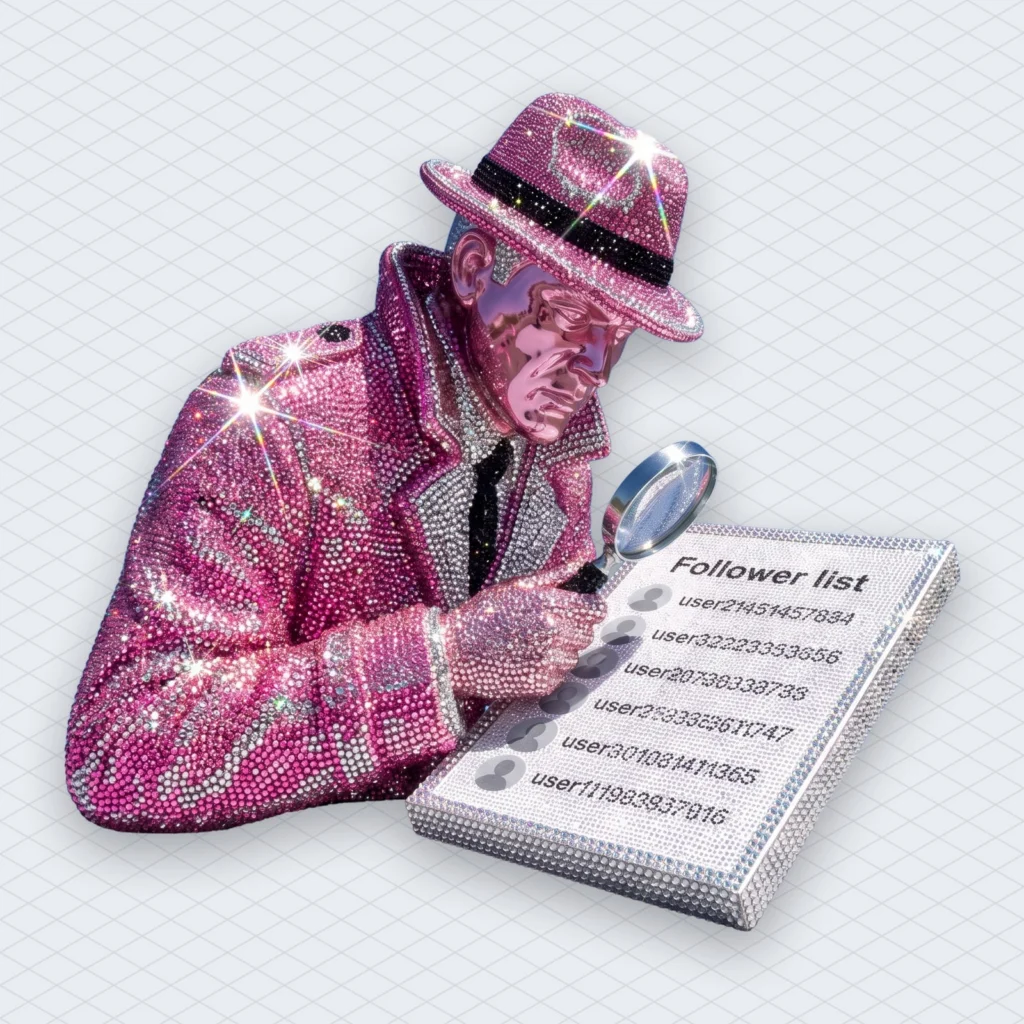
The default handle needs a word. When someone signs up and never picks a name, TikTok hands them “user” plus a long string of digits. A bot farm signing up in bulk gets the same. Somewhere out there is a perfectly real person called user8271940 who is very tired of being mistaken for a script. Anyway.
None of these signs proves anything on its own. TikTok shows videos to people who do not follow the account, so views can sit above or below the follower count for normal reasons. Plenty of real followers also stop opening the app. What you want is the cluster: weak views, generic comments and blank followers on the same profile. One sign is noise. Three is a receipt.
Follower audit tools measure ratios and samples
Follower audit tools measure ratios and samples, not people. Most work from what is public on a profile. That means the follower count, the views, likes and comments on public videos, a sample of the follower list, and their own snapshots from earlier days. From that, they compute four things.
The first is engagement rate: usually likes, comments and shares divided by followers or by views. A profile far below accounts of its size gets a red flag, because bought followers do not like anything.
The second is growth history. If a tool has been taking snapshots of an account, it can spot a jump of thousands of followers on a quiet day. Real growth tends to follow a video. Bought growth tends to follow a payment.
The third is a bot share, estimated from a sample. The tool pulls a slice of the follower list and scores each profile against the signs you would check by eye. Then it extrapolates from the slice to the whole list. That is how most tools put a percentage on TikTok fake followers without seeing all of them.
The fourth is audience geography and language, guessed from the sampled profiles. Picture a local bakery in Lyon with most of its followers in a country it cannot ship to. The tool will tell you that story, whether or not it is true.
What audit tools never see, and TikTok does
TikTok’s own detection runs on signals that never leave TikTok. Its report names bulk registration of accounts through automation as a tactic it catches, and checking that takes device and sign-up data that no outside website ever gets to see. So an audit score is an outsider’s estimate built from a sample. TikTok’s removal is an insider’s decision built from everything. The platform wins. It holds the eraser.
This also means a clean audit today says nothing about next month’s sweep. When TikTok deletes a batch of fake followers, the count drops and the tool simply records the drop. A sudden fall with no bad video behind it is often the clearest sign a tool ever gets. The platform did the audit. The tool took notes.
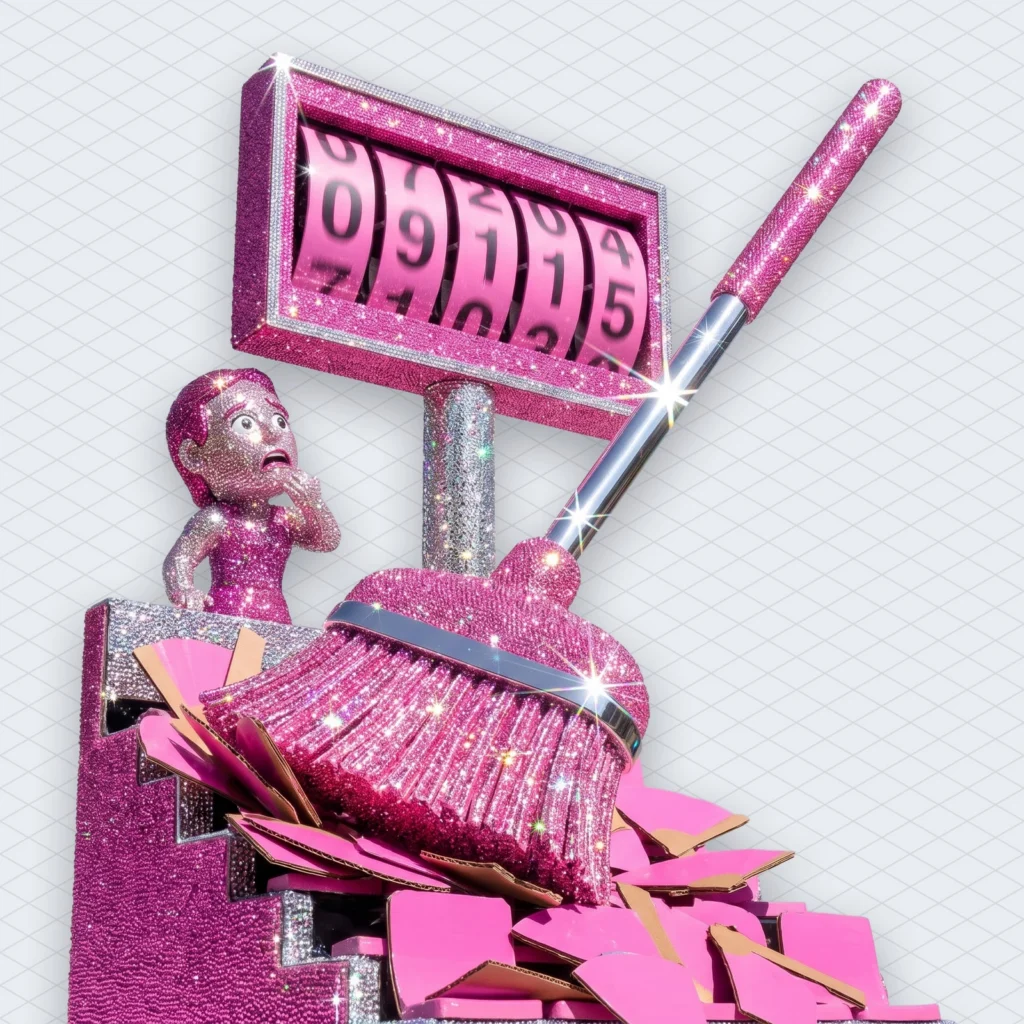
Audit scores get real accounts wrong in predictable ways
An audit score is an estimate, and it misreads real accounts in the same few ways. The commonest false alarm is a creator who went viral once. One video pulls in a wave of followers who came for that clip and never watch anything else. They drag the engagement rate down for months. To a tool, that looks a lot like a purchase. To the creator, it looks like the best week of their year.
Old accounts get flagged too. Someone who started posting in 2020 has followers who left the app, forgot their passwords or just stopped scrolling. They are real people. They are also, for audit purposes, furniture.
Follow-for-follow trains are the grey zone. Real humans follow each other in bulk to push the numbers up, then never watch a thing. Nobody paid, but the result looks like a bought following. TikTok’s guidelines also take a dim view of anything that tries to trick the recommendation system.
The error runs the other way as well. Sellers know which signs the tools check. So the pricier packages come with TikTok fake followers that have avatars, a couple of posts and plausible names. Some buyers add likes and views to keep the ratio looking healthy. That is why TikTok’s 54 billion blocked fake likes matter here. The people selling them have read the same audit checklists you have.
So read a score as a reason to look closer, not as a verdict. A low score plus weak videos plus a comment section full of “nice” is a bought following. A low score on a creator with one massive hit and steady comments since is probably just a creator with one massive hit.
Checking your own account for fake TikTok followers
Your own account gives you better data than any audit tool, because TikTok analytics show your follower count from the inside. In TikTok Studio, open the analytics and look at how your followers changed over time, a view TikTok has offered since its first analytics tutorial. A jump that lines up with a video that took off is fine. A jump on a quiet day is worth a look.
Bots sometimes follow accounts nobody paid for, to make their own profiles look normal. If a batch of blank accounts lands on you, remove them from your follower list through the menu next to each name. It’s tedious. It also stops dead accounts from dragging down the engagement rate that brands and audit tools read. Clearing TikTok fake followers you never asked for is part of keeping your numbers honest.
Stop buying TikTok fake followers and grow real ones
If you did buy followers at some point, stop topping them up. TikTok will keep removing them in sweeps. A sudden drop of a few thousand hurts far less than a restricted account, and a smaller count with real viewers is worth more than a large one with none. (Every brand that has ever paid for an audit agrees, at length.)
Real followers come from videos people watch to the end, and sound is a bigger part of that than most creators admit. A trending track can be muted on your video after you post. The same audio also sits under thousands of other clips. Mubert Render writes an original track to the exact length of the video, from samples made by real artists. That is one less reason for a viewer to swipe.
Grow it that way and the car park fills with people who come inside and order. The bought cars get towed eventually. TikTok has the tow truck, and in 2024 alone it ran it over 5 billion times.
A checklist for auditing TikTok fake followers this week
- Compare the follower count with the views on the last dozen videos before you sign any deal.
- Open the comments on three recent videos and count how many say anything specific.
- Sample twenty followers and note how many have no photo, no posts and a default handle.
- Run one audit tool, then check its red flags by eye instead of trusting the score.
- Ask the creator for a screenshot of their TikTok Studio follower and audience analytics.
- Check your own follower graph for jumps on days when no video took off.
- Remove obvious TikTok fake followers from your own list before you pitch a brand.
- Cancel any follower top-up service before the next TikTok sweep cancels it for you.

 Who we are