


Music that nobody owns barely exists. In the US, a track is under copyright the moment it is recorded, and for most new works that lasts the author’s life plus 70 years. So when creators search for no copyright music, what they want is music they can put in a video without getting a claim, a strike or an invoice. This post is for the YouTubers, streamers and editors who typed that search. It covers the five places no copyright music really comes from, and the catch that comes with each one.
The phrase usually shows up in a video title. Someone uploads a track, types “NO COPYRIGHT” in capitals, and those words carry the legal weight of a sticky note on a fridge. We’ve believed the sticky note before. It went about as well as you’d expect.
No copyright music almost always has a copyright
Almost every track sold, streamed or uploaded as no copyright music still belongs to someone. The US Copyright Office says a work is under copyright “the moment it is created and fixed in a tangible form”, and registering it is voluntary. A beat exported from a laptop at 3 a.m. has an owner by 3:01.
The term is long too. For most works made since 1978, protection lasts the author’s life plus 70 years. Works made for hire run 95 years from publication or 120 from creation, whichever ends first. Either way, nothing you heard on the radio this decade will be free in time for your next upload.
So the people searching for no copyright music mean something else. They mean permission. That permission has to cover the platform and the monetisation, last for years, and come from someone who actually has the right to give it.
YouTube’s own fair use page shoots down the usual shortcuts. It says there are no magic words, so “no infringement intended” in a description does nothing. Giving credit doesn’t turn a straight copy into fair use either. The same page warns that a claim can block monetisation even if you only use a few seconds. (The ten-second rule is folklore. It was never a rule, and it was barely ever ten seconds.)
What creators mean by no copyright music is four promises
In practice, creators who type no copyright music want four promises at once. The video stays up. The ad money stays with the channel. Nobody sends an invoice two years later. And the track still works when the video gets cut down for every other platform, from a 20-minute upload to a vertical clip.
Very few sources make all four promises. Most make one of them loudly and stay quiet about the rest. That’s how a creator ends up with a video that is live, monetised and quietly paying someone else, which technically counts as the video staying up.
So the useful question is never “is this free?” Instead, ask which of the four promises a source makes, and whether it makes them in writing. A licence page answers that. A thumbnail with a padlock on it does not.
Claims and strikes are what creators are really worried about
Creators worry about two separate things, and they work differently. A Content ID claim is automatic: YouTube compares every upload against a database of files that rights holders submitted. When it finds a match, the owner can block the video, put ads on it and take the money, or just track its views.
A copyright strike is a legal takedown, and it’s the more serious of the two. YouTube says channels that get 3 copyright strikes in 90 days are subject to termination. A strike expires after 90 days if you complete Copyright School. Claims don’t count toward termination, but they can quietly send your ad money to someone else, which is a punishment of its own.
Claims also happen a lot. In Mubert’s own data from the last 28 days, about one in four results from our copyright checker found a rights holder’s claim on the uploaded track (24.4%, down from 26.7%). These are tracks people were worried enough to check, so the figure doesn’t describe every upload. Still, plenty of no copyright music turns out to belong to someone.
The five sources below start with the one that is actually free and end with the ones that come with paperwork.
Public domain music is the only kind with truly no copyright
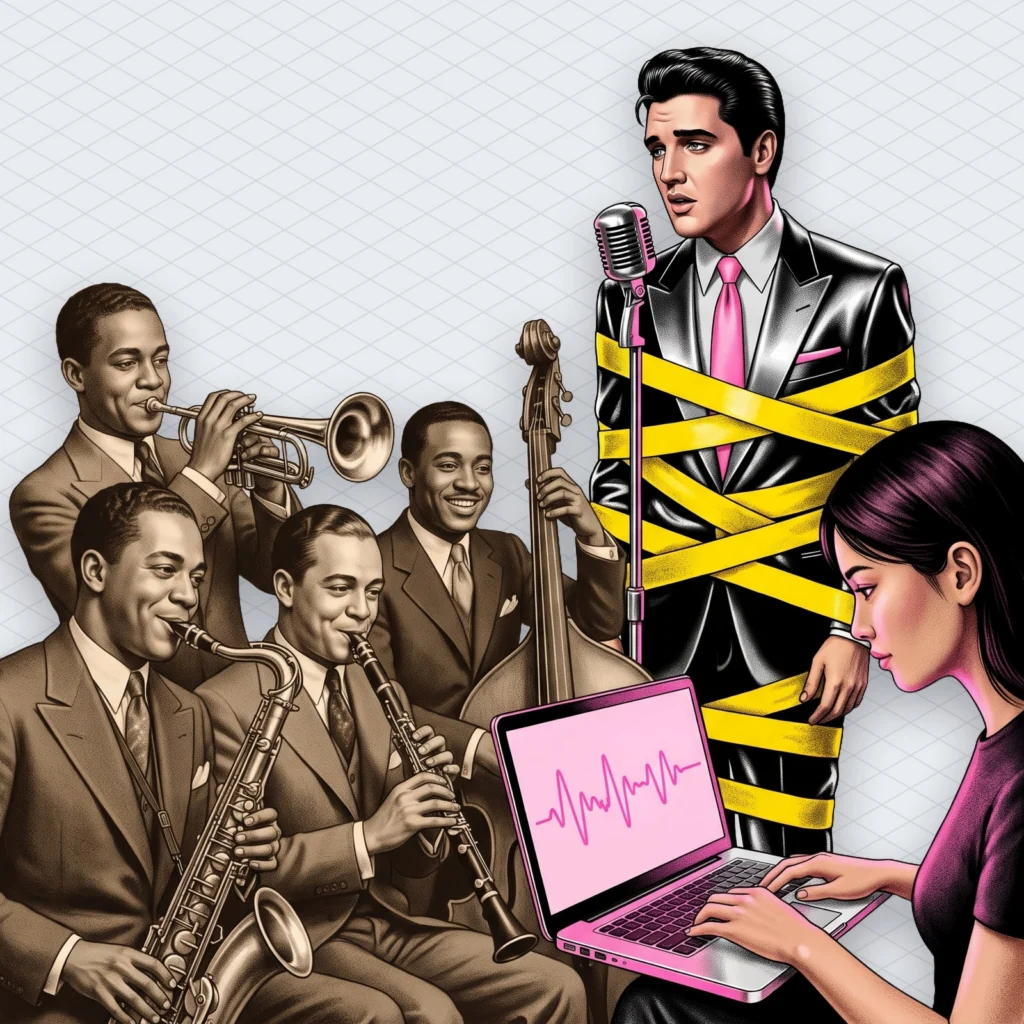
Public domain is the only no copyright music in the literal sense, because the copyright has really run out. On January 1, 2026, US sound recordings from 1925 and musical compositions from 1930 entered the public domain, according to Duke’s Center for the Study of the Public Domain. That covers Bessie Smith and Louis Armstrong’s 1925 “The St. Louis Blues”, and also the songwriting behind “Georgia On My Mind” and “I Got Rhythm”.
Every recorded song carries two copyrights. One is the composition (the notes and lyrics). The other is the sound recording, meaning that one specific performance. “Georgia On My Mind” as a song is free in the US, but later recordings of it are not, and Duke says plainly that later recordings by other artists are still protected. Even recordings made in 1930 outside of films stay protected until around 2031.
We learned this the embarrassing way. One of us found a lovely “public domain” version of a jazz standard. The song was old enough, but the recording came from decades later, and the claim showed up the same afternoon. Nobody lost money, only some pride.
The public domain also stops at the border. Duke points out that the EU and many other countries protect authors for life plus 70 years and protect recordings on their own schedules, so a work can be free in the US and still owned somewhere else. Duke’s own example is a 1930 novel that stays under copyright in some countries until 2036. Not all of your viewers are in the US.
The last catch is about sound. A 1925 recording sounds like 1925: crackle, mono, a tuba playing the bass line. That’s perfect for a history channel and strange under a skincare tutorial.
Creative Commons music is copyrighted, with the licence written in advance
A Creative Commons track still has a copyright. It also comes with a public licence that answers the permission question before you ask. There are six Creative Commons licences, and all six require you to credit the creator (that’s the BY). The extra letters change the deal: NC means noncommercial use only, ND means no adapted versions, and SA means anything you build from it has to be shared under the same terms.
NC is the one that catches creators out. A monetised channel, a sponsored video or a client edit is hard to call noncommercial with a straight face. ND is the second trap, because cutting a track down to fit a 47-second Short can count as adapting it. So the letters matter more than the free download button.
When a reupload channel calls a CC track no copyright music, the licence still travels with it, credit line and letters included. The reupload just doesn’t mention them. You inherit the terms anyway, whether or not anyone told you what they were.
CC0 is the exception. It lets rights holders waive all copyright and related rights as far as the law allows, which is the closest a living artist can get to handing you music with no strings on purpose. When you find a CC track, read the licence on the artist’s own page. A reupload’s description only copies someone’s claim about the licence, and copies get edited.
YouTube Audio Library is no copyright music with a fence around it
YouTube’s Audio Library is the one source a platform stands behind. Its help page says tracks downloaded from it won’t be claimed by a rights holder through Content ID, and creators in the Partner Program can monetise videos that use them. Creative Commons tracks in the library still need the artist credited in your description, and the library has a filter that shows only the tracks that don’t need credit.
For creators who publish only on YouTube, it’s the closest thing to no copyright music with a guarantee attached. The promise only covers YouTube, though. The help page says only Audio Library music is “known to YouTube to be copyright-safe”, and it adds that YouTube can’t give legal guidance on music problems that happen off the platform. On YouTube, then, you’re covered. On TikTok, on a Twitch stream or in a client’s Instagram ad, all you have is a download and a hunch.
There’s a creative catch too. Anyone can download the same track, so the same track turns up under a huge number of other videos. Viewers notice, and some of them say so in the comments.
Free music labels give permission, with house rules
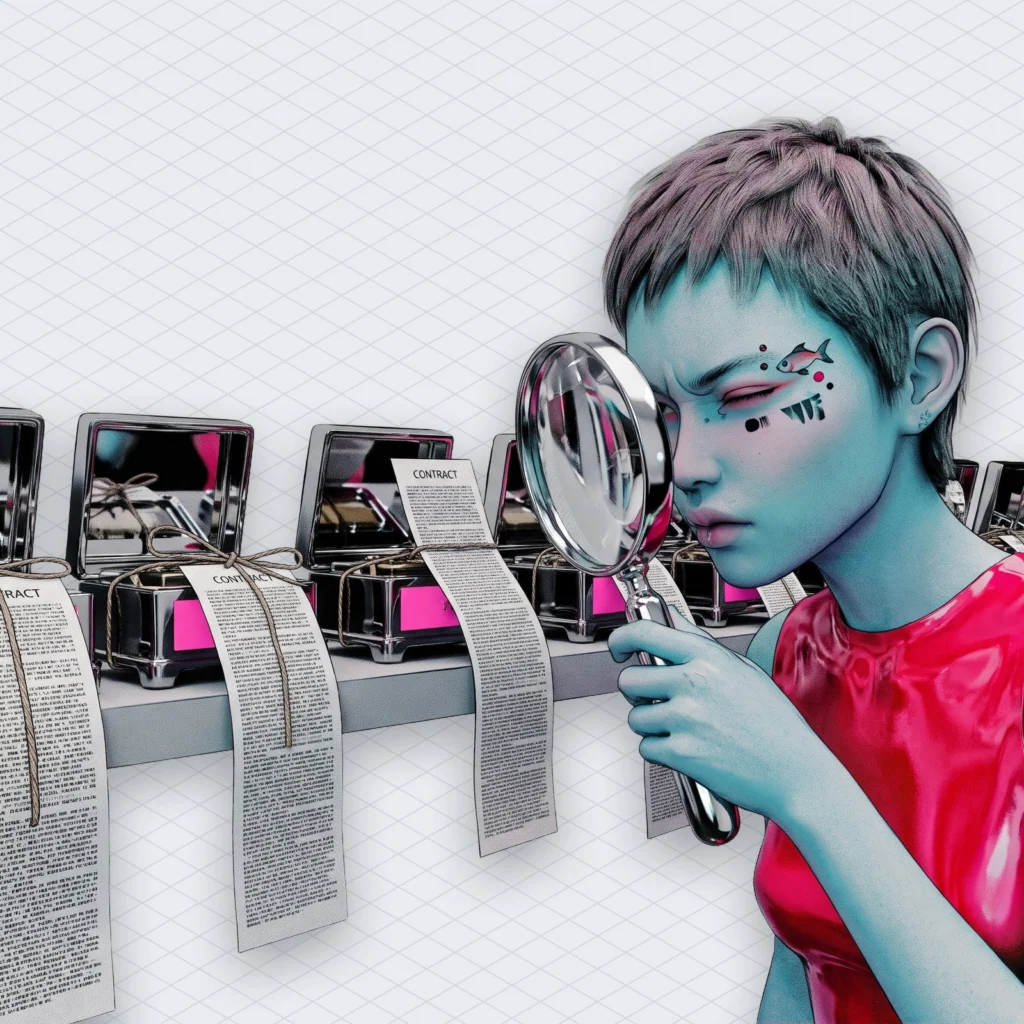
A free music label owns or controls its releases and gives creators standing permission to use them in exchange for credit. The best known is NoCopyrightSounds (NCS), a UK label founded in 2011. In late 2021, Music Business Worldwide reported that its music was in about 150 million videos and its YouTube channel had over 31 million subscribers.
The label built its whole name on the idea of no copyright music, but the business runs on copyright. According to the same report, NCS signs artists on a 50/50 split and releases about three tracks a week. Independent creators get to use those tracks for free with credit, and that model only works because the label controls the rights. Its own usage policy sends games, and brands promoting their own products, to a separate licensing contact.
Its label manager told MBW there’s “still a stigma attached that it’s of poor quality, cheap and mass market.” That’s an unusually honest thing to say about your own category, and it explains why the label spends effort on the music instead of the slogan.
Every label shares the same catch. Rules change, catalogues move, and your permission is only as good as the policy page that was live on the day you published. Take a screenshot.
Licensed and generated music is copyrighted on purpose
The fifth source doesn’t pretend: the music has an owner, and you get a licence from them. “Royalty-free” music belongs here. It means you pay no royalties per play under that licence. The copyright doesn’t go anywhere, and the licence decides where the track can be used.
The licence’s scope matters more than people expect. A song from an app’s built-in picker may cover a personal post but not a paid one, which is why a listing tour for an estate agent counts as an ad and needs a different licence. Platforms are building their own fixes too: YouTube now writes AI replacement tracks for videos that get claimed, so you can swap the music instead of fighting the claim.
Generated music is the newest answer to a no copyright music search, and it is copyrighted on purpose as well. Mubert Render composes an original track at the exact length you ask for, built from samples that musicians uploaded and get paid for. It’s cleared for commercial use under the platform licence, and the exact scope depends on your plan, so read yours. Being original matters more than it sounds, because a track written for your video isn’t also playing under a thousand other videos.
A “no copyright” title is not a licence
Most no copyright music trouble starts with reupload channels, because the label in the title is the only paperwork they offer. Anyone can rename a file. A track can be reuploaded by someone who doesn’t own it, on terms the real artist never offered. Then it gets registered with Content ID months later, and you only find out when an old video suddenly has a claim on it.
A quick tangent about the capital letters. At some point, “NO COPYRIGHT” in a title stopped being a legal claim and became a genre, with its own thumbnail style and its own comment-section rituals. Somewhere, a track is called “Chill Beat (No Copyright) (Free) (Official) (Real)”. Anyway.
Tracing a track takes about five minutes. Find the artist, find their own page, read the licence there, and check that it covers your platform and your money. If you can’t find an owner, treat the track as owned by someone who hasn’t shown up yet. They usually do.
Proof of permission beats the word on the track
Permission you can’t show is worth about as much as permission you never had. When a Content ID claim lands, you can dispute it, and the rights holder then reviews what you sent. A dated screenshot of the licence page, with the track name on it, makes that argument short.
We kept no records for our first year of uploads. Then a claim landed on an old video, and we spent an evening digging through browser history for a download page that no longer existed. The page was gone. So was the label that ran it.
So treat every no copyright music download as a promise you may need to prove later. Keep the source link, the licence, the date and the credit line together, in one place, for every track. It’s boring. Boring is the point, because a boring spreadsheet beats a sticky note on a fridge, even one written in capitals.
A checklist for using no copyright music this week
- Search the track name and artist, and find the original upload instead of the reupload.
- Read the licence on the artist’s or label’s own page, then screenshot it with the date.
- Check for NC and ND before you put a Creative Commons track in a monetised video.
- Paste the exact credit line the licence asks for into your description.
- Use YouTube Audio Library tracks on YouTube, and get a separate licence for other platforms.
- For “public domain” jazz, check the year of the recording as well as the year of the song.
- Run the finished video through a copyright check before you publish.
- Keep a sheet that lists each no copyright music track, its source, its licence, the date and where you used it.
 Who we are


