


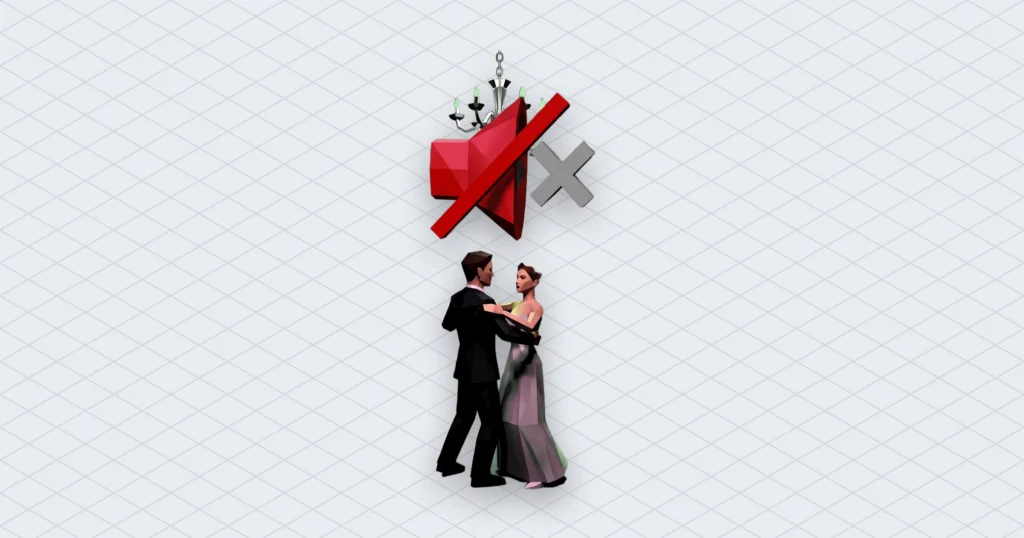
The bride cried. The groom’s uncle danced like his knees were rented. Three weeks later the highlight film went up on YouTube, and the first dance had no sound. If you film weddings, or you’re the friend with a good camera who said yes, finding music for wedding videos is where the legal trouble starts. This post explains what music in a wedding video needs legally, what YouTube, Vimeo and Instagram do when they spot a track you don’t have rights to, which “free” options are actually free, and how to build a soundtrack that stays online.
Short version: the song the couple cares about most is the one you’re least able to use.


Music for wedding videos needs two permissions, not one
A recorded song isn’t one thing. According to the US Copyright Office, when you record a song “you may be creating two works that are protected by copyright: a musical work and a sound recording,” and those works “are commonly owned and licensed separately.” The musical work is the composition, meaning the melody and lyrics, and it usually belongs to a publisher. Then there’s the sound recording, that particular performance, which usually belongs to a label. Two owners.
Putting a song under moving pictures is its own kind of use. People call the permission a sync licence (short for synchronization: music synced to images). The law firm Nixon Peabody sums it up: “A sync license allows a user to synchronize recordings with visual work,” and you get it by negotiating with the rights holder, usually the publisher. If you use the original recording rather than your own cover, you also need the label’s permission for the recording, known as a master use licence.
So a famous first dance song needs two yeses, from two companies, for one wedding. Most wedding budgets cover one photo booth. And the rule applies to every commercial track in wedding videos, including background music nobody chose on purpose.
The venue’s music licence doesn’t cover your wedding video
This is the misunderstanding we hear most. The venue pays for music. The DJ pays for music. Surely the music in the wedding video is covered too.
It isn’t. Venues pay performing rights organisations such as BMI and ASCAP (the groups that collect royalties for songwriters when music plays in public) for permission to play songs in the room. BMI’s own licensing page says it licenses performing rights only and does not offer synchronization licences. It also says the producer of a video usually asks the song’s publisher for a sync licence. The room is licensed. Your timeline isn’t.
Buying the song doesn’t cover it either. Vimeo’s help centre warns that buying a track from a download store doesn’t give you the right to use it in your videos, and the rights holder can still send a takedown. A download licence is a ticket to listen. It isn’t a ticket to edit.
We learned this the dull way. Years ago one of us cut a friend’s wedding to a well-known indie ballad, uploaded it “just for the family”, and watched a robot claim it before the family had found the link. Nobody sued anybody. The video simply stopped being watchable in a few countries, which is somehow worse than a lawsuit, because there’s nobody to argue with.
YouTube and Vimeo listen to the music in wedding videos
Every big platform runs software that listens to uploads and compares them with reference files from rights holders. What happens next depends on the platform.
On YouTube, that software is Content ID, and it treats music in wedding videos like music anywhere else, matching uploads against a database of audio and video files submitted by copyright owners. When it finds a match, the owner’s chosen policy kicks in: block the video, monetize it with ads (sometimes sharing the money with the uploader), or just track its views. A claim isn’t a copyright strike, so your channel survives. Your soundtrack might not.
YouTube’s claims page says you can mute the song, trim the claimed segment, or replace the audio with a track from the YouTube Audio Library. Muting a first dance is technically a fix. Couples tend to disagree.
Claims also cost money. We covered what a view is actually worth in our post on YouTube RPM by niche and country. When the owner picks monetization, a claim on the music in your wedding videos can send that money to someone else.
Plenty of filmmakers keep their wedding videos on Vimeo, partly because the music policing there feels lighter. Lighter isn’t absent. Its help centre still says plainly: “We strongly advise against using a commercial music recording as the background song of your video.” Vimeo runs automated copyright detection too, and a match can end with the video taken down.
Instagram counts the full songs, and a lot of tracks get flagged
Meta’s published guidance, posted in May 2020, says there are limits on how much recorded music a video can include, and “the greater the number of full-length recorded tracks in a video, the more likely it may be limited.” It recommends shorter clips. A four-minute highlight reel cut to one famous four-minute song is roughly the opposite of a shorter clip. Wedding videos with one full song of recorded music under them are exactly what that guidance warns about. Ours used to be.
A private or unlisted link lowers the chance a robot hears your video. It doesn’t change who owns the song.
For a sense of how common claims are: in Mubert’s own data for the last 28 days, about one in four tracks people ran through our copyright checker came back with a rights holder’s claim (slightly down from the 28 days before). Those are songs people already suspected, so it’s a self-selected crowd. Our checker also isn’t limited to wedding videos, so read it as a general signal about music, nothing more. Still, one in four is a lot of muted first dances.
Fair use won’t save a wedding montage
“Fair use” is the American legal defence that lets you use copyrighted material without permission in some situations, such as commentary, criticism or parody. Courts weigh four factors: the purpose of the use, the nature of the original work, how much of it you took, and the effect on the market for it. Each case is decided on its own facts, after the fact, usually by people who charge by the hour.
Commercial music in wedding videos fails that test on nearly every count. You use the whole song, you use it for exactly what it was made for (making people feel things), and you replace the licence fee the publisher would otherwise get. If you film weddings for money, the film is a commercial product too. Vimeo’s article points out that fair use gets stronger when the video transforms the original into something new. A slow-motion bouquet toss doesn’t transform a pop song. It just agrees with it.
So fair use is a defence you raise when something has already gone wrong. It isn’t a soundtrack strategy.
The Wedding March is free, most recordings of it aren’t
The good news is that the oldest wedding music is in the public domain, meaning no one owns the composition any more. Mendelssohn wrote his Wedding March in 1842 as part of his music for A Midsummer Night’s Dream, and Wagner’s Bridal Chorus (“Here Comes the Bride”) comes from his 1850 opera Lohengrin, according to Encyclopedia.com’s history of the wedding march. Both composers died in the 19th century. Anyone can perform those notes.
The catch is the second copyright from earlier. Whoever recorded the Wedding March in 2015 owns that recording, and owners can submit recordings, classical ones included, as Content ID references. So a free composition inside a copyrighted recording can still get your video claimed. We wrote about the same trap with carols in our post on Jingle Bells and the recordings of it, and it works exactly the same at the altar. Public domain music in wedding videos is safe only when the recording is yours or cleared too.
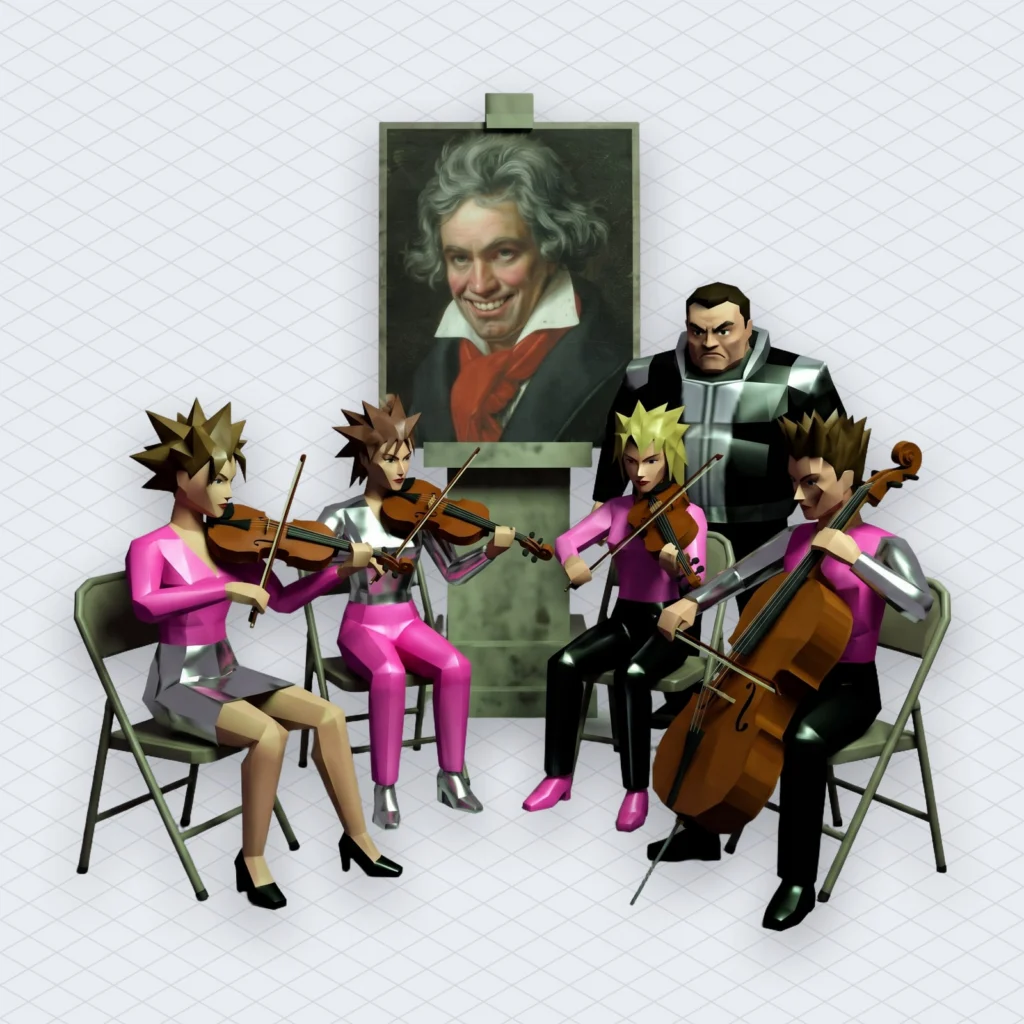
There’s one neat way out. If a string quartet plays Pachelbel’s Canon live at the ceremony and you record it, the recording is yours and the composition belongs to nobody. Ask the musicians first, because their performance is theirs and some contracts limit recording. If they agree, you have a legally clean ceremony track that also happens to be the real ceremony. That’s the best kind of wedding video music.
A tangent: Pachelbel’s Canon went centuries without being a wedding staple, and now it’s so tied to weddings that some people find it hard to hear anywhere else. Somewhere a cellist has played its eight-note bass line more times than anyone should, and has opinions. Anyway.
Background music at the reception still counts
Reception music is the part of wedding videos people forget. The DJ plays a chart hit while the best man gives his speech. You film the speech. Now the hit is in your video, under the talking, and matching software may still pick it out with voices on top.
You can’t really strip a song from under a speech without wrecking the speech. You have three practical options. Ask the DJ to pause or play something quiet and cleared during speeches. Record speeches with a lapel mic so the music sits further back. Or keep the full speeches in the private family edit and use short, music-free bits in the public cut. Nothing here is legal advice. It’s what saves you from re-editing a film at 1 a.m. in December.
Where cleared music for wedding videos actually comes from
Once the famous songs are off the table, music for wedding videos becomes a sourcing problem. These sources hold up for a public film:
- The YouTube Audio Library. It’s free inside YouTube Studio, but some tracks need attribution in the description because they’re Creative Commons, so filter by licence and read before you download.
- Creative Commons music elsewhere, if you follow the exact licence. Some versions ban commercial use. That matters when a client paid you.
- A music library subscription. Check that the licence covers client work and every platform you post to, beyond your own channel.
- A composer you commission. It costs the most and sounds the most like this one wedding.
- Your own live recordings of ceremony music, as in the quartet example above.
- Generated music, made to order.
That last one is the newest, so here’s how it works in our case. With Mubert Render, you describe the mood, genre and tempo, or the video itself, and get an original track made for that request. It comes at the exact length you need, and it’s built from samples that real musicians uploaded and get paid for. Commercial use falls under the platform licence. Scope varies. How far it goes depends on the plan, so read the licence for yours before you deliver to a client.
Wedding films come in odd lengths, and the soundtrack has to fit
Length is the boring problem nobody warns you about. Wedding videos come in odd sizes, and the music has to fit each one: a 60-second teaser, a 4-minute highlight, a 25-minute documentary edit. Stretch one stock track across all three and you get loops you can hear. Also an ending nobody wrote.
A three-minute-forty highlight reel wants a track that ends at three-forty, rather than a fade-out halfway through a chorus. Some editors cut picture to the music, while others cut the music to the picture, and both work when the track was written for the duration. Neither works when the song runs out before the kiss.
We tried the other way once. Two tracks, crossfaded under the vows, because the first one was too short. It went badly. Every guest who watched it heard the seam, and so did the couple. Music that fits the cut sounds like it belongs. That’s the whole job.
Talking to couples about the first dance song
The hardest part of wedding video music isn’t legal. It’s the conversation. The couple picked their song years ago, probably in a car, and you’re about to tell them it can’t go online.
Have that conversation at booking. Not at delivery. Put a line in your contract saying the public film uses licensed music and that specific commercial songs need permission you’ll ask for or can’t get. When a couple really wants their song in a public film, the honest route is a sync licence from the publisher plus a master licence from the label. That route exists. It’s often slow, and the price depends entirely on the song. Some publishers never reply, so plan for that.
Many filmmakers offer a compromise: the public film uses cleared music, and the first dance gets its own clip with the live room audio for the couple to keep. Be clear that a private copy isn’t a licence. It just means fewer people, and fewer robots, hear it. If they post that clip to Instagram, the earlier rules apply to them.
Then the practical part. Cut the public film to a cleared track that matches the first dance song’s tempo and mood. If you generate it, describe the feel of their song rather than naming it. Something like “slow acoustic ballad, warm piano, builds at the end” gets you closer than you’d think. Nobody ends up muted.
A checklist for wedding video music this week
- Add a music clause to your booking contract saying public films use licensed tracks.
- Ask couples which songs matter.
- Check the licence of every track in your current library for client work and for each platform you post to, Instagram included.
- Ask ceremony musicians before recording them.
- Brief DJs before the reception to pause or soften music during speeches.
- Upload each film unlisted, then check YouTube Studio for claims before you send the link to anyone.
- Build a folder of cleared tracks at your usual lengths.
- Re-cut one old portfolio film before a robot does it.
Then go back to that highlight film with the silent first dance and give it a track it’s allowed to keep. The uncle’s rented knees deserve to be heard.

 Who we are


