
The fear is real, but so is the opportunity. Here’s what’s actually happening in the AI music revolution.
The headline practically writes itself: “AI Takes Over Music Industry, Artists Left Behind.” It’s dramatic, it’s scary, and it’s the story many musicians fear. With AI systems now capable of generating over 100 million tracks and tools that can create a complete soundtrack in seconds, the existential dread is understandable.
But is this narrative accurate? Or are we watching something far more nuanced unfold, a transformation that could actually create new possibilities for human creativity?
Let’s have an honest conversation about what’s really happening.
The Reality Check: What AI Music Actually Does
First, let’s clarify what we’re dealing with. Modern AI music platforms don’t conjure sound from thin air. They work with vast datasets, millions of samples, loops, and recordings contributed by human musicians. The AI acts as an incredibly sophisticated arranger, combining these human-created elements into new compositions based on parameters like mood, genre, and duration.
This distinction matters enormously. The raw material of AI music is still human creativity. The piano riff, the drum pattern, the atmospheric texture, these originate from people who spent years developing their craft. AI systems are essentially curators operating at superhuman speed, not replacement artists.
Think of it this way: when you use a search engine, the algorithm doesn’t write the content you find, it organizes and surfaces human-created information. AI music operates on a similar principle, though with far more creative synthesis involved.
Where AI Music Is Genuinely Disrupting
That said, let’s not pretend nothing has changed. AI music is fundamentally reshaping specific market segments.
Background and functional music is experiencing the most dramatic shift. Content creators making YouTube videos, podcasts, or social media content previously faced a choice: expensive licensing, limited free libraries, or potential copyright strikes. AI-generated music offers unlimited, royalty-free options perfectly tailored to their needs. A travel vlogger can generate a calming ambient track at exactly 3:47 to match their footage. A fitness instructor can get high-energy beats at 145 BPM without negotiating licenses.
Stock music libraries are feeling pressure. When an AI can generate tracks customized to exact specifications in seconds, the value proposition of searching through thousands of pre-made tracks diminishes. The same applies to jingle producers and those creating background music for retail spaces and hospitality venues.
These are real disruptions affecting real livelihoods. Musicians who built careers providing functional music for commercial applications need to adapt or find their market shrinking. There’s no honest way to sugarcoat this reality.
What AI Music Cannot Replace
But here’s where the “death of music” narrative falls apart. The segments AI can adequately serve represent a specific type of music: functional, background, utility-focused. Music designed to accompany rather than captivate.
Live performance remains untouchable. The energy exchange between a performer and audience, the improvisation responding to crowd emotion, the physical presence of musicians, AI cannot replicate this experience. People don’t attend concerts to hear technically perfect playback; they go for the human connection.
Original artistic expression defies algorithmic replication. When Kendrick Lamar drops a verse that captures a cultural moment, when Billie Eilish creates a soundscape that expresses teenage alienation, when a jazz ensemble engages in spontaneous musical conversation, these emerge from lived human experience, emotional depth, and creative risk-taking that AI systems cannot genuinely possess.
Cultural significance requires cultural participants. Music has always been about more than sound waves. It’s identity, rebellion, community, and history. Songs become significant because of who creates them, what they represent, and the stories they embody. An AI-generated track cannot carry the weight of a protest anthem or a generational love song.
The Collaboration Model: Humans + AI
Perhaps the most interesting development isn’t replacement but augmentation. Forward-thinking musicians are discovering that AI tools can enhance their creative process rather than substitute for it.
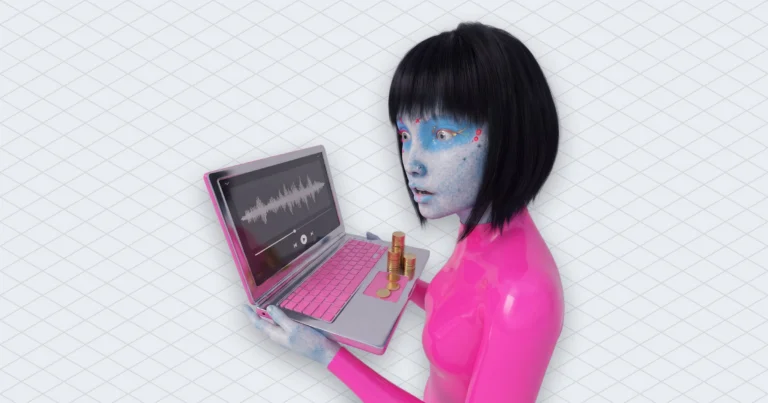
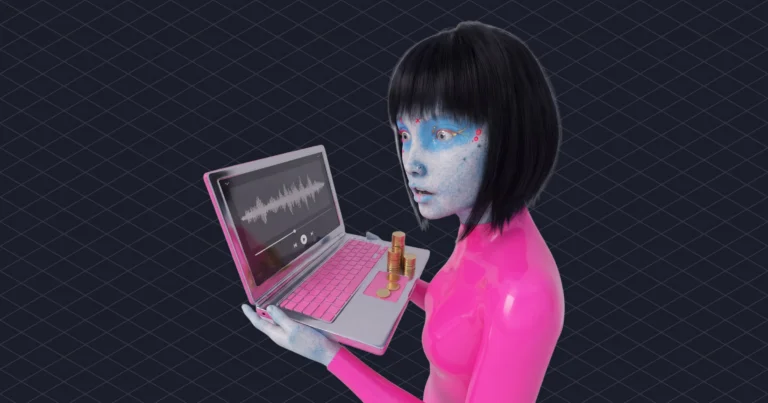
Modern platforms allow artists to contribute their samples and sounds to AI databases, earning revenue each time their work is used in generated tracks. This creates a new revenue stream from creative assets that might otherwise sit unused on hard drives. A producer with thousands of loops and one-shots can monetize their entire catalog continuously.
AI can also serve as a rapid prototyping tool. Musicians use it to quickly generate reference tracks, explore variations they might not have considered, or build starting points they then humanize and develop. It’s collaborative in the same way a spell-checker collaborates with a writer, useful assistance that doesn’t replace creative judgment.
The democratization aspect matters too. Bedroom producers with limited equipment can now access sounds and styles that previously required expensive studios. While this creates more competition, it also lowers barriers and enables creators who might never have entered music production.
The Fairness Question
Here’s where the conversation gets complicated. Many AI music systems were trained on copyrighted works without compensation or consent. Musicians who never agreed to have their styles analyzed and replicated are essentially having their creative DNA extracted and commercialized.
This is a genuine ethical problem the industry must address. More responsible approaches involve building databases exclusively from licensed content and ensuring original artists receive payment when their contributions influence generated output. This model of transparent attribution and fair compensation represents what ethical AI music should look like, though it’s far from universal.
The question isn’t whether AI music will exist; it will. The question is whether its development will respect the creative labor that makes it possible.
What Musicians Should Actually Do
If you’re a musician wondering how to navigate this landscape, here’s a realistic assessment:
Double down on what makes you human. Your story, your presence, your ability to connect emotionally, these cannot be automated. Build your brand around who you are, not just what you produce.
Consider strategic adaptation. If part of your income came from stock music or jingles, explore whether contributing to AI music platforms might convert disruption into opportunity. Your samples and loops could earn ongoing royalties in this new ecosystem.
Focus on premium experiences. Live performance, session work, custom composition for high-end clients, music education, these markets value human judgment and relationship in ways that resist automation.
Stay creative, not just productive. AI excels at producing volume quickly. Humans excel at producing meaning deeply. Make music that matters to people on a personal level, and you’ll find an audience that no algorithm can capture.
The Bigger Picture
Every technological shift in music history has triggered existential panic. The phonograph would kill live performance. Radio would kill record sales. Synthesizers would kill orchestras. Sampling would kill originality. Digital production would kill “real” music.
Music survived all of it, not unchanged, but still fundamentally human. Musicians adapted, new genres emerged, and the need for human creative expression remained constant.
AI music represents another evolution, not an extinction event. The industry will reshape. Some niches will shrink while others expand. Musicians who view AI as a tool rather than a threat will find opportunities their predecessors couldn’t imagine.
The real question isn’t whether AI is killing music. It’s whether we’ll build an AI music ecosystem that respects the human creativity at its foundation, one that compensates artists fairly, attributes contributions honestly, and enhances rather than exploits the musicians who make it possible.
That’s a question with an answer still being written. And it’s one where musicians, listeners, and creators all have a voice.
The future of music isn’t human versus machine. It’s human, with machine, if we build it right.
 Who we are