


Free Instagram comments come from three places: bot apps that want your login, comment pods where strangers trade comments to a schedule, and engagement bait (“comment YES for part two”). Instagram started removing inauthentic likes, follows and comments made through third-party apps on November 19, 2018. It also keeps bait out of recommendations to people who don’t follow you. This post is for anyone with a small account and a comment section that echoes. Here’s what it covers. What each free method delivers, what it costs your reach and what gets real comments instead.
You can spot a bought comment from across the room. It says “Nice pic bro” under a carousel with no pictures in it, only text. It shows up eleven seconds after you post. The account behind it has no posts, four followers and a sunset for a profile photo. You have seen that sunset on other accounts. Most free comments on Instagram look exactly like this.


What free Instagram comments sites actually deliver
Free Instagram comments sites deliver comments from accounts Instagram is trying to delete. They usually want your login in return. The deal rarely changes. You type in your username (often your password too), get a small free batch, then get offered a bigger paid one.
The login is the real price. When Instagram announced its crackdown in 2018, it said people who use these apps share their username and password. Some apps, it said, then use those accounts to generate inauthentic activity. Accounts it caught got an in-app message saying the fake activity had been removed. Instagram also asked them to change their password. It added that accounts which keep using these services may find their experience on Instagram affected. The company had also built machine learning tools to find them.
So “free” is paid in another currency. Your account becomes one of the commenters. The site’s other customers get “Amazing content” from you, on posts you have never seen, maybe in a language you don’t speak. That’s how free Instagram comments get made: by your account, for someone else’s post. Then Instagram cleans up, and both ends of the deal vanish in the same sweep.
The money side is even simpler. Meta’s spam policy bans selling, buying or exchanging engagement such as likes, shares, views and follows. It also bans posting or engaging “either manually or automatically, at very high frequencies”. Meta may also restrict accounts acting at lower frequencies when other spam signs show up. A bot that comments around the clock is the textbook case.
We took the same trial-then-upsell sites apart for followers in our post on free follower and bot sites, and for likes in the one on like bots. The comment version is the same machine with a keyboard bolted on.
Comment pods actually raise comments, which is the awkward part
Comment pods work, at least on the comment counter. A pod is a group chat where members post a link to their new post. Everyone else has to comment within a set window. It’s a neighbourhood watch where the only crime is not commenting. Because real people write the comments, a pod feels safer than a bot.
It isn’t.
Pods also have actual research behind them, unlike most growth folklore. In 2020, a team from NYU Tandon and Drexel University studied 1.8 million Instagram posts from 111,455 accounts. They found more than 400 pods advertised on Telegram. The average pod had about 900 members, and the largest had around 17,000. After joining, 70% of users saw at least a two-fold rise in interaction on posts they had not shared with the pod. On average, their comments rose five-fold.
Instagram treats free comments from pods like bot comments
Instagram puts pods under the same rule as the bot apps. That’s the catch behind the honest result above, and it is also why pods never die: the counter goes up first and the trouble comes later. A pod is the human version of free Instagram comments. Nobody pays, everybody owes.
Instagram told TechCrunch that the activity “violates our policies and we have numerous measures in place to stop it”. It treats pods under the same rule as third-party services that generate fake likes, follows or comments. The researchers’ own model spotted pod-boosted posts with up to 90% accuracy. If a university can do that from outside, we’d assume the company holding all the data can do it from inside.
A confession. We have been in something shaped like a pod. It was a friendly group chat with one rule: everyone comments on everyone’s launch. That meant a few weeks of “this is so good” typed in a supermarket queue. Nobody read anything. The posts got a cheerful wall of nothing, and as far as we could tell, no extra strangers.
Free Instagram comments from a pod still count as exchanged engagement
Under Meta’s rules a pod is a trade. So free Instagram comments from a pod still count as exchanged engagement, which the spam policy forbids. A comment for a comment is an exchange, even when nobody pays. A spreadsheet of who owes whom is still a spreadsheet. And calling it “a support group” doesn’t change what the system sees.
Pods have a quieter cost. They teach the algorithm about you. When Adam Mosseri explained how Instagram ranks posts in 2021, one Feed signal was your history with an account, including how often the two of you comment on each other’s posts. In a pod, the people you trade comments with are other pod members. So the system learns that your audience is a few hundred small accounts commenting on everything, in unrelated niches. Then it shows your next post to them, not to people who might care about your sourdough or your synth patches.
That’s our reading of the signals, not a rule Instagram has published. Still, it fits the pattern. The comments arrive. The reach goes somewhere useless, like a flyer for your gig pinned up inside the venue after the gig.
Engagement bait keeps your post from people who don’t follow you
Engagement bait costs you the strangers. Instagram’s Recommendation Guidelines list engagement bait among things it won’t recommend in places like Explore, Reels and suggested posts. Its creator FAQ says it filters or demotes posts it judges to be bait. Your followers can still see the post. Post bait often enough, though, and the whole account can become ineligible for recommendation for a while. That includes posts that broke no rule.
Bait means asking for the action for its own sake: “comment FIRE if you agree”, “tag three friends who need this”, “type YES and I’ll post part two”. The question isn’t really a question. It’s a lever, and Instagram has a filter for levers. Its Recommendations and Originality page for creators files engagement bait next to clickbait, as content many people say they dislike. So bait is the cheapest source of free Instagram comments and the most expensive one for reach.
Meta has run this play before, on Facebook. It started demoting engagement bait in December 2017, with “LIKE this if you’re an Aries” as one of its own examples. Bait in comments got demoted from November 13, 2018, and bait spoken in a video’s audio from January 30, 2019. Pages that kept doing it got harsher demotions than single posts did.
That Aries example deserves a moment. Somewhere, a person wrote a company-wide ranking policy and used a horoscope as the test case. It worked, too, because the horoscope posts did get demoted. Anyway.
Account Status shows if Instagram stopped recommending you
Professional accounts can see the damage directly in Account Status. It shows if your content is currently ineligible to be recommended to non-followers. It also lets you ask for a review when you think Instagram got it wrong.
Say your free Instagram comments came from a run of “comment YES” captions, and your reach fell right after. Look there before blaming the algorithm in general. It’s the warning light on the dashboard. Check it before you rebuild your content plan at midnight, because the fix might be one caption habit, not everything.

Asking for a one-word comment is fine when it does a job
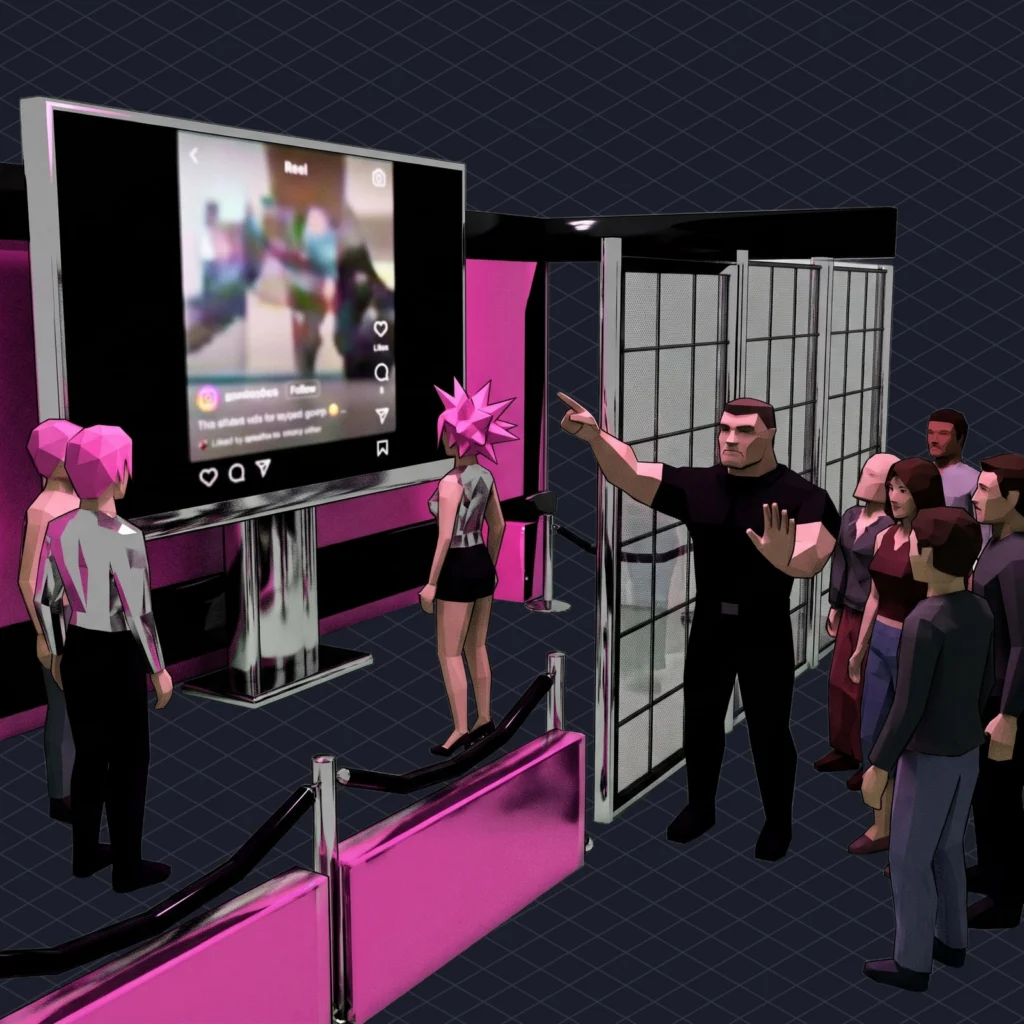
A one-word prompt is allowed when it does something. Means, not goal. That’s the line.
In mid-2024, Instagram’s @creators account posted advice that asking people to comment a specific word, number or emoji could limit reach. Creators pushed back fast. The ones using auto-DM tools pointed out that “comment GUIDE and I’ll send it” is how they deliver files. Instagram blinked. It then clarified that open-ended questions and calls to action are fine, and so are third-party tools. Bait, it said, is when the goal is simply to rack up engagement to “hack” reach.
Instagram also declined to say which words get flagged, or how it detects misuse. No list. That’s sensible from its side (a published list is a spammer’s shopping list) and annoying from yours.
So here’s our working test. “Comment GUIDE and I’ll DM you the PDF” delivers something, and the person gets a file. “Comment GUIDE if you want more posts like this” is a vending machine that takes your coin and dispenses nothing. If the comment leads to a real action, you’re probably fine. If the only point is the count, you’re the Aries.
Comments are not the signal Instagram ranks first
Comments are not what Instagram’s own boss lists first. In January 2025 Mosseri said: “The top three signals that matter most for ranking are watch time, likes and sends.” He told creators to watch average watch time, likes per reach and sends per reach. Likes, he added, matter a little more with followers, and sends matter a little more for reaching new people.
Comments weren’t on that list. Go back to the 2021 explainer and the picture holds. Feed predicts how likely you are to comment, among other actions. Explore leans on predicted likes, saves and shares. Reels estimates the chance you’ll watch to the end, like the reel, find it entertaining or tap through to its audio page.
So free Instagram comments sites sell the one metric the head of Instagram left out of his top three. They also sell it as a count, when Mosseri talks in rates per reach. A thousand comments on a post that reached a thousand bots is a ratio of one, and a ratio of nothing useful. A bot comment doesn’t add a second of watch time. And nobody has ever sent a post to a friend because a stranger with a sunset avatar wrote “fire” under it.
Free filters hide bot comments on Instagram
Instagram’s own comment filters cost nothing and catch a lot of the junk. Its help page on filtering comments says comments with common offensive words, phrases or emojis are hidden automatically. That setting is on by default. There’s also a Manual Filter, where you add your own words, so the phrases the bots love can go on the list too.
Hidden comments don’t disappear for good. Scroll to the end of the comments, tap View hidden comments, and you can unhide anything the filter caught by mistake. That matters, because a real fan who types “fire” looks a lot like a bot who types “fire”. The filter can’t read intent. Neither can we, most days.
Why bother, if the bots will keep coming? Because the comment section is the first thing a human visitor reads after the caption. A wall of “Nice pic bro” tells them nobody’s home. A short thread of real questions with your answers under them tells them the opposite. You can’t stop strangers’ bots from showing up, but you can stop them from being the welcome mat.
Real comments come from posts that leave something unfinished
The free Instagram comments worth having come from posts that give people a reason to type, and from creators who answer. Instagram’s creator FAQ puts one version plainly. Like or reply to comments on your reel authentically within the first 7 days to draw more engagement. Your replies are comments too, and they show the next visitor that someone is actually there.
The rest is craft, and none of it costs anything:
- Ask a question with more than one right answer (“which of these two intros would you keep” beats “thoughts?”).
- Leave a detail open on purpose, like the name of the location, the plugin or the recipe step, so people ask.
- Post a mild, defensible opinion your niche will argue about politely.
- Pin your best reply from the first hour, so latecomers have a conversation to join.
None of this is fast. It is, however, the only version where the comment count and the reach move in the same direction.
One boring failure kills all of this: a Reel nobody can hear. If the soundtrack gets claimed or muted, watch time drops and the comment section fills with “audio?”. Mubert’s own data from the last 28 days shows that 24.1% of results from our copyright checker found a rights holder’s claim, which works out to about one in four, down slightly from 25.7%. Our guide to music for Instagram Reels on personal and business accounts covers what each account type can use. Rather not gamble? Try Mubert Render. It writes an original track from a short description, cut to the exact length of the Reel. It’s generated from samples that real artists uploaded and get paid for. Licence scope depends on your plan.
A checklist for free Instagram comments that stay
- Remove every growth app you gave your Instagram login to. Then change your password.
- Leave any pod that makes you comment to a deadline.
- Open Account Status and see if your content can be recommended to non-followers.
- Take the phrases the bots like best, add them to the Manual Filter, and free Instagram comments from bots will stay hidden instead of showing up under your posts.
- Rewrite your next three captions so the question has more than one possible answer.
- Reply to every real comment on a Reel within its first 7 days.
- Ignore comment totals. In Insights, track likes per reach and sends per reach.
- Check that the Reel’s soundtrack is cleared before you post, not after the mute.
And if a “Nice pic bro” still lands under a post with no picture in it, leave it there. Of all the free Instagram comments on the internet, it’s the most honest one, because it tells you exactly how closely it looked.

 Who we are