


The Suno download limit took effect on 3 September 2026, and it applies to everything already in your library. A Pro plan is 2,500 credits a month, which Suno describes as up to 500 songs. From that date the same plan allows 20 downloads a month.
Generating stays cheap. Getting the result out of the building is the part that becomes scarce. Below are the questions people are actually asking about that, answered straight.
Key Takeaways
- Since 3 September: up to 7 lifetime trial downloads on free accounts opened before that date, with no commercial rights; 20 a month on Pro; 60 on Premier; unlimited only for Premier users working in Suno Studio.
- The cap is retroactive. It covers everything already in your library, not just new work.
- Unused downloads do not roll over. Extra downloads can be bought, but Suno’s help pages and announcement still give no price.
- Third-party downloaders break Suno’s Terms of Service, which prohibit scraping and allow account termination — and a file pulled that way carries no licence.
- Nothing is deleted. Songs stay playable on Suno. What changes is whether you can take them with you.


The Suno download limit, tier by tier
| Tier | Downloads | Commercial rights |
|---|---|---|
| Free | Up to 7 total, for life, on accounts opened before 3 September 2026. Newer accounts only get occasional trial downloads | None. Personal, non-commercial only |
| Pro | 20 per month | Yes |
| Premier | 60 per month | Yes |
| Premier, in Suno Studio | Unlimited | Yes |
Can I download more than 20 songs a month?
Not on Pro, not by default. Twenty is the cap, it resets monthly, and unused downloads do not carry over — a quiet month banks nothing for a busy one.
Three ways past it, in order of how much they cost you:
Move up a tier. Premier is 60 a month, and Premier users downloading from Suno Studio, the professional production suite, have no cap.
Buy extra. Suno says users who hit their limit “will be able to purchase additional downloads.” Suno’s help pages and announcement still give no price, so you cannot work out what a heavy month costs from official numbers. That single missing number decides whether this is a cap or a paywall, and it is worth waiting to see before committing to a plan.
Plan what you export. At 500 generations and 20 exports, the ratio is 25 to 1. In practice that turns downloading into an editorial decision rather than a reflex: generate freely, export only what has a job.
Can I buy extra downloads, and how much are they?
Yes to the first, unknown to the second. The commitment is in Suno’s own FAQ; the price is not. Until it appears, treat any budgeting as guesswork.
Worth watching for when it lands: whether overage is priced per download or in packs, whether packs expire, and whether they stack with the monthly allowance or replace it. Those three details are the difference between a mild inconvenience and a materially more expensive subscription.
What happens to the songs I already made?
This is the part most people miss, and it is the sharpest edge of the change. From Suno’s FAQ:
“Download limits apply to all music on Suno starting September 3, including songs created before that date.”
The cap is retroactive. Your back catalogue sits behind it too.
Run the arithmetic on a real library. Four hundred tracks accumulated over a year of Pro is not four hundred tracks you can retrieve. It is twenty a month for twenty months, and only while the subscription stays active. Which means the honest description of what you have is not a library. It is a queue.
Everything stays playable and shareable on Suno on every plan. Nothing is deleted. The lock is on export, not on access.
Can I use a third-party downloader?
You can find them. Using them is a different question, and the answer is genuinely not “yes, but be careful” — it is closer to “this costs you more than it saves.”
Suno’s Terms of Service prohibit it. The current terms state that you agree not to “modify, copy, frame, scrape, rent, lease, loan, sell, distribute, or create derivative works based on the Service,” and separately not to “engage in or use any data mining, robots, scraping, or similar data gathering or extraction methods” (Suno Terms of Service, in force since 3 September 2026, retrieved 14 October 2026).
The stated penalty is your account. The same document reserves the right to “investigate and take appropriate legal action against anyone who violates this provision, including removing the offending content from the Service, suspending or terminating the account of such violators, and reporting the violator to law enforcement authorities.”
So the trade is: a few dozen files now, against the account that holds your entire catalogue and the subscription you are paying for. Losing the account does not just cost you future downloads. It costs you the library the downloads were for.
And the file you get is not the file you wanted. This is the part that actually matters and gets discussed least. The commercial rights attach to a download made through Suno on a paid plan. A copy obtained outside that channel is a media file with no licence behind it. If the point of exporting was to use the track in client work, in an ad, or on a monetised channel, a scraped copy does not do that job — it only looks like it does, right up until someone asks for the paperwork.
The terms quoted above are the version in force since 3 September 2026. They also limit commercial use to songs you obtained through a permitted download on your plan.
If I use one, will that have limits too?
Usually yes, and they are less predictable than Suno’s.
Third-party downloaders are small operations reselling access to somebody else’s platform. They rate-limit, they charge their own subscription, they break whenever the source site changes, and they have no obligation to still exist next month. You are swapping a published limit from a company with a support desk for an unpublished limit from a service with neither.
The deeper problem is that none of it addresses the licence. Whatever the tool’s own caps turn out to be, the file still arrives without commercial rights.
Is there a way around the Suno download limit at all?
Not one that leaves you better off. Every route splits into the same three outcomes:
- Pay more. Higher tier, or overage once it is priced. Legitimate, predictable, and the licence stays intact.
- Export less. Treat downloads as a budget and spend them on work that has a purpose. Costs nothing but discipline.
- Go around the platform. Breaks the terms, risks the account, and produces files you cannot commercially use anyway.
The fourth option is not a workaround. It is deciding whether a platform that meters export is the right place for the kind of work you do — which is a different question, and the last section deals with it.
Does re-uploading or re-encoding help if something gets claimed?
No, and it is worth understanding why, because the same reasoning explains a lot of adjacent confusion.
Platforms do not compare your file to other files. They compare it to a reference database. YouTube describes Content ID as working from “a database of audio and visual files submitted by copyright owners” and states that “when a video is uploaded to YouTube, it’s automatically scanned by Content ID” (YouTube Help, retrieved 14 October 2026).
Re-encoding, changing the container, or nudging pitch and speed all leave the recording matching the same reference. The check is not inspecting your file’s history. It is looking for a match.
What happens to my old models?
They are retired. Suno launched its v6 models on 9 September 2026 and moved off every earlier model. Songs already made on them stay playable, but you cannot generate from them again, and new extensions, remixes and covers of old songs run on v6, so they may sound different.
If a channel, a series, or a client’s sound was built on a particular model, that consistency is going away independently of the download question. Suno says v6 is trained on music licensed from Warner Music Group, BMG and Believe.
Do I keep commercial rights on what I already downloaded?
Suno’s FAQ states that songs downloaded on a paid plan carry commercial rights. The terms in force since 3 September say those rights are perpetual and are not affected by running out of downloads, by later changes to allotments or pricing, or by cancelling or downgrading your subscription.
Remixes are the exception: the terms rule out commercial use of any Remix. If your business depends on tracks already downloaded, keep a record of the plan you were on when you downloaded them.
Why is this happening?
Briefly, because it is the least useful part for anyone deciding what to do.
Suno frames it as anti-abuse: limiting downloads “will make it harder for bad actors to mass-export music.” The change also follows Suno’s November 2025 settlement and licensing partnership with Warner Music Group, and Udio made a comparable move in October 2025 after settling with Universal Music Group, switching downloads off entirely across every tier, then opening a one-off 48-hour window for past songs after a user backlash.
The practical read: this direction is industry-wide and driven by rights deals, so it is not likely to reverse. Plan for it rather than waiting it out.
What to do now the caps are live
- Count what you have. Open the library and get the real number. The decision looks different at 30 tracks than at 400.
- Export what has a job. Client work, monetised series, anything currently running. Not everything deserves a slot.
- Store the licence with the file. Same folder, same project. A licence you cannot produce later is not much of a licence.
- Read the terms in force since 3 September, particularly the commercial-use section and the rule on remixes.
- Decide what the next year needs. If music is your finished product, a walled garden may be a fair trade for model quality. If music is a component — under video, inside a podcast, in an app — a metered export is a metered business.
Alternatives, if metered export does not fit your work
We build in this category, so weigh the rest accordingly. Here is what we do differently and where our own limits sit.
Downloads are not the metered step. Mubert charges credits for generation. Exporting what you generated is not what the plans ration, on any tier including free. That is a design decision, not a moral position — but it is the opposite of the one being made elsewhere this year.
A licence certificate ships with every download. It arrives in the archive alongside the track. That does not make a copyright claim impossible, and anyone selling you claim-proof audio is overselling. What a licence record does is shorten the argument when a dispute happens, which is the realistic goal. Three podcasters with valid licences still lost episodes; what decided those cases was whether they could produce the document quickly.
The training data is not a pending negotiation. Mubert generates from millions of samples contributed by thousands of musicians through Mubert Studio, who are paid for their work. A platform that owes nothing to a rights holder has nothing that can be renegotiated out from under its users in a settlement. That is the structural difference the last ten months have been demonstrating across the category.
Which product fits which job
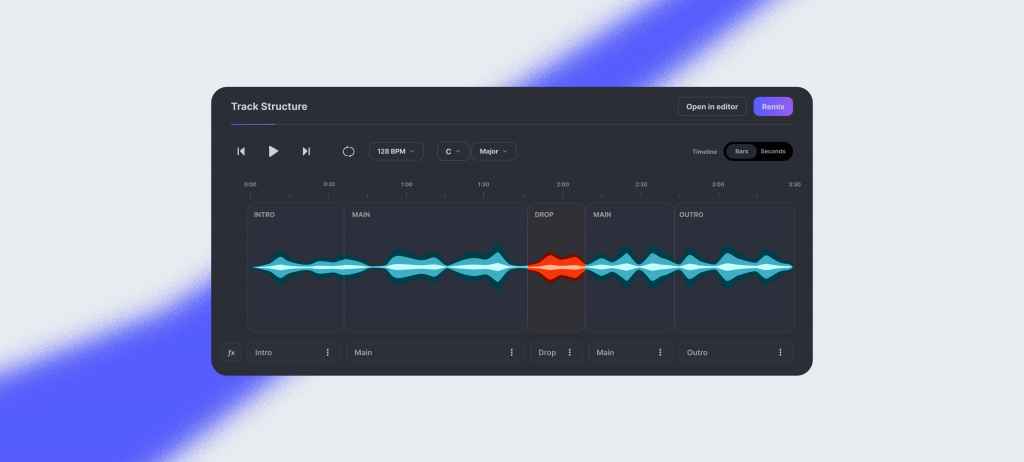
Mubert Render — you need a track and only a track. Describe it or upload an image, set the exact duration from 15 seconds to 25 minutes, pick track, jingle, loop or mix, and download with the licence certificate in the file. This is the closest equivalent to what most people use Suno for.
Our limits, stated plainly. Commercial rights depend on the plan: on Fuse the free tier is personal use only and commercial licensing begins at Lite. Render tracks are not licensed for Content ID registration, standalone release on streaming platforms, or resale on stock-music sites. Those are real restrictions and worth reading before you assume a track covers your use — the same scrutiny this article asks you to apply everywhere else.
 Who we are